Bed Direction Feng Shui: Head Compass Without the Myths

What bed direction means in feng shui, why charts disagree, and a form-first method to pick a sleeping head direction that still feels safe.

Bed direction in feng shui is the compass way your head points while you sleep—not which wall the room “faces,” and not a single lucky arrow for everyone. Searches for feng shui bed direction, feng shui sleeping head direction, bed direction in feng shui, or feng shui bed orientation are asking the same job: pick a head orientation without wrecking the layout that actually lets you rest.
This guide stays on that compass question. Where the bed sits in the room (door line, solid backing) is the safety gate—not a full placement atlas. Personal direction systems disagree; we say so, then give you a tonight method that puts form safety first.
What “bed direction” actually measures
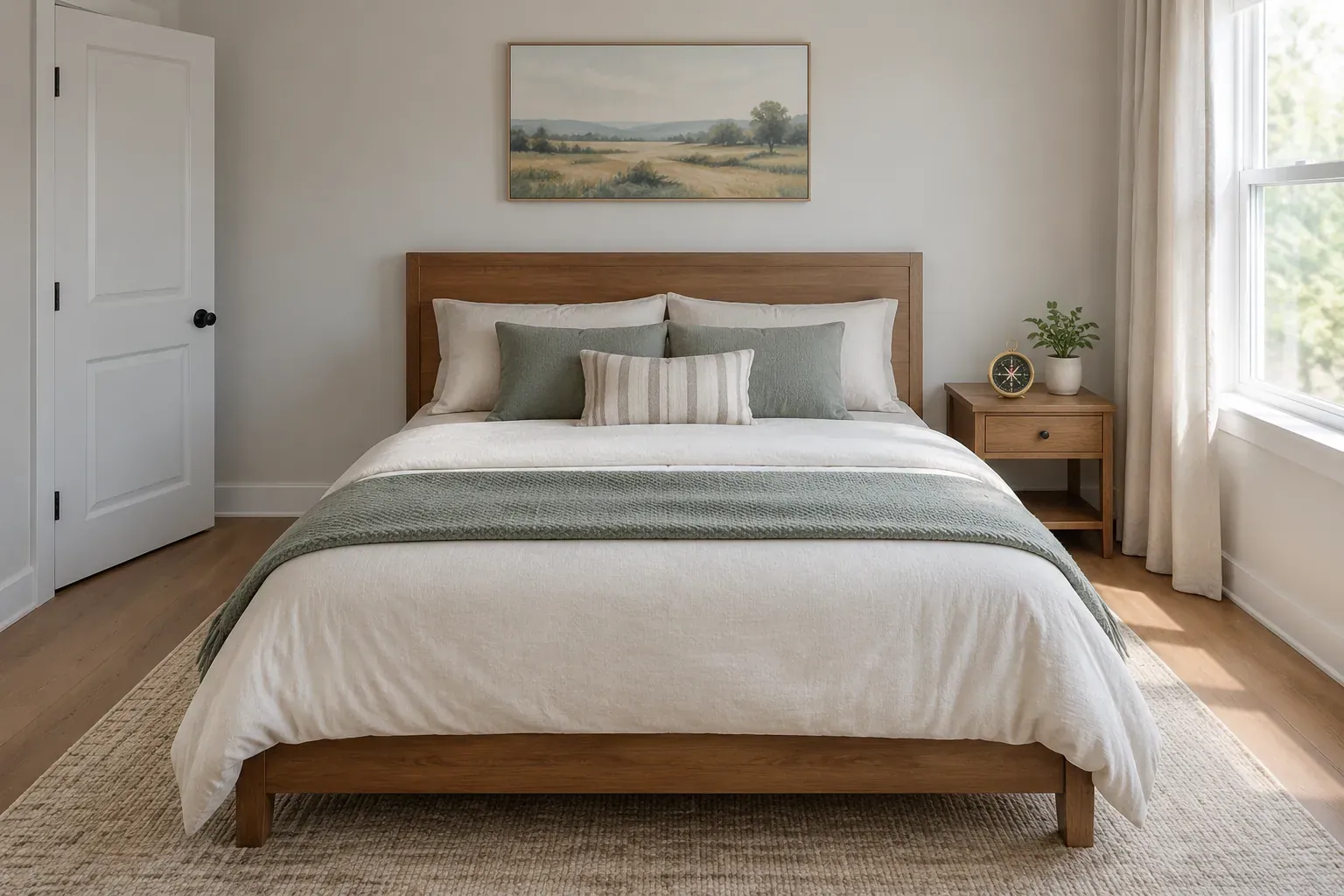
Your bed direction is the compass heading from the crown of your head toward the headboard wall—the way the top of your head points when you lie down. If the headboard sits on the north wall, your sleeping head direction is north. The bedroom door can face east while your head still points south. Mixing those two ideas is how “my room faces X” answers go wrong.
Feng shui bed orientation is the same measurement in different words. Stand (or sit) at the pillows, face the foot of the bed, and read the compass. That reading is what traditional sleeping-head advice is talking about.
Why direction charts disagree
There is no one universal “best” bed direction in feng shui; schools and popular charts often point different ways for the same person. Treat every viral tip as a system, not a law of physics.
| System people mean | What it claims | Honest limit |
|---|---|---|
| Personal Eight House / Kua (East or West group) | Four favorable and four unfavorable compass directions from birth year and gender | Partners often conflict; needs a real calculation, not a meme |
| Generic N–S–E–W meaning charts | East = growth, north = calm, south = vitality, etc. | Folklore layer; traditions disagree on the same compass point |
| “Always head east” simplifications | East brings fresh chi / restful sleep | Conflicts with personal Kua lists for many people |
| Cross-tradition sleep tips (e.g. Vastu prefer south) | One fixed best for almost everyone | Not the same system as Chinese personal directions |
Some traditional interior guidance also warns against head-to-south for magnetic-field reasons, while other popular charts praise south. That clash is the point: do not rearrange your lease around one absolute. Prefer a direction that fits a system you actually follow—or skip personalization and keep the safest wall.
Form safety first—then direction
If a “lucky” compass reading forces your bed under a window, into the door’s straight rush, or with your back to the entrance, keep the safer layout and drop the perfect degree. Form-school bedroom practice treats door awareness, staying off the doorway’s straight band, and solid support behind the head as the foundation. That commanding idea is geometry, not astrology.
In one minute, gate every candidate wall:
- From the pillows, can you see the bedroom door with a small eye turn?
- If someone walked straight in, would they walk over your feet?
- Is there a real wall (and a serious headboard) behind your head—not a window pretending to be one?
Only walls that pass (or come closest) earn a compass check. Deep command-position checklists belong in their own guide; here the job is to stop direction from outranking safety.

Survivor-wall method (tonight)
List every solid headboard wall, discard unsafe ones, then choose a direction only among the survivors. That is the whole decision—compass last, not first.
- Sketch the room — mark door, windows, closet, bathroom wall, beams.
- List solid walls you could put a headboard against.
- Strike walls that put you in the door rush, share a toilet wall at the pillow, or sit under a heavy beam/soffit on the pillow line.
- Compass each survivor — note the sleeping head direction for that wall.
- If you know your East/West group, prefer a survivor that matches a favorable direction. If you do not, pick the survivor that feels most backed and calm.
- Couples: find a shared survivor both can live with; if none, prioritize the person with greater sleep or health needs, then strengthen the room with solid headboard, equal access on both sides, and a quiet foot-of-bed buffer if the door is still close.
This is how bed direction feng shui stays practical in rentals: you are not hunting a mythical perfect degree through drywall.
How to measure sleeping head direction
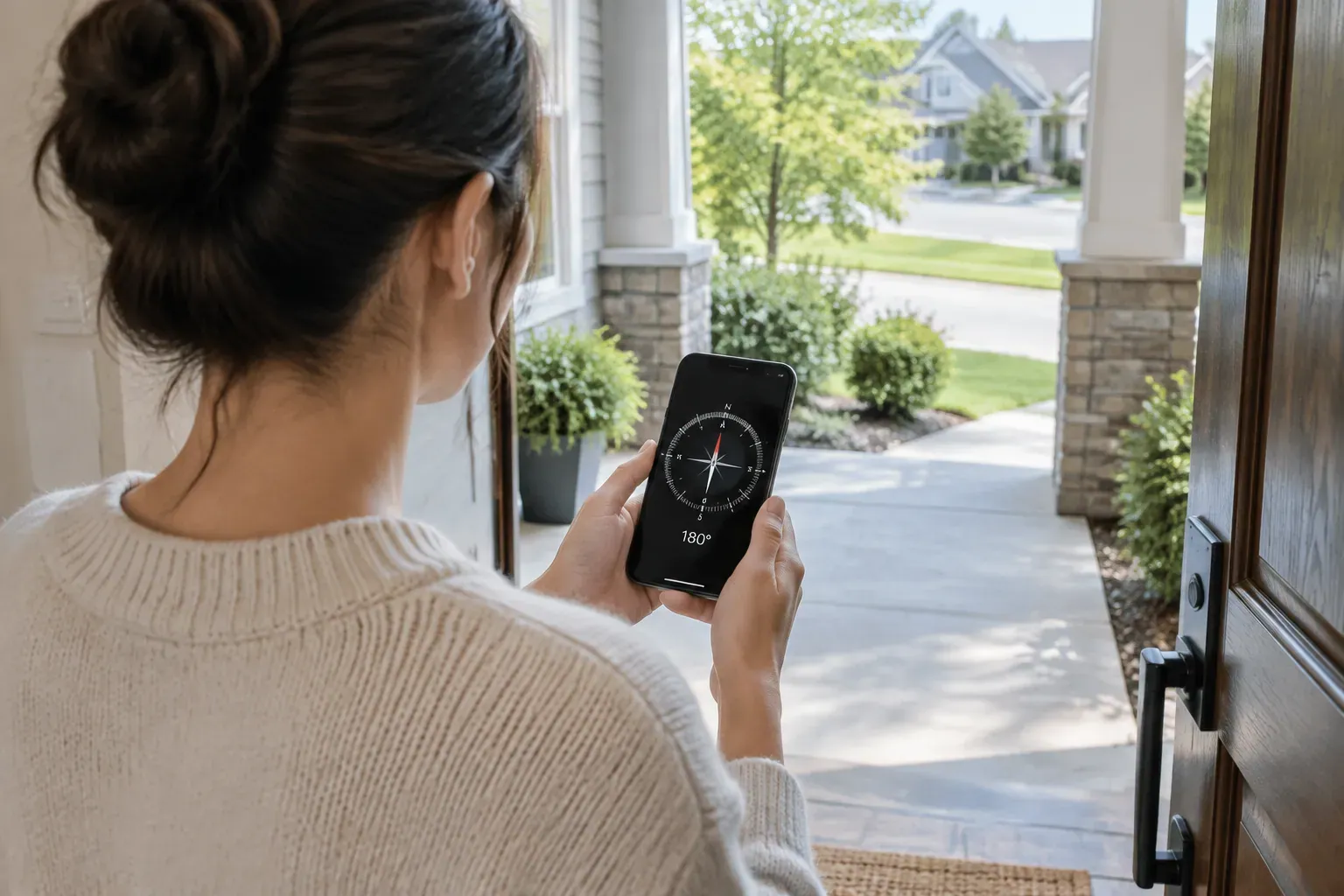
Sit where the pillows go, face the foot of the bed, and read a compass app—the heading in front of you is your sleeping head direction. Calibrate the phone away from metal frames and large speakers; step back if the needle jumps. Mark the wall (N / NE / E…) on your sketch so you stop guessing after you move furniture.

Do this after you shortlist survivor walls. Measuring a doomed window wall first only wastes an evening.
Optional direction meanings (chart, not law)
Traditional popular charts associate each compass point with a mood or life theme—use them as optional flavor after form safety, not as orders. Schools differ; if a meaning fights your survivor list, ignore the meaning.
| Head points | Often associated with (popular chart talk) |
|---|---|
| East | Growth, starts, daytime vitality |
| Southeast | Creativity, gentle momentum |
| South | Warmth, visibility, stronger yang (can feel intense) |
| Southwest | Partnership, settling |
| West | Comfort, completion |
| Northwest | Support, mentors, steadier leadership tone |
| North | Quieter rest / career stillness (some say too still) |
| Northeast | Study, clarity (sometimes labeled awkward for sleep) |
A feng shui bed direction chart is useful when you already have two safe walls and want a tie-breaker. It is not useful when it tells you to sleep under glass for “wealth.”
FAQ
What is the best bed direction in feng shui?
The best workable answer is a form-safe wall whose compass heading matches a personal favorable direction if you use that system—and a calm solid wall if you do not. There is no single compass point that wins for every birth year.
Which way should your bed never face?
Prioritize “never” for layout, not folklore: feet aimed straight out the open doorway, head on a toilet wall, or pillow under a pressing beam when another wall exists. Compass “nevers” change by school, so treat them as secondary.
Which direction is best for wealth?
Online wealth tips often pick a cardinal at random. Classical personal systems assign wealth-related directions by chart, not by a blog slogan. Fix the door-and-wall safety first; chase wealth sectors elsewhere in the home if you work with a full reading.
Is bed orientation the same as which way the bed “faces”?
In careful language, orientation/head direction is the crown compass point. Casual English sometimes says “face” for the foot of the bed. Say which end you mean, or you will rotate the mattress the wrong way.
What if partners need opposite directions?
Common. Keep a form-safe shared wall; prefer the least-harm direction on that wall, or prioritize the partner with greater sleep stress. Matching nightstands and clear space on both sides still help even when the compass is a compromise.
Tonight’s move
Pick one survivor wall, move the bed onto it, and sleep there three nights before you judge the compass. When you want the whole bedroom scored—not only head direction—open the bedroom feng shui layout guide and walk the room with a plan you can actually keep.