Feng Shui Bed Facing East: Growth Tropes vs Form Checks

Is a feng shui bed facing east good? Define head-east, separate sunrise/growth talk from form checks, and decide when east helps—or when the door wins.

A feng shui bed facing east means the crown of your head points east while you sleep—usually with the headboard on the east wall—not that your feet “march toward sunrise.” Searches for bed facing east feng shui ask the same job: is that orientation a growth boost, a personal match, or a meme that fights your room?
This page stays on east. It does not pretend east is always best, and it does not recycle north’s “calm vs magnetic” arguments or south’s “wealth and fire” marketing. You get a clear definition, the popular sunrise story, a form-first gate, honest school splits, then a tonight test.
What “bed facing east” means
In careful language, bed facing east = head toward east; feet toward west. Sit where the pillows go, face the foot of the bed, and read a compass: if that reading is roughly west, your sleeping head direction is east.
People mix three different ideas:
- Sleeping head direction — where the top of your head points (this article).
- Which way the bedroom door opens — room entry, not pillow compass.
- Which way the foot of the bed “faces” — casual English that reverses the answer.
If an online tip never says which end it means, do not rotate the mattress yet.
Why people praise east (sunrise and growth tropes)
Popular charts link east with sunrise, fresh starts, daytime vitality, study focus, and “young” growth energy. Traditional interior notes in the same spirit sometimes say east and southeast rooms suit younger people or new chapters, while quieter directions suit other life stages. That is one school’s mood map—not a lab result and not a promise that rotating the bed will promote you.
Treat the tropes as optional flavor after the room is safe:
- Sunrise symbolism → “new day” language in lifestyle guides
- Wood / growth talk → expansion, family, learning themes in popular five-element charts
- Student / starter advice → east as a tie-breaker when two walls are already form-safe
If you only want deeper rest and the east wall puts your feet in the doorway, skip the poetry.
Form checks beat a lucky compass
If the only east headboard wall fails door view, door-lane, or solid-backing checks, keep the safer layout and drop perfect east. Layout teaching about the commanding idea is geometry: you can see who enters, you are not lying in the door’s straight rush, and something solid has your back.
Run the east wall through three questions before you buy the sunrise story:
- From the pillows, can you see the bedroom door with a small eye turn?
- If someone walked straight in, would they walk over your feet or mid-mattress?
- Is there a real wall behind the head—not a full window pretending to be support?
Pass all three and east is allowed to compete. Fail any one and east is a compromised candidate, no matter how pretty the growth metaphor sounds.

Common east-wall fails: window behind the pillows, closet door opening at your shoulder, ensuite door aimed at the bed, or the only “east” wall sitting inside the entry lane. Shift sideways off the lane when you can; a tall solid headboard plus closed heavy curtains only softens a window back—they do not erase a coffin-line doorway.
School differences (be honest)
There is no single classical rule that “everyone should sleep head-east.” Systems disagree on purpose.
| Toolkit people mix online | What it usually says about east | Honest limit |
|---|---|---|
| Popular N–S–E–W meaning charts | East ≈ growth, starts, vitality | Folklore layer; easy to overclaim |
| Eight Mansions / personal Kua (East vs West group) | East often favorable for East-group numbers; can be listed unfavorable for West-group | Needs a real calculation; partners conflict |
| Form / command-position practice | Door and wall geometry first | Direction is secondary when they fight |
| Vastu-style sleep tips (often blended into FS articles) | Head east or south commonly preferred | Different tradition; anti-north stories are not “feng shui law” |
Some beginner books simply say head-east for restful chi. Other classical personal systems will disagree for half the population. Your job is to name which toolkit you are using—or to skip personalization and keep the safest wall.
East vs north vs south (do not mix the memes)
East is not north’s calm debate and not south’s wealth slogan. Keeping the tropes separate stops you from “fixing” three sibling articles into one confused mattress spin.
| Head points | Common online story | What this page cares about |
|---|---|---|
| East | Sunrise, growth, starters, study energy | Try it when form-safe; watch morning glare |
| North | Deep rest / career stillness—or magnetic warnings in other systems | Different controversy; do not import “never north” as an east rule |
| South | Warmth, visibility, “wealth/fire” marketing—or magnetic caution in some books | Different controversy; Spruce-style guides may prefer south overall |
If you are choosing among three safe walls, use your personal system or a calm preference. If only one wall is safe, that wall wins—even if the compass is boring.
How to try an east headboard tonight
Measure first, move second, sleep-test third—especially for morning light.
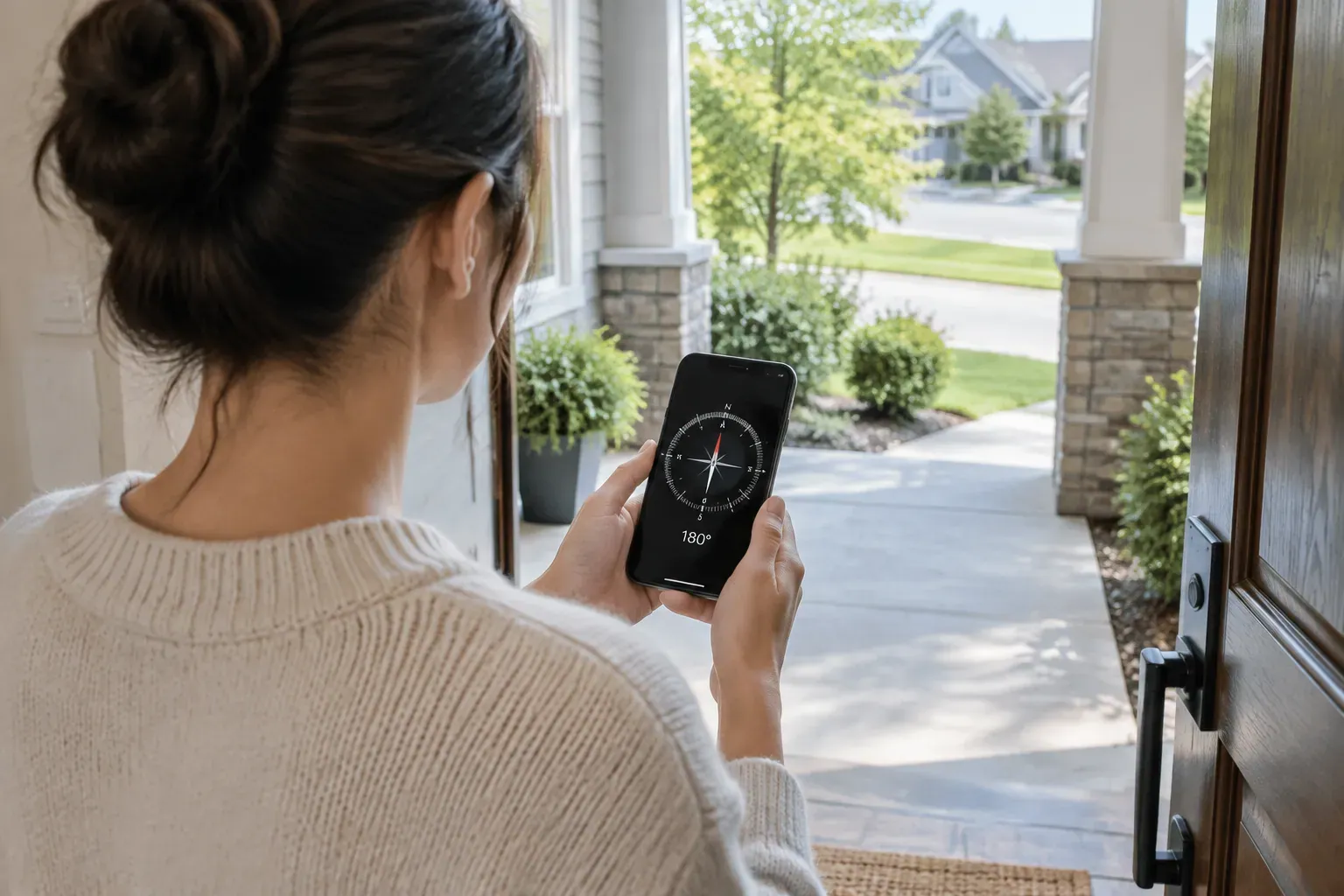
- Find true east with a compass app away from metal bed frames. Mark the east wall on a quick sketch.
- Gate the wall with the three form checks. If it fails, stop or shift off the door band before chasing degrees.
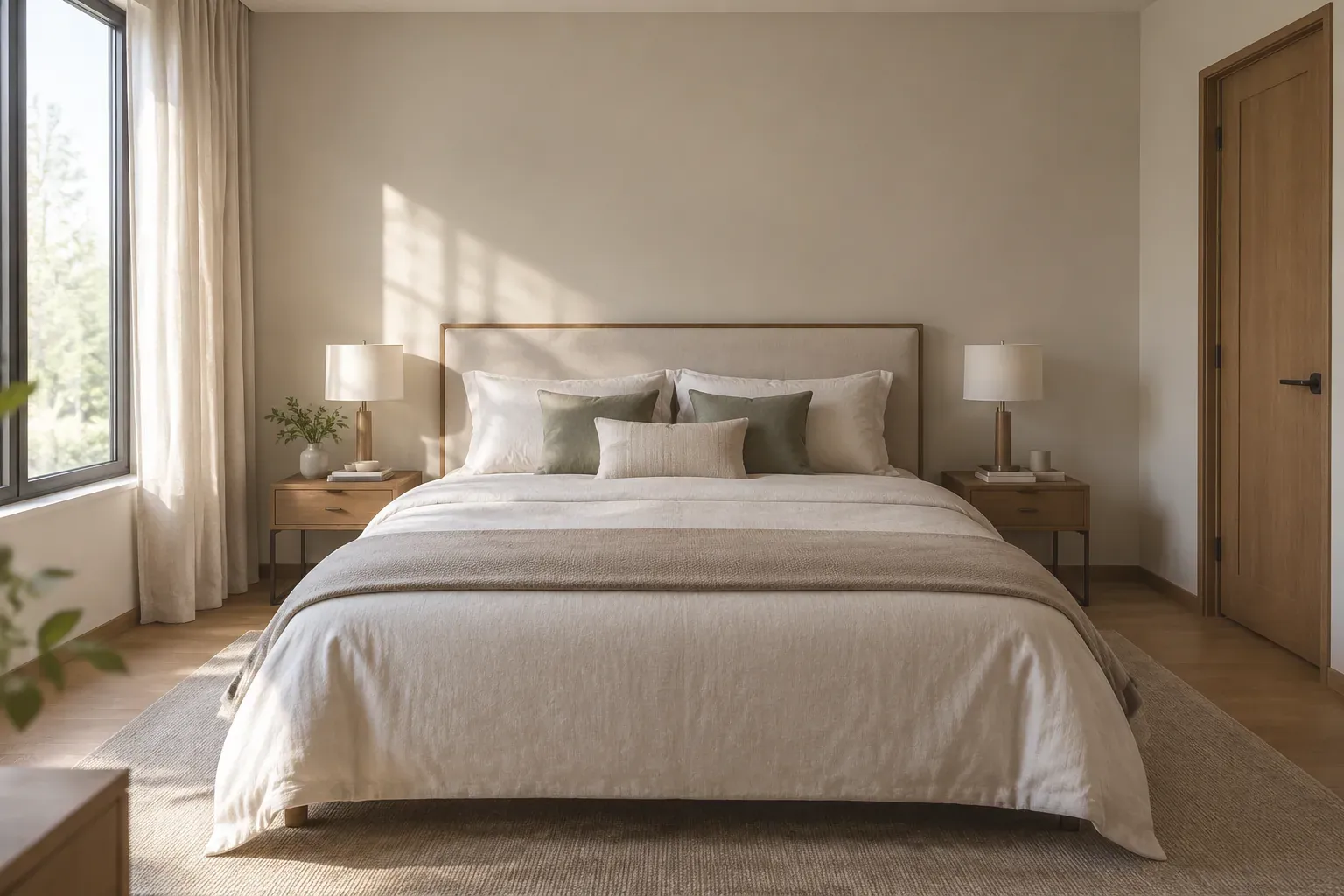
- Place the headboard on the surviving east (or near-east) wall. Leave walk space on both sides when the room allows.
- Light check — east can mean earlier wake-ups. Use blackout curtains if dawn hits the pillow; note sleep for three nights (ease of falling asleep, night waking, morning mood).
- Personal direction optional — if you already know you are East-group and east is listed favorable, this is a bonus, not a requirement. If you are West-group and east is listed weak, prefer another form-safe survivor when you have one.

Couples: share one form-safe wall. If only one partner “needs” east, prioritize the person with worse sleep stress, then keep matching access on both sides of the bed so the compromise still feels fair.
FAQ
Is a feng shui bed facing east always good?
No. It is a popular growth/sunrise orientation and may match some personal charts, but it is not universal. Form-safe placement still comes first.
Does “facing east” mean my head or my feet?
Head. Crown toward east; feet toward west. If a tip is ambiguous, ask which end before you move furniture.
Is east best for wealth?
Online wealth tips often pick a cardinal at random. Classical personal systems assign wealth-related directions by chart. Do not wreck a safe layout for a slogan.
What if the east wall is all window?
Prefer another solid wall. If you must use it, a tall sturdy headboard and closed heavy curtains are a buffer—not a full substitute for masonry behind you.
What if east puts me in line with the door?
Prioritize getting out of the door’s straight band. A slightly imperfect compass on a safe wall beats textbook east in the doorway lane.
Tonight’s move
If the east wall passes the three form checks, put the headboard there and sleep three nights before you judge the tropes. If it fails, keep the safer wall and let sunrise symbolism wait. When you want the whole bedroom scored—not only head-east—open the bedroom feng shui layout guide and walk a plan you can actually keep.