Feng Shui Bedroom Layouts: 5 Patterns & When They Fit

Match feng shui bedroom layouts to your floor plan—command diagonal, long-wall, small-room, window-wall, and door-lane fixes—with clear fit conditions.

Feng shui bedroom layouts are floor-plan patterns for where the bed sits relative to the door, walls, and windows—not a laundry list of décor rules. Searches for bedroom feng shui layout, best feng shui bedroom layout, or bed feng shui layout are usually asking the same job: which arrangement fits this room shape?
This guide stays layout-first. You will map your geometry, match one of five patterns, and know when a “textbook” setup is the wrong trade for a small or window-heavy room.
What a good feng shui bedroom layout actually means
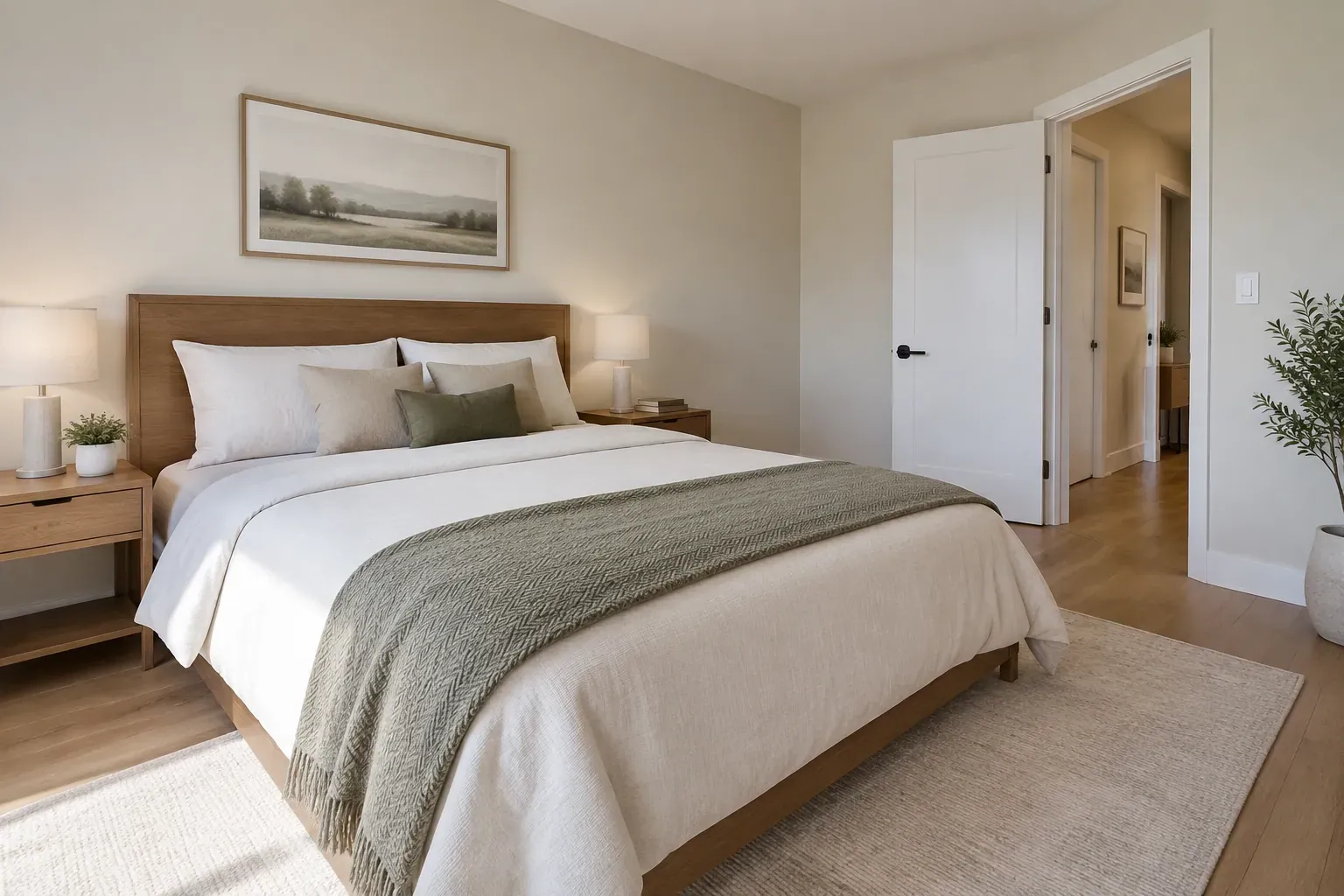
A good feng shui bedroom layout puts your head against solid support, lets you see the door from the pillows, keeps the bed out of the doorway’s straight rush, and leaves at least one clear walking path. That is the practical meaning of a good bedroom feng shui layout—whether the room is a master suite or a rental box.
Traditional teaching and modern “does this feel safe?” checks land on the same geometry. Lucky compass directions are a separate tool; tonight, fix the map of the room first.
Pick a pattern from your floor plan (two-minute map)
Before you buy furniture, sketch four facts: door lane, solid walls, windows, and the widest clear path. A feng shui for bedroom layout decision that starts with shopping usually fails.
- Stand in the doorway. Imagine the door’s width projected straight across the room—that is the “rush” band.
- Mark every full wall (no window, no closet opening) that can take a headboard.
- Note window walls and whether there is a solid pier between windows.
- Measure the longest wall you can still walk past after the bed is in.
Then choose the first pattern below that your room can honestly support. Do not force Pattern 1 if it blocks the closet every morning.
Pattern 1 — Classic command (diagonal to the door)
When it fits: a roughly rectangular room with a free solid wall that is not the door wall, and enough corner space so the bed can sit diagonally to the entrance.
This is the layout most articles mean by the best feng shui bedroom layout: headboard on a solid wall, pillows with a clear angled view of the door, feet outside the door’s straight band, and space on both sides when the width allows.
Use it when you can keep closet and bathroom doors usable without climbing over the mattress. If the only diagonal spot traps you against a radiator, skip to Pattern 2.
Pattern 2 — Long solid wall (door on the short wall)
When it fits: typical apartments where the door sits on a short wall and the long walls are the only places a queen bed can live.
Place the bed on the longest solid wall, centered enough that you still see the door with a small head turn. Keep the mattress outside the door’s projected band. Matching nightstands are nice; a clear aisle on the door side matters more.
This is still a strong bedroom feng shui layout. It is not a “failed” command position—it is the command idea adapted to a long footprint.
Pattern 3 — Small or narrow bedroom layout
When it fits: rooms where a full diagonal with two nightstands would erase the only walking path.

For a small bedroom feng shui layout, prioritize in this order: (1) solid head support, (2) door visible, (3) bed off the door lane, (4) one clear path, (5) equal sides and décor. Symmetry is last, not first.
Practical moves:
- Downsize the bed before you abandon the wall behind your head.
- Use one slim nightstand or a wall sconce on the tight side.
- One side against the wall is an honest compromise for a single sleeper when both sides would block the door.
- Prefer closed storage over open piles; keep under-bed space as clear as you can.
A cramped “perfect diagonal” that forces you to edge sideways to the closet is worse feng shui than a calm long-wall setup.
Pattern 4 — Window-wall rooms
When it fits: bedrooms where glass eats most of the long walls, common in modern condos.

Prefer a solid pier between windows for the headboard so you keep backing without abandoning daylight. If the only option puts the head under glass, treat it as a compromise: a tall, sturdy headboard plus curtains you close at night so the bed does not feel open to the street.
Avoid aiming feet straight at a large window the way you avoid aiming feet straight at the door—both feel like an open lane. Keep the dresser or desk off the primary door path so the room still “reads” as rest, not traffic.
Pattern 5 — Awkward door lanes and multi-door rooms
When it fits: beds that currently line up with the bedroom door, an en-suite door, or a short hallway of facing doors.
Shift the bed sideways until the door’s straight band misses your torso and feet. Traditional layout teaching treats a bed aligned with any door as a problem configuration—including a bathroom door in the same room. Move first; décor later.
If the room is too locked to shift, a solid footboard or low trunk at the foot is a last-resort visual break—not as good as leaving the lane, but better than pretending the line does not exist. Keep the bedroom door able to open fully; a blocked swing creates daily friction that no pillow color fixes.
Layout moves that matter less than the bed
Once the bed pattern is right, these finish the feng shui bedrooms layout without turning this page into a full rules encyclopedia:
- Pair nightstands when both sides are walkable.
- Keep dressers from pinching the door open zone.
- Place mirrors so they do not reflect the sleeper.
- If a desk must stay, screen or curtain it so sleep and work do not share one sightline.
For deeper command-position checks, full bedroom rules, or a step-by-step room reset, use those companion guides when you need them. Here the job is choosing a best bedroom layout feng shui pattern that matches the walls you actually have.
FAQ
What is the best feng shui bedroom layout?
The best layout is the one that gives you solid head support, a view of the door, and a bed outside the door’s straight path—usually a diagonal command setup, or a long-wall version when the room is narrow.
How do I feng shui a small bedroom layout?
Keep the hierarchy short: wall behind the head, see the door, leave the door lane, protect one walking path. Slim furniture beats forcing two bulky nightstands.
Is a bed facing the door bad?
A bed in the door’s straight line is the classic problem. Seeing the door from an angle is the goal; lining feet up with the opening is what to fix.
Can the bed go under a window?
It is weaker support than a solid wall. If you must, use a tall headboard and close curtains at night so the head is not “open” to the glass.
Can I keep a desk in the bedroom?
Prefer another room. If you cannot, place it away from the bed’s sightline and close it down at night so the layout still reads as rest.
What to do tonight
Walk the doorway, mark the rush band, and pick Pattern 1–5 that your solid walls can support. Move the bed first; styling can wait. When you want a fuller bedroom plan—colors, furniture, and room-level checks—open the bedroom feng shui design guide and compare it to the layout you just chose.