Feng Shui Colors for Bedroom: Restful Palettes Guide

Choose feng shui colors for the bedroom that stay calm at night—warm neutrals, soft sage, dusty blue—plus five-element caveats without lucky-paint myths.

Feng shui colors for bedroom spaces are soft, quiet hues that help the room feel ready for rest—not a single “lucky” paint code that fixes money, health, or relationships by itself. Searches for bedroom colors feng shui, feng shui color for bedroom, or feng shui best bedroom colors usually want the same practical answer: which walls and bedding stay calm at night, and how the five elements fit without turning color into a superstition checklist.
This guide stays on atmosphere and palette. Bed placement and door geometry matter for a complete bedroom, but here the job is color you can choose tonight—especially if you rent and can only change textiles.
What “feng shui bedroom colors” actually means
In plain terms: feng shui bedroom colors are restful, mostly muted tones that keep the sleep room quieter than the rest of the home. Traditional teaching treats the bedroom as a yin space—meant for recovery, intimacy, and quieter evenings—so bright, busy, or highly stimulating schemes work against the room’s job.
Online lists often sound absolute (“always paint blue,” “never use white”). A clearer rule is: pick colors you can live with after sunset, keep large surfaces soft, and treat louder hues as accents. Personal taste still counts; a “recommended” shade you hate will not feel supportive when you wake up next to it every day.
Start with rest, not a wish list
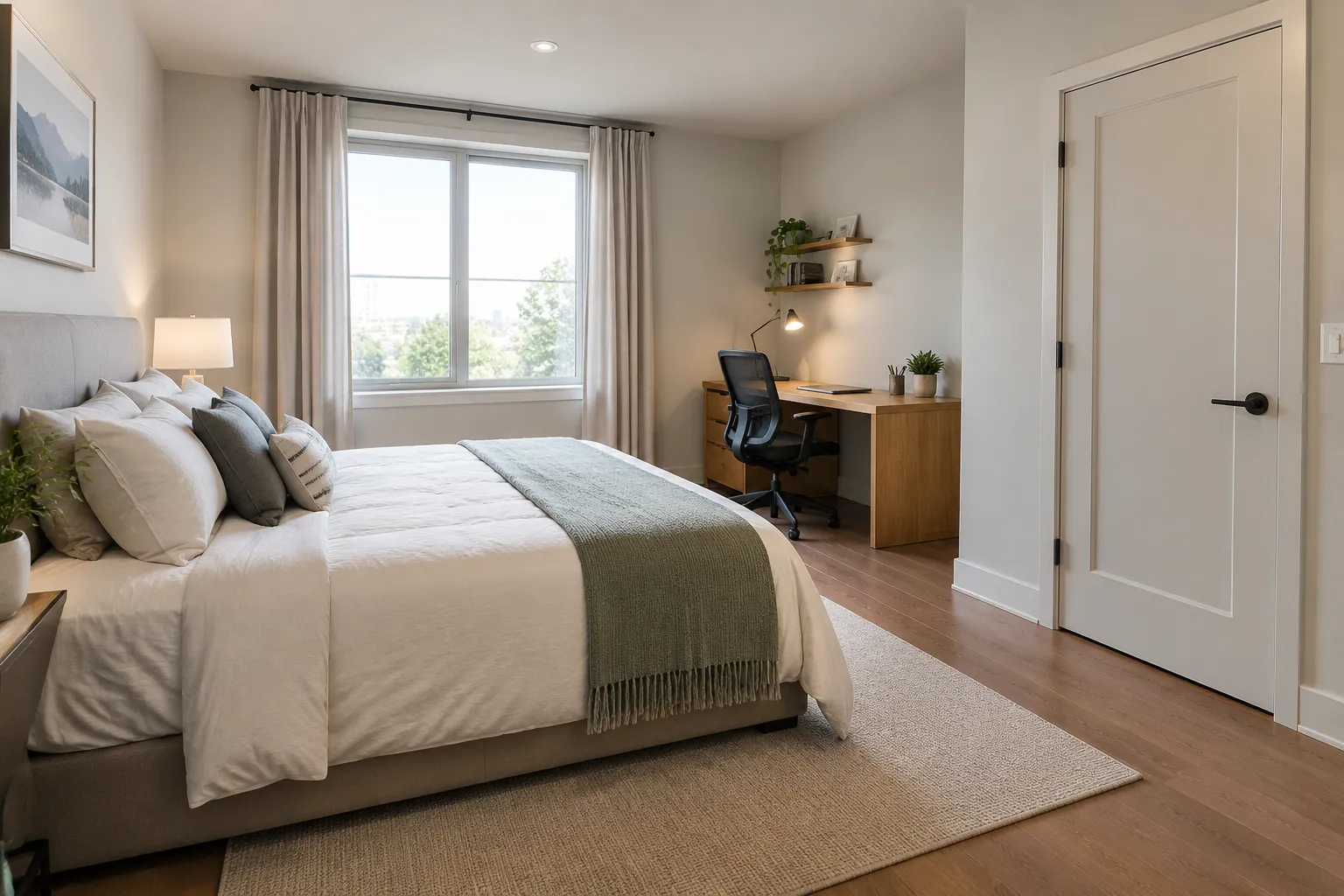
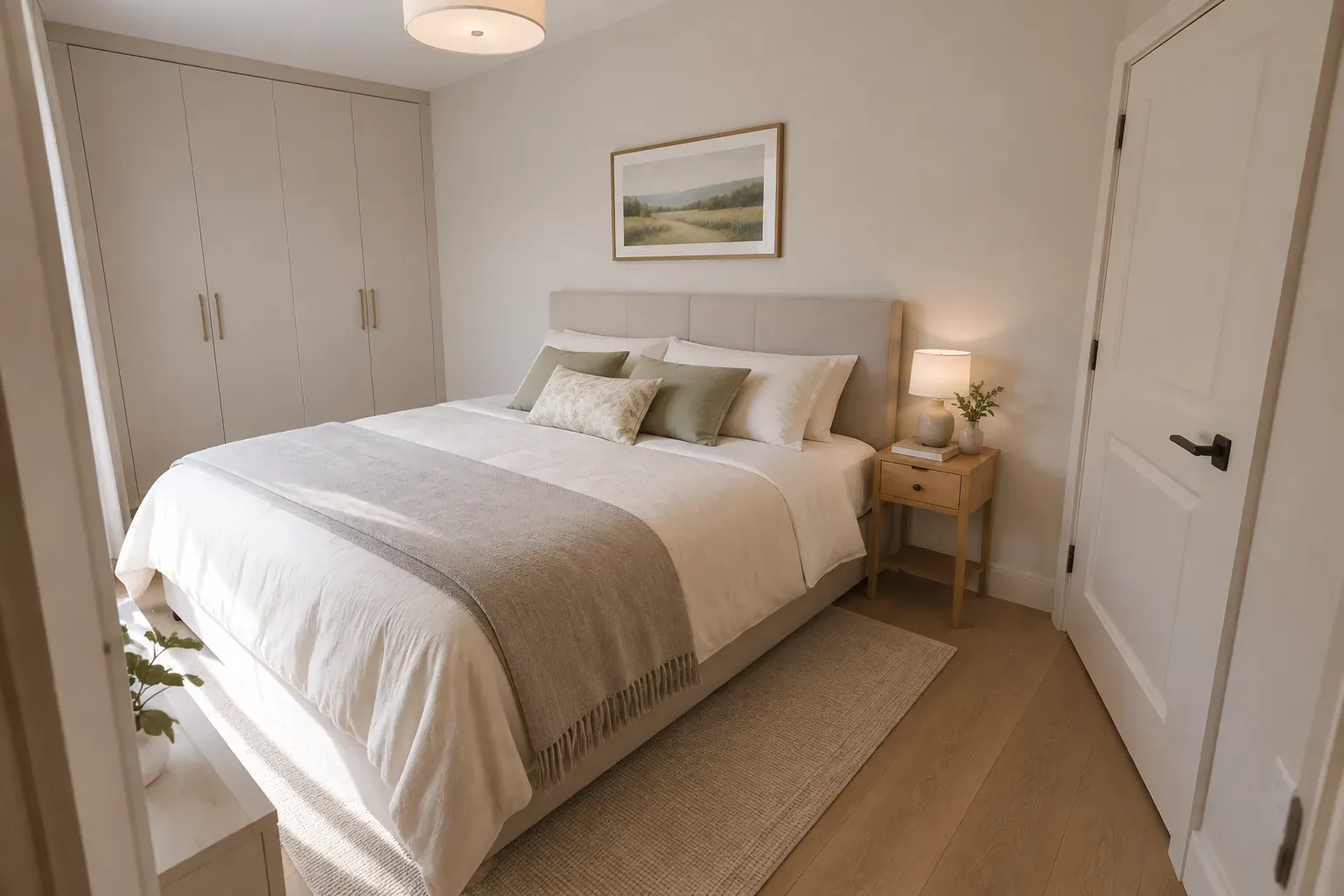
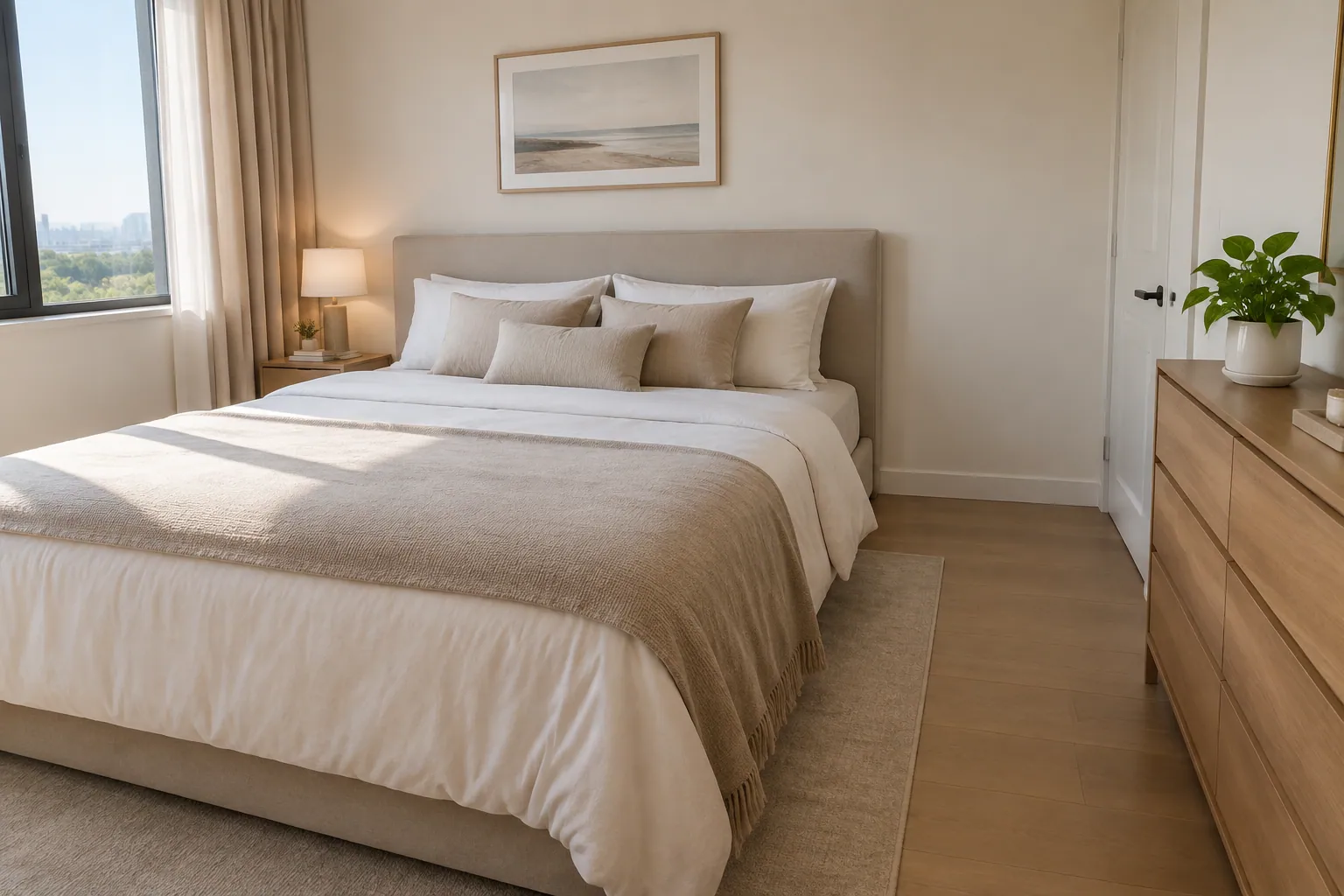
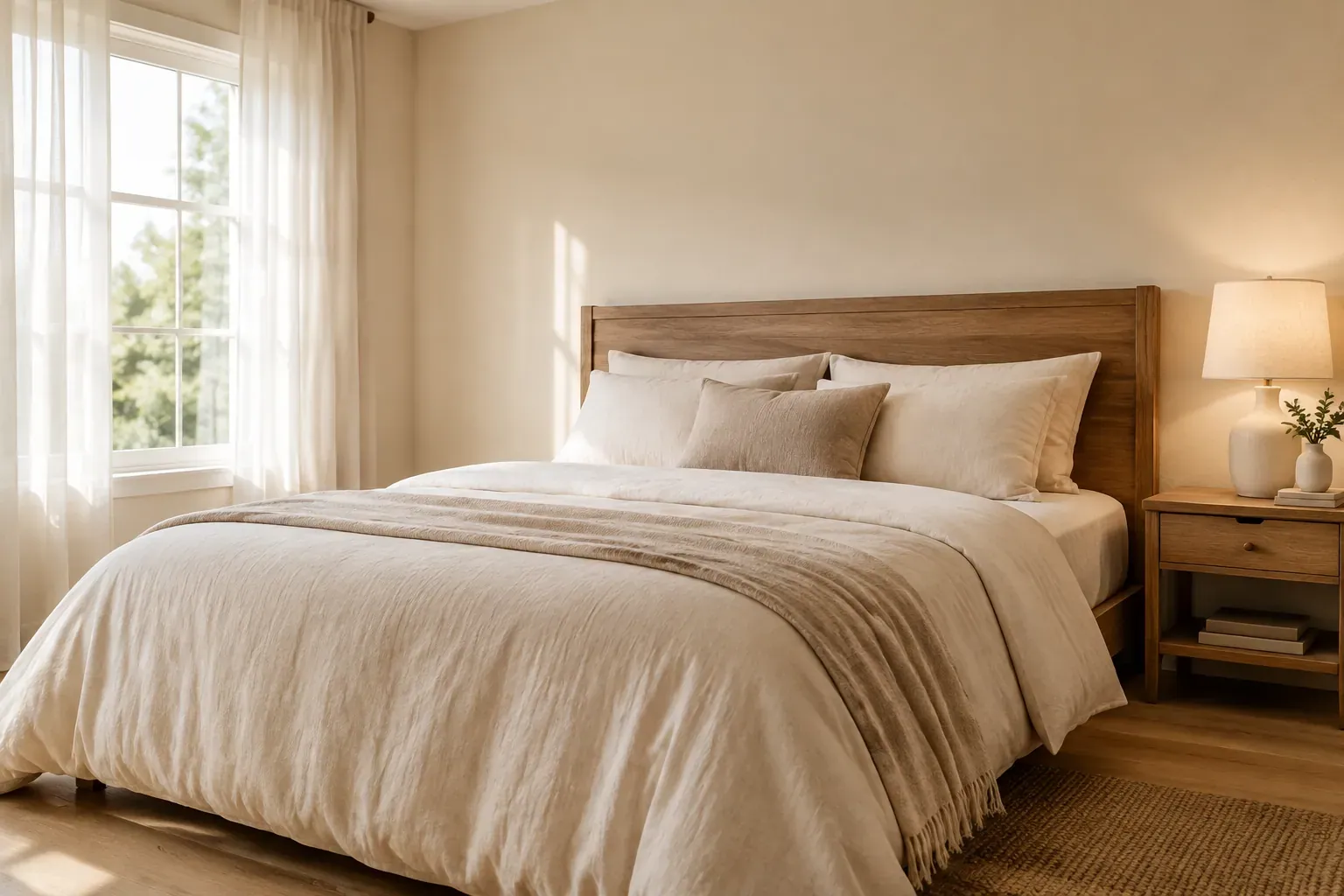
The best first filter for bedroom colors feng shui is rest: if a color wakes the room up, it is the wrong lead color—even if a blog calls it lucky. Warm beige, soft cream, mushroom taupe, gentle sage, and dusty blue show up again and again because they behave like background, not like a spotlight.
Save bagua-style intentions (romance pink, “wealth” purple, and similar) for smaller layers after the base feels calm. Fire-forward reds and hot oranges can signal warmth in tiny doses; as full-wall themes they often read as yang—active, chatty, hard to settle. That is a dose problem, not a moral rule about the color red.
Best colors for bedroom feng shui (starting set)
The most reliable feng shui best bedroom colors for everyday use are warm neutrals, soft sage or olive, dusty blue, and gentle blush used carefully. Use the table as a starting kit, then adjust for your light and furniture.
| Direction | Example hues | Best as | Keep in mind |
|---|---|---|---|
| Warm neutrals | Cream, warm beige, oat, mushroom, taupe | Walls, large rugs | Easiest night-friendly base |
| Soft wood greens | Sage, soft olive, muted teal-green | Accent wall, drapery, plants | Restorative without shouting |
| Quiet blues | Dusty blue, misty blue-gray | Bedding, one cooler field | Prefer muted over icy or neon |
| Soft romance | Blush, peach, clay rose | Pillows, art, small textiles | Warmth without a red flood |
| Clear metal lights | Warm white, soft ivory, light gray | Trim, sheets, clarity | Soften stark pure white if nights feel harsh |
If you only change one feng shui color for bedroom surfaces this month, change the bedding and pillow layer first. You sleep closest to that color, and renters can reverse it without paint.

Five elements: a map, not a medical chart
Five-element color talk is a dosing map—Wood, Fire, Earth, Metal, Water—not a promise that paint will heal sleep problems or guarantee wealth. Common associations used in home design:
| Element | Typical colors | Bedroom-friendly use |
|---|---|---|
| Earth | Beige, sand, clay, soft ochre, warm brown | Strong candidate for walls and grounding layers |
| Wood | Greens, some teals, natural wood | Soft greens for calm growth mood |
| Metal | White, cream, light gray, soft pastels | Clarity; add texture so the room does not feel sharp |
| Water | Blues, blue-gray, charcoal, black | Muted blue can soothe; heavy ink/black works better as accents |
| Fire | Red, bright orange, hot pink, strong purple | Small accents for warmth or romance—rarely whole walls |
Use the map to decide how much of a family you want, not to chase a lucky hex code. If Earth and soft Wood carry the room, Fire can show up as a lamp glow or one clay pillow without rewriting the whole palette.
Colors to use carefully (or skip as the main story)
High-saturation red, orange, neon, and busy multi-color wall treatments are the usual colors to avoid as the bedroom’s main story. Traditional residential notes also warn against gaudy, “everything at once” schemes and busy patterned paint that keep the eye jumping.
Other caution flags:
- Stark icy white — can feel cold and clinical after dark; warm white or cream is often easier.
- Large fields of hard black or deep navy — meditative for some, heavy or cooling for others; better as frames, lamps, or a single textile.
- Strong high-contrast combos (bright white + hard black + hot red) — often leave the room visually “awake.”

If you love a bold color, keep it on art, a throw, or the inside of a closet door you do not stare at while falling asleep.
Give each color a job (walls, bed, accents)
Quiet walls, a slightly deeper bed layer, and small accents beat three competing wall colors. A simple ratio many designers and feng shui-friendly guides land on:
- About 70% base — warm beige, cream, or warm white on walls and broad surfaces.
- About 20% support — taupe, mushroom, dusty blue, or sage on headboard, duvet, or drapes.
- About 10% accent — clay, wood, blush, or one nature note in pillows or art.
That structure answers “best colors for bedroom feng shui” without forcing every wall to carry a different bagua wish. North-facing or dim rooms usually prefer warmer undertones; very bright south- or west-facing rooms can take a quieter cooler note without going icy. Test swatches morning, evening, and under your real bedside lamps before you buy gallons of paint.
Tonight: three color moves
Tonight, pick one restful base, one deeper bed layer, and one small accent—then stop. Pull loud patterns or neon textiles out of the sleep sightline. If you cannot paint, swap the duvet cover and pillowcases to a warm neutral or soft sage/dusty blue.
When the palette feels quieter and you still want the whole bedroom checked—walls, doors, and layout together—open the bedroom feng shui check and walk the room with a plan, not a lucky-color rumor.
FAQ
What is the best feng shui color for a bedroom?
There is no single best feng shui color for bedroom walls for everyone. Warm beige, soft cream, taupe, dusty blue, and soft sage are the safest shared starting points because they stay calm at night.
What are the best colors for bedroom feng shui if I want better rest?
Lead with warm neutrals or muted sage/blue, keep fire-strong reds small, and judge the room after sunset. Rest is the filter; marketing names for “lucky” paint are not.
Are blue bedroom colors good feng shui?
Muted dusty or misty blues can feel calm. Bright icy blue or heavy navy over every wall can feel cold or heavy—balance with warm wood, cream, or soft textiles.
Should I paint for romance with pink or red?
Soft blush or peach works well in bedding and accents. Strong red is better as a small Fire accent than as four walls if sleep is the priority.
Do five-element colors replace personal taste?
No. Element maps help you dose stimulation. If a recommended hue stresses you, choose another restful tone in the same family—or a warm neutral base.
Finish one surface job tonight: quieter bedding, or a tested swatch on the wall you see from the pillows. Sleep in that quieter field, notice how the room feels at midnight, and use the bedroom layout and design check when you are ready to line color up with the rest of the room—not when you are hunting a miracle pigment.