Feng shui couch placement: host seat before the TV wall

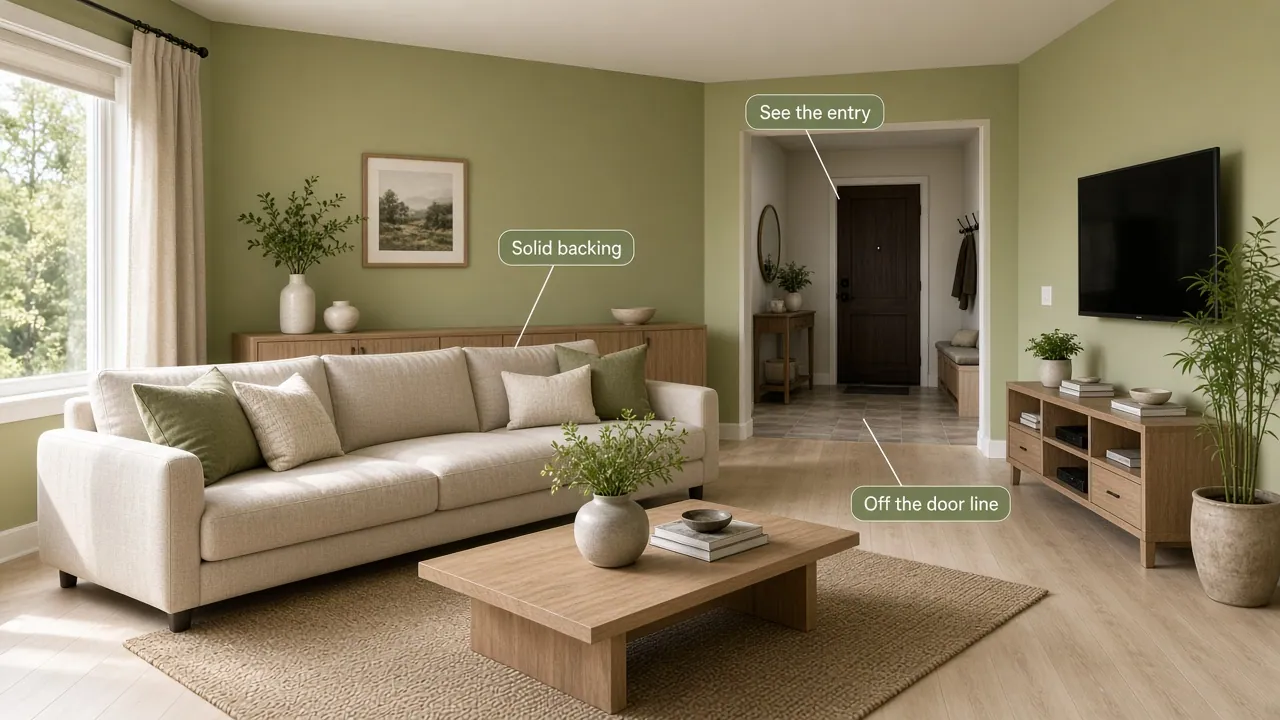
Feng shui couch placement is host-seat geometry—see the living entry, solid backing, off the door rush. Fix the TV-wall trap before colors or compass.
Feng shui couch placement is the US search for one living-room job: where the longest seat—the couch—sits relative to the entry, the backing wall, and the TV. Form school does not treat “couch” as a different animal from a sofa. It treats it as the host seat. If sitters cannot see who arrives, or they sit in the door’s dart with only air behind the cushions, throw pillows will not make the room feel held.
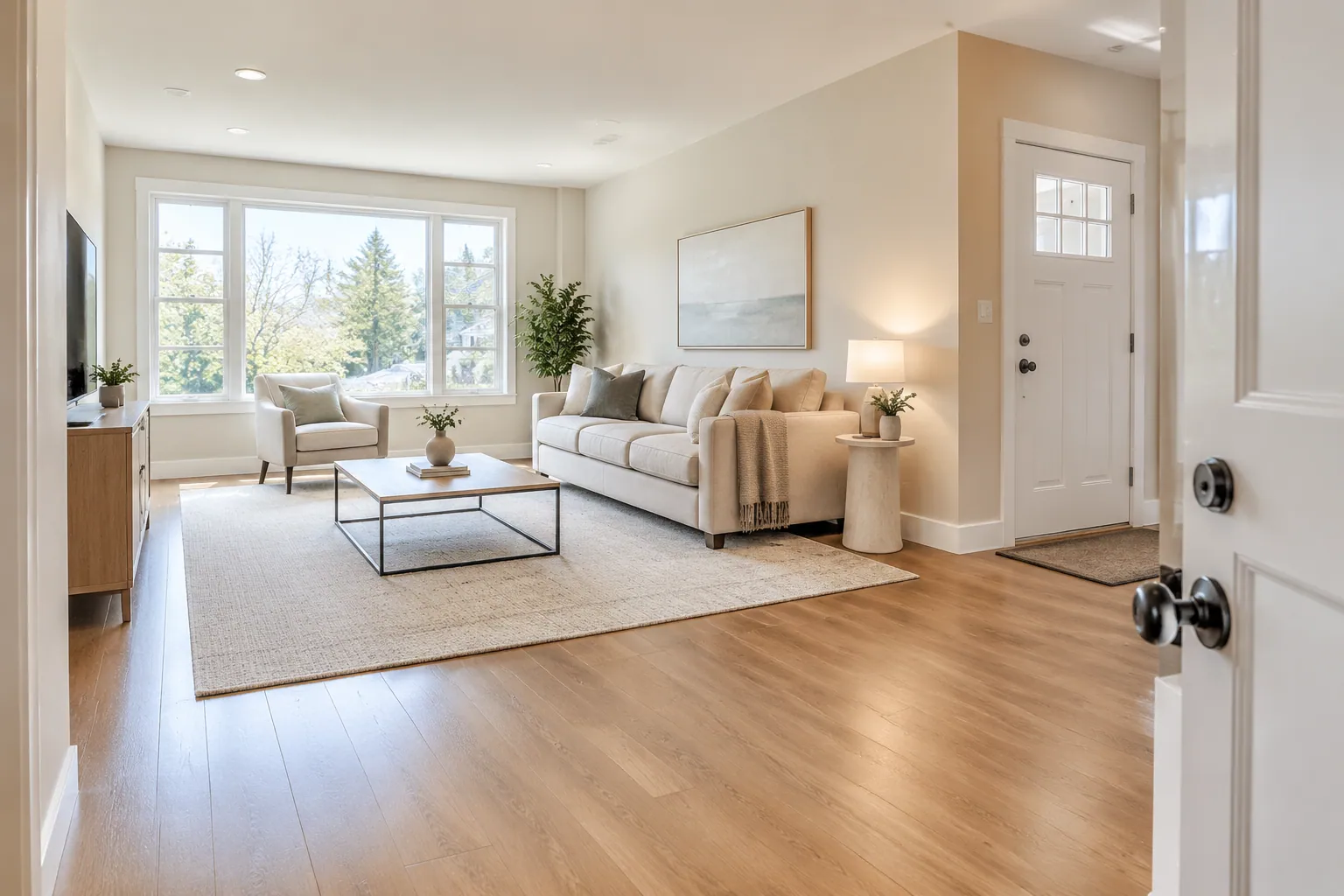
American living rooms usually fail in one pattern: the TV claims the only solid wall, and the couch floats with its back to the foyer. This page stays on that host-seat geometry. Whole-room gathering notes live on the living room hub. The mouth of the house is entryway feng shui. Score the plan on Analyze.
Sit the host seat, then aim the screen
Classical interior teaching calls the living room the heart of the house: guests land here first, and the main sofa is the harbor they land in. Traditional sofa rules want a U or harbor conversation shape, a solid wall behind the cushions, and no direct line from the door through the seat. The combination cabinet reads as mountain; the low sofa reads as water—you want both, not a screen that stole the mountain wall.
Compass “face the couch south” and a one-inch gap off the plaster are optional polish. They do not rescue a startled host.

Three checks from the middle cushion
No compass. Sit where guests actually sit:
- Can you see the living entry without a hard twist?
- Does the open-door centerline cut the middle of the cushions (or your mid-body)?
- Is there a mountain behind you—a solid wall, or a continuous console / low cabinet that reads as a back?
Fail #1 or answer “yes” to #2 → rotate or slide before you shop earth-tone slipcovers. Fail #3 → build backing; do not call a skinny open shelf a mountain.
This is the same command idea as a bed or desk: diagonal awareness of the door, not the coffin line. Related: desk placement.
The TV-wall trap (why US rooms feel “off”)
A TV wants a blank wall. A couch wants that wall as backing. When the room only has one good wall, people usually give it to the screen and sit in the rush. Living-room teaching also wants electronics away from the seated body—not a reason to aim every neck away from the door.
Ranked moves:
- Swap jobs if the plan allows: couch on the solid interior wall, TV on a lesser wall or slightly offset so the host still glances the entry.
- Angle the host run if the TV wall is locked: sitters keep a door glimpse; the chaise or a chair takes the worse angle.
- Construct a mountain behind a floating couch—console, credenza, or low bookcase, continuous, not a pair of floating nightstands.
A mirror on the opposite wall so you can “see the door in the glass” is a last-resort awareness trick in some Western lists. Traditional sofa teaching is blunter: no mirror behind the sofa. Fix the seat first; glass is not a substitute mountain. Mirror hygiene: feng shui mirrors.
Window behind the couch
Search pages often treat this as a yes-or-no curse. Form school treats it as a weak mountain.
The backing wall opposite the entry is the classical 靠山. Interior manuals do not want that wall to be all window or balcony if you have a choice—the “life source” wall should feel closed, not a glass cliff. If the window wall is the only long run:
- Keep a substantial back (high cushions or a real sofa back, not a backless bench)
- Control draft and night glare
- Keep the entry in view; do not turn the couch into a hallway bench on the front-door dart
- Tall plants or heavier curtains are optional cues. They do not replace command
Prefer an interior wall when the room actually has one.

Sectionals, “left facing,” and the 2-2-1 shopping rule
Left- or right-facing names which side the chaise is on. It is a furniture label, not a luck formula. Put the longest back on the wall that still gives door view plus backing. Keep the chaise out of the main rush when you can. An open L that exposes both backs to the entry fails the host test twice.
The 2-2-1 rule (two-seat + two chairs + one table, or similar retail ratios) is merchandising. Traditional living-room seating often starts from a two-seat sofa plus two chairs with the table as the center of gravity—that can work after command and mountain hold. Buying the ratio will not fix a couch in the door dart.
Coffee / tea table: keep it low (not above the seated knee), reachable, not a trip bar in the rush. Sharp corners aimed at guests are the classical “arrow”; round or softened edges help. Do not delay moving the couch to hunt a perfectly round table.
Advice that sounds strict—and usually isn’t
| What you’ll hear | Better read |
|---|---|
| Leave a 1–2 inch gap so qi can circulate | Fine for baseboards; not a layout rule |
| Face the sofa south for yang sun | Daylight is good; command + mountain still first |
| Two sofas opposite each other cause “defensive” energy | Conversation facing is normal once hosts are not in the dart |
| Round table required to kill poison arrows | Soft corners help; moving the host seat helps more |
| Mirror instead of rotating | Last resort; keep glass off the sofa back |
| Beam over the couch | Real pressure—shift the seat or conceal the beam; lucky bamboo is optional theater |
Overhead lights that hover on sitters belong with the beam family: don’t sit under a visual weight.
Open plan: what counts as “the door”
If there is no swing door into the living zone, treat the main arrival into the seating—kitchen pass, stair mouth, or foyer opening—as the command door. Backs should not face that rush. Stairs that dump into the couch, or a bowling-alley path from the entry through the cushions, are the same dart in a bigger room. Pull the seating so the walk goes around the harbor, not through it.
Common questions
Is feng shui couch placement different from sofa placement? Same physics. Couch is the usual US word for the same host seat; the TV-wall conflict is the part that actually needs a move.
Is a couch in front of a window bad? Weak mountain, not a curse. Substantial back, draft control, entry still in view—prefer a real wall when you have one.
Should the sofa face the window or away? Face the entry, not the glass. Side light is kinder than a backless window cliff or a glare wall in every face.
How do I know left vs right facing? Choose the chaise that keeps the long back on the mountain wall and out of the rush—not a compass lucky side.
Back of the sofa toward the entry? Classic fail. Rotate, swap with the TV wall, or add a real console mountain and re-angle so the door is not staring at shoulder blades.
Close
Tonight, sit in the middle of the couch. Can you see the doorway? Is there a wall—or a continuous cabinet—behind your back? Put the couch on a real wall first, then decide where the TV goes. For the whole room, use the living room guide; to check your own plan, open Analyze. Once the main seat feels backed and aware of the door, the remote can wait.