Feng Shui for Doors: Hinges, Thresholds & Bedroom Basics

Feng shui for doors hub: fix squeaky hinges, clear the threshold in three zones, bedroom door basics, and doorway etiquette—plus a soft next step for home design.

Feng shui for doors is less about lucky charms on the knob and more about whether every door you touch opens quietly, fully, and into a clear path. Searches for feng shui doors, feng shui door, feng shui and doors, or feng shui about doors usually want the same job: stop friction at the openings of the home.
This hub stays on the door itself—hinges, squeaks, the threshold, bedroom door basics, and doorway etiquette. Direction colors (including west) get only a short pointer; dedicated facing articles go deeper. When you want a wider home layout read, open the free Home Design Feng Shui page after your door audit.
What doors mean in feng shui
In plain terms: a door is a mouth of energy—traditional teaching treats each working door as a place where qi enters or passes between rooms, so a stuck or noisy door reads as a stuck or noisy threshold. The front door carries the most weight (sometimes called the mouth of qi for the whole house), but interior doors still regulate how movement feels room to room.
Think of hallways as paths and doors as valves. A valve that sticks, squeaks, or only opens halfway does not feel like “good vibes”—it feels like daily resistance. That is why feng shui on doors starts with hardware and clearance, not with shopping for symbols.
Fix hinges and squeaks first
Oil and tighten first: a door that groans or catches is read in feng shui as friction or stalled opportunity, and the same five-minute fix solves both the tradition’s complaint and the ordinary noise. Practitioners often liken a squeaky door to awkward communication—every entry announces strain.
Do this in order:
- Tighten loose hinge screws so the leaf hangs true.
- Lubricate the hinge pin (silicone or light hinge oil—wipe excess so dust does not cake).
- Check the latch and strike plate so the door does not slam or need a hip check.
- Confirm the door opens a full, comfortable swing—about 90 degrees or more—without hitting shoes, boxes, or an overloaded over-door hook.
Work by priority: front door first, then the main feng shui bedroom door, then high-traffic hall doors, then rarely used closets. A linen closet that squeaks once a month matters less than the door you lean on every night.
Humidity, settling frames, and old paint ridges are common mechanical causes. If the door still binds after hinge work, that is a carpenter or landlord job—not a crystal job.
Keep the threshold clear (three zones)

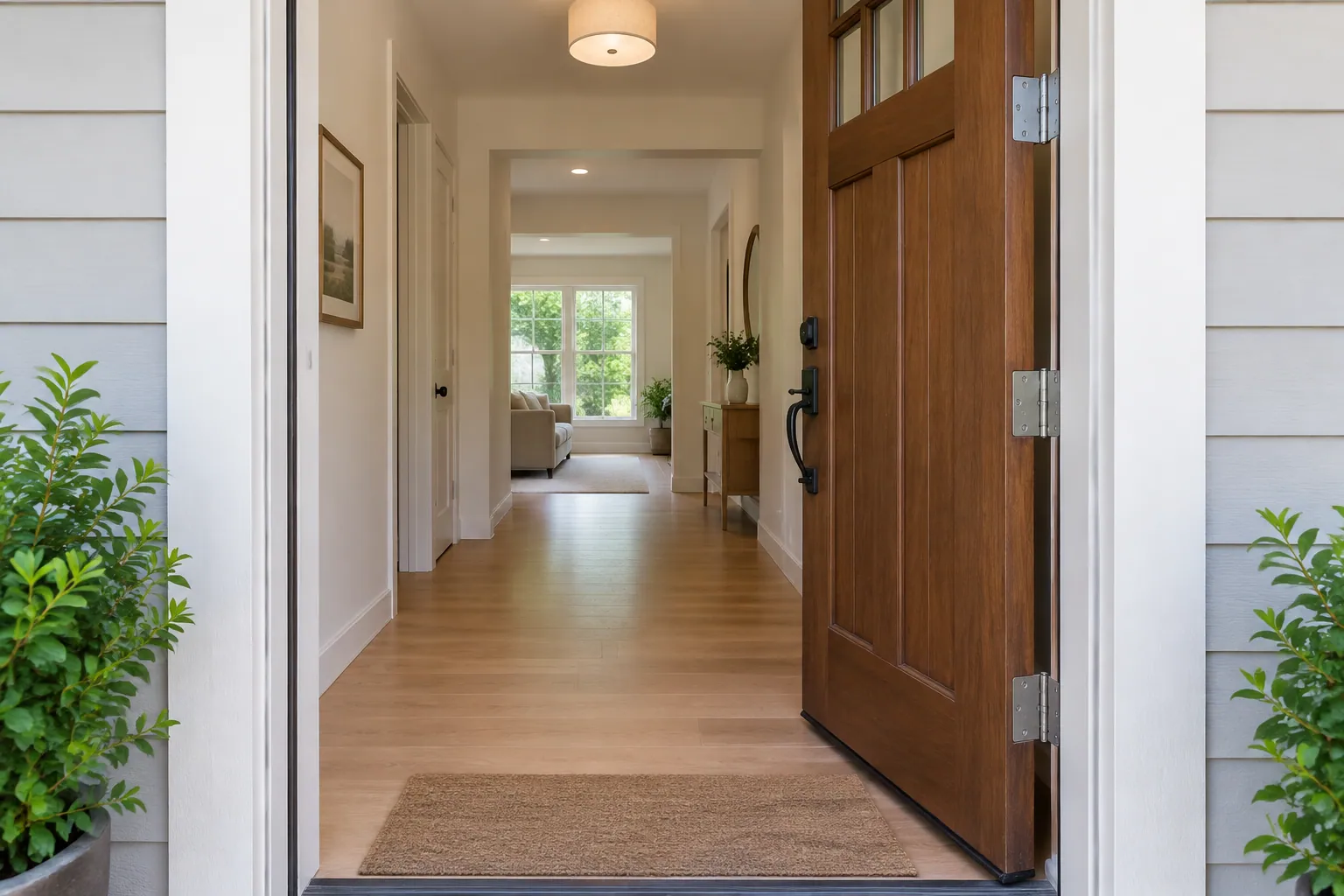
Treat the doorway as three zones: the approach outside, the sill itself, and the first meter inside—all three should be bright, walkable, and free of “just leave it here” piles. A clean feng shui doorway is not only aesthetic; it is how guests and daily energy arrive without weaving around bags and bins.
| Zone | What to check tonight |
|---|---|
| Approach | Path visible, house number readable, plants trimmed so the door is not hidden |
| Sill | Mat flat, no dead leaves or rusted scrap underfoot, hardware polished enough to catch light |
| First meter | Shoes contained (not a minefield), no trash bin as a permanent neighbor, door able to open fully |
If you mostly use a side or garage door, that door is your practical “front” for this checklist. Unused official front doors still deserve a weekly open so the main portal does not feel abandoned.
Bedroom door basics
A good bedroom door closes smoothly, swings free of clutter, and does not aim a straight “lane” of traffic at your feet while you sleep. That is the core of feng shui bedroom door advice before you rearrange the whole room.
Full swing and quiet close
Clear the arc behind the door. Over-door coat racks and hanging bags are fine for a short bath; they are not storage for every jacket you own. Keep the latch quiet so night entries do not startle anyone awake.
Many households prefer the bedroom door closed at night for privacy and a calmer boundary. If you must leave it ajar for kids or pets, at least keep the swing path empty.
Don’t sleep in the door’s lane
When you can, place the bed so you see the door without lying in its straight path—especially with feet pointing out the doorway. That alignment is the classic problem online guides warn about. If the room will not allow a perfect layout, offset the bed even slightly, use a solid headboard, or keep the door mostly closed to break the line. For a deeper three-check guide, see Feng Shui Command Position.
Doorway etiquette (facing doors, mirrors, front-to-back)
Doorway etiquette is about soft sightlines: do not bounce energy straight back out with a mirror, and soften short door-to-door or front-to-back rushes so qi (and drafts) can settle. These are layout habits, not superstition shopping lists.
- Mirror facing the main door: Traditional interior teaching warns that a mirror on the axis of the front door reflects incoming energy back out. Move the mirror off that straight line—side wall is usually enough.
- Two doors facing each other: Common advice says opposing bedroom doors can feel competitive or argumentative. Traditional notes add a useful caveat: the issue is strongest when the doors are close; a wide open span between them is often treated as fine. Soften a short face-off with a plant, console, or rug that breaks the tunnel look—or simply avoid leaving both doors wide open all day.
- Front door straight to back door or a far window: A short, straight shot lets air and attention race through. Close the far opening when the front is open, or add a light partition so you cannot see all the way out on arrival.
None of this requires tearing out walls. Soften the line first; rebuild later only if you are renovating.
West-facing doors (brief)
A west-facing door is not “cursed”—in common five-element color teaching it sits with Metal, so white, gray, and soft metal accents are the usual palette. Afternoon sun and glare are practical issues worth shading. For colors, heat fixes, and porch-level detail, use the dedicated Feng Shui West Facing Door guide rather than expanding this hub into another facing article. Searches for feng shui doors facing west belong there.
A 10-minute door audit
Walk the house with a notepad:
- List every door you use daily.
- Open each fully; note squeaks, scrapes, or blocked arcs.
- Clear the three threshold zones at the main entry.
- Check bedroom: quiet latch, free swing, bed not centered in the door lane.
- Glance for a mirror on the front-door axis or a short front-to-back tunnel.
Fix one hinge tonight. Tomorrow clear one threshold zone. Small repairs compound faster than waiting for a full remodel.
FAQ
What does feng shui say about doors that squeak?
Traditional and modern writers treat a squeak as friction—awkward communication or stalled movement—while the physical fix is ordinary hinge care. Lubricate and tighten; replace broken hardware. The front door and bedroom door deserve attention first.
Should every door stay open for good feng shui?
No. Doors are valves. Too many rooms left permanently open can feel rushed; unused rooms that never open can feel stagnant. Aim for doors that can open fully and that you use with intention—especially the main entry and the bedroom door at night.
Is a door facing another door always bad?
Not always. Facing doors that sit close across a narrow hall get the most concern in traditional notes. Distance and a soft visual break change the reading. Start with plants, furniture, or simply not leaving both doors wide open.
Where should I go after the door checklist?
When doors feel smooth and thresholds are clear, zoom out to whole-home layout with Home Design Feng Shui. That page helps you connect the entry to the rest of the floor plan without guessing from door color alone.
Tonight, oil one noisy hinge and clear the first meter inside your main door. When those two feel easy, the rest of feng shui for doors gets simpler—and the next step is mapping how that calm entry supports the whole home on Home Design Feng Shui.