Feng Shui Lucky Bamboo Plant: Placement, Stalks & Care

Feng shui lucky bamboo plant guide: stalk-count myths with caveats, East/SE placement, water quality tips, and where not to put it—plus a soft home layout check.

A feng shui lucky bamboo plant works best as a healthy Wood-and-Water accent you can actually keep green—not as a magic stalk lottery. Searches for feng shui lucky bamboo plant, lucky bamboo in feng shui, lucky bamboo plant feng shui, or lucky bamboo and feng shui usually want the same jobs: what the stalk counts mean, where to set the vase, how to keep the water clean, and where not to park it.
This guide stays practical. Treat popular stalk meanings as gift lore with caveats, prioritize plant health, then—if you want the bigger picture—open a calm home design feng shui layout check after you finish the plant checklist.
What lucky bamboo actually is
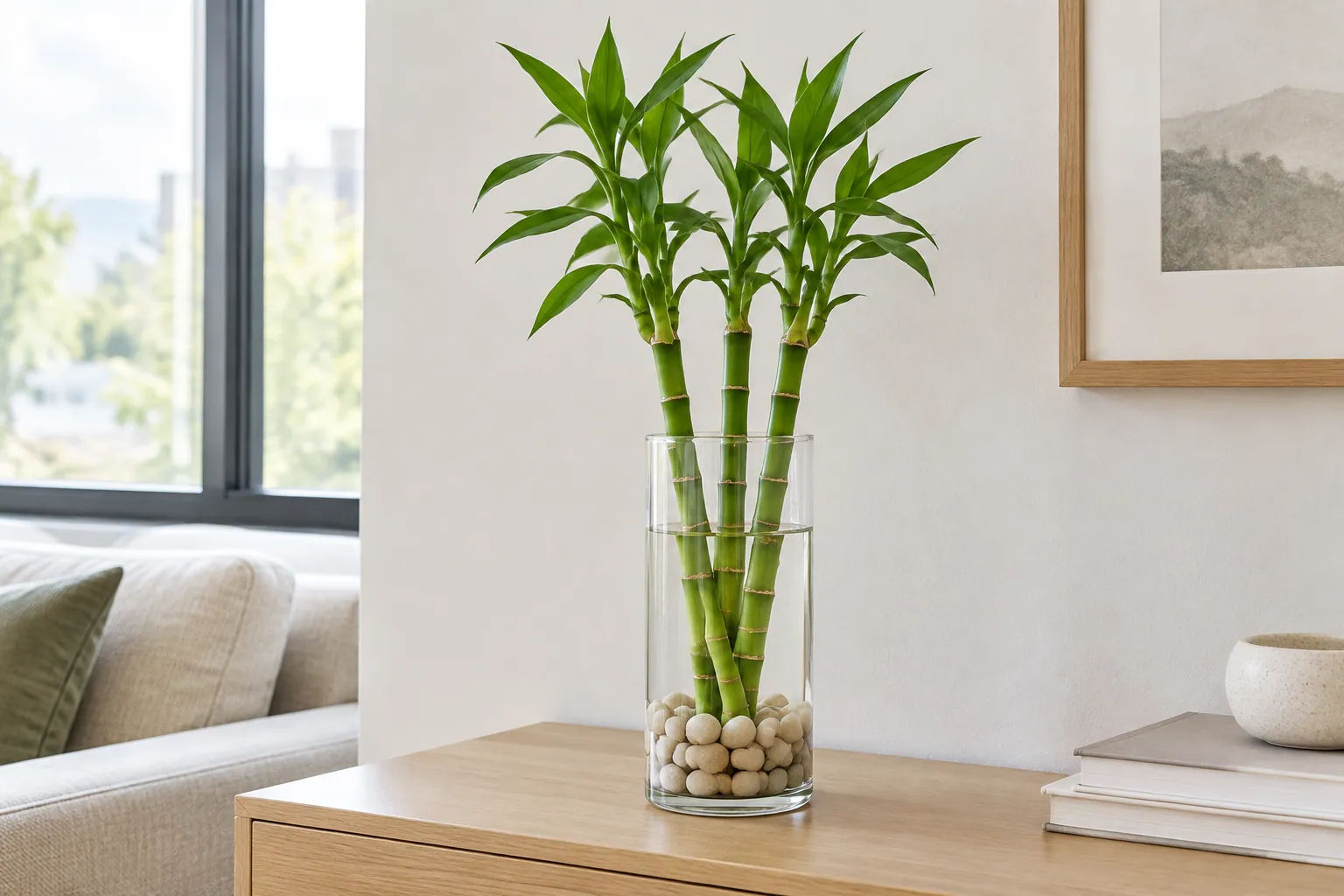
Lucky bamboo is usually Dracaena sanderiana (sometimes sold as D. braunii)—a tropical houseplant that looks like bamboo but is not botanical bamboo. Growers train the canes into spirals or braids under directional light; the “luck” story rode along because the silhouette echoes classic bamboo symbolism of flexibility and upright growth.
In everyday feng shui styling, the arrangement often stacks elements: plant (Wood), water in the vase (Water), pebbles (Earth), a red ribbon (Fire), and glass or a coin (Metal). That combo is decorative shorthand. A thriving plant in a clear spot still beats a dusty “complete” set in a dark corner.
Stalk counts: popular meanings with caveats
Stalk-number charts are widespread gift and retail lore—useful as intention labels, not as classical feng shui law or a guarantee of money. Many modern guides map counts to wishes; schools and sellers disagree on details. Use them if they help you choose a gift; do not panic if your vase has “the wrong” number.
| Stalks | Common popular meaning | Caveat |
|---|---|---|
| 1 | Fresh start, simple focus | Fine for a desk or study |
| 2 | Partnership / “double luck” | Common couple gift |
| 3 | Happiness, longevity, prosperity | Most common “all-purpose” set |
| 4 | Traditionally avoided | Homophone link to “death” (sì / sǐ) in Chinese—skip for gifting |
| 5 | Balance / five areas of life | Sometimes framed as health |
| 6 | Smooth luck / opportunity | Often tied to wealth wishes |
| 7 | Health focus | Keep the plant healthy first |
| 8 | Growth / abundance | Popular business gift number |
| 9 | Broad good fortune | “Completeness” lore |
| 10 / 21 | Fullness / strong blessing | Decorative; still needs care |
If one cane dies and your count slips to four, replace or remove stalks so the arrangement matches an intention you are comfortable with—or simply keep a healthy odd count and move on. The plant’s color and roots matter more than the spreadsheet.
Where to place it
For popular bagua-style practice, put a healthy lucky bamboo where Wood is welcome—often the east (family/health) or southeast (wealth) of a living room, entry console, or work desk—in bright, indirect light. Keep the vase at table height, upright, and free of clutter so the space feels tended.
Good everyday spots:
- East sector of a shared living area for a “family / vitality” intention.
- Southeast corner when you want a visible wealth-corner accent (still not a salary plan).
- Entry console flanking the path of arrival—welcome energy you walk past daily.
- Home office desk (side, not blocking the keyboard) for growth-and-focus symbolism.
Match the light the plant needs. Symbolism cannot fix a scorched leaf.
Where not to put it
Skip spots that kill the plant or send mixed signals: harsh direct sun, dirty stagnant water, clutter piles, and—depending on the school you follow—using the bathroom as your main “money plant” stage. Bedroom placement is also debated: many rest-first guides keep yang greenery away from the bed.
Practical avoid list:
- Direct south- or west-facing glass that cooks the leaves.
- Floor-level forgotten corners, under stairs, or next to trash/broken items.
- Crowded vases with rotting roots (looks “abundant,” smells like failure).
- Primary bathroom shelf as your only wealth cure — some modern writers use bamboo to “balance” drain energy; many popular guides say water-drain rooms weaken a prosperity symbol. If you put one there, treat it as humidity-friendly greenery and keep a healthier wealth accent elsewhere.
- Right beside the pillow if sleep already feels restless—choose a calmer corner or another room.

Water quality and everyday care
Change the water about every 7–14 days, keep roots covered, prefer distilled, rain, or well-filtered water, and give bright indirect light between about 65–90°F (18–32°C). Fluoride in many municipal taps does not leave if you only let water sit overnight—that trick helps chlorine more than fluoride—so brown tips often mean water chemistry, not “bad luck.”
Care checklist:
- Rinse pebbles and the vase when you change water; wipe algae early.
- Keep roots submerged, not the entire leafy crown drowning in murky water.
- Skip heavy fertilizer; a tiny diluted drop monthly (or less) is enough in water culture.
- Trim yellow leaves promptly; remove a fully yellow cane so it does not foul the rest.
- Pet note: Dracaena is toxic to cats and dogs if chewed—place out of reach.

When leaves turn yellow
Yellow tips usually point to water quality, direct sun, or fertilizer burn—not a curse. Move the vase back from the window, switch water source, and pause feeding for a month. A cane yellow from base to tip is rarely recoverable; cut cleanly and root a healthy top cutting in fresh water if you want to restart.
A neglected yellow plant is poor practice in any school that cares about living Wood energy. Refresh the water before you buy another ribbon.
After the plant: check the room around it
One well-kept vase helps a corner; it cannot rewrite a blocked entry, a cramped desk, or a cluttered wealth sector on its own. When the bamboo looks happy, spend ten minutes on the larger layout—door swing, light, and furniture flow—with the free Home Design Feng Shui check. Use it as a map, not a hard sell.
FAQ
Is lucky bamboo real bamboo?
No. It is a Dracaena houseplant nicknamed lucky bamboo because of its cane-like stems.
How many stalks of lucky bamboo are good?
Three is the most common all-purpose gift set. Avoid four for traditional Chinese gift etiquette. Treat other counts as optional intention labels.
Can I use tap water for lucky bamboo?
You can, but many plants brown at the tips from fluoride and minerals. Distilled, rain, or quality filtered water is safer for long-term green leaves.
Where should I put lucky bamboo in the house?
Favor bright-indirect east or southeast living, entry, or office spots. Keep it upright and uncluttered. Be cautious with bedrooms and treat bathroom placement as optional and secondary.
Is it bad luck if lucky bamboo dies?
A dead plant is mostly a care signal. Clean the vase, fix water and light, and replace the arrangement if you still want the symbol—no need for ritual fear.
Tonight, rinse the vase, set the plant where you actually see and tend it, and leave stalk superstition in second place. When you are ready to read the room around the plant, open Home Design Feng Shui and walk the layout once with fresh eyes.