Feng Shui One Bedroom Apartment: A Whole-Home Layout Guide

Treat a one-bedroom apartment as one flow: clear the door, keep a living spine, protect sleep privacy, then contain dual-use desks—before bagua or décor.

Feng shui for a one-bedroom apartment works best when you treat the unit as one connected system—door to living room to bedroom—not as a pile of bedroom tips. Searches for feng shui one bedroom apartment or a feng shui one bedroom apartment layout usually want a walkable plan for a rental with one sleep door, dual-use pressure, and limited walls you can move.
This guide is that system walk. It is not a studio-only zone article (you already have a separate bedroom door), and it is not a tiny-bedroom packing ladder—use feng shui for a small bedroom when the mattress fight stays inside one room.
What “feng shui one bedroom apartment” really means
In plain terms: arrange the path from the front door through the living area into a protected sleep room so daily movement feels easy and rest feels private. Traditional form practice cares about doors, solid walls, and whether your bed or sofa sits in a rush lane—not about lucky house numbers or a full bagua paint job first.
A one-bedroom gives you something a studio does not: a real privacy valve. The bedroom door is not decoration. Closing it at night is already a layout tool. Online tips that only talk about mirrors and plants skip that advantage.
The Flow Map ladder (when space fights)
When furniture, storage, and a desk all compete, follow this order: (1) clear entry landing and full door swing, (2) one open spine through the living room, (3) bed command position with solid head support, (4) contain dual-use work or gym gear, (5) color, plants, and bagua last. Drop from the bottom of the list when something has to give—not from the top.
That ranking is the information most tip lists bury. Good feng shui for an apartment starts with circulation and sleep privacy. Décor comes after the walk still works in socks at midnight.
Start at the door (entry landing)

Energy talk online often calls the door the “mouth” of the home. In rental language: if you trip over shoes the second you enter, the whole apartment already feels blocked.
Do this first:
- Make sure the front door opens fully without hitting a shoe mountain or a bike.
- Keep a small landing zone—hook, tray, or rack—off the straight rush path into the living room.
- Add one calm focal point (lamp, plant, or art) only after the path is clear.
If opening the front door gives you a straight tunnel view into the bedroom bed, break the sightline with a tall plant, open shelf, or angled chair in the living room. You usually cannot move walls in a lease; you can still interrupt a rush view.
Living room as the active middle
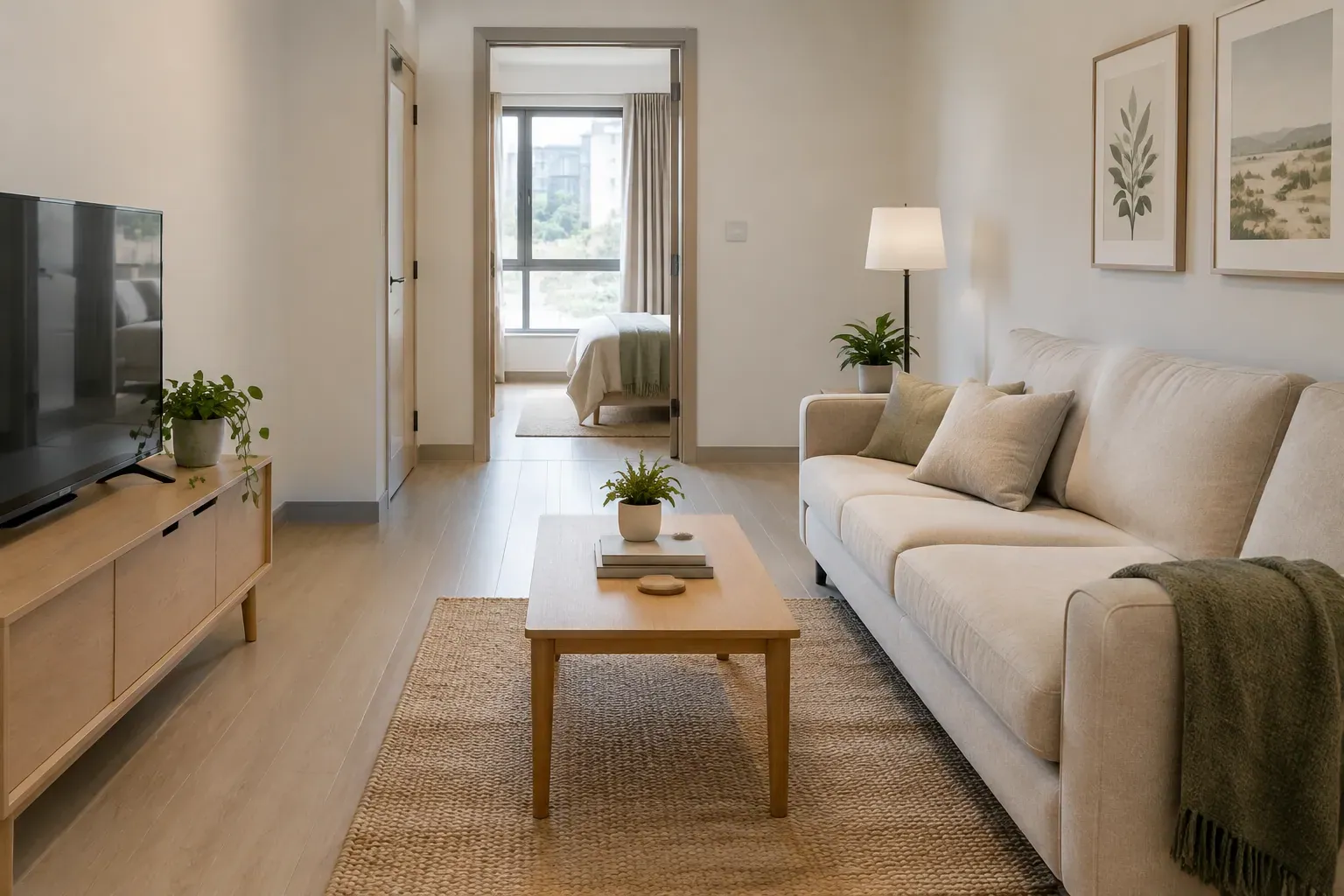
The living room is the active middle of a feng shui apartment layout. It should carry conversation, screens, and daytime yang activity so the bedroom can stay quieter.
Practical checks:
- Put the sofa against a solid wall when you can, with a view toward the apartment entry—not with your back glued to the front door.
- Leave the center walkable. A coffee table is fine; an obstacle course is not.
- Use a rug, low shelf, or curtain as a soft edge if the living space stares straight into the bed through an open doorway.
Mirrors help bounce light in a feng shui for small apartment setting, but do not aim a large mirror at the bed from the living room. Expand the living zone; do not put the mattress on stage.
Protect the sleep zone (privacy valve)

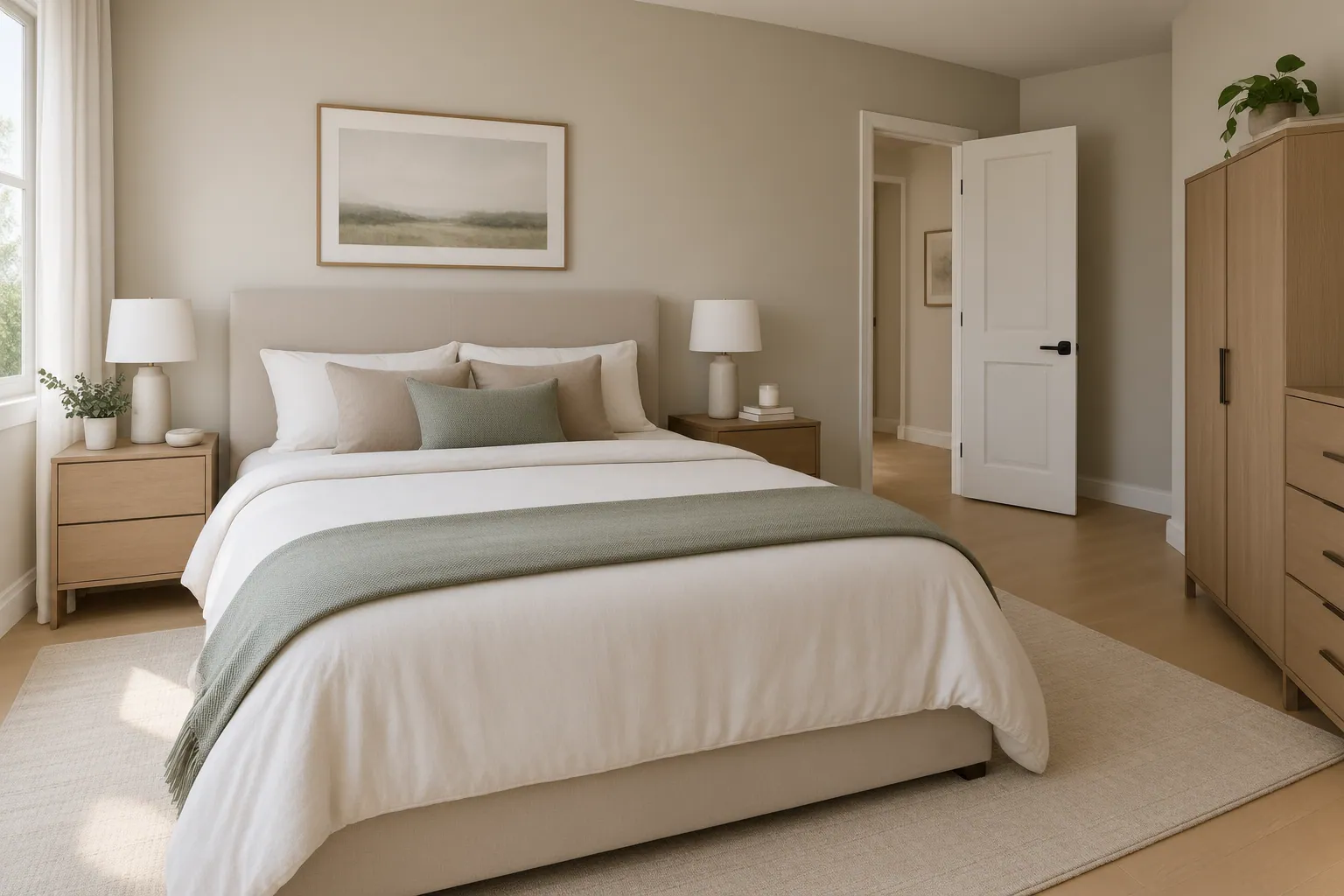
The sleep zone should feel like the quiet end of the Flow Map: door usable as a privacy valve, bed able to see the bedroom door without lying in its straight lane, headboard on a solid wall. That “command” geometry is the same idea covered in depth in feng shui command position; here you only need the apartment-scale reminder.
One-bedroom advantages to use tonight:
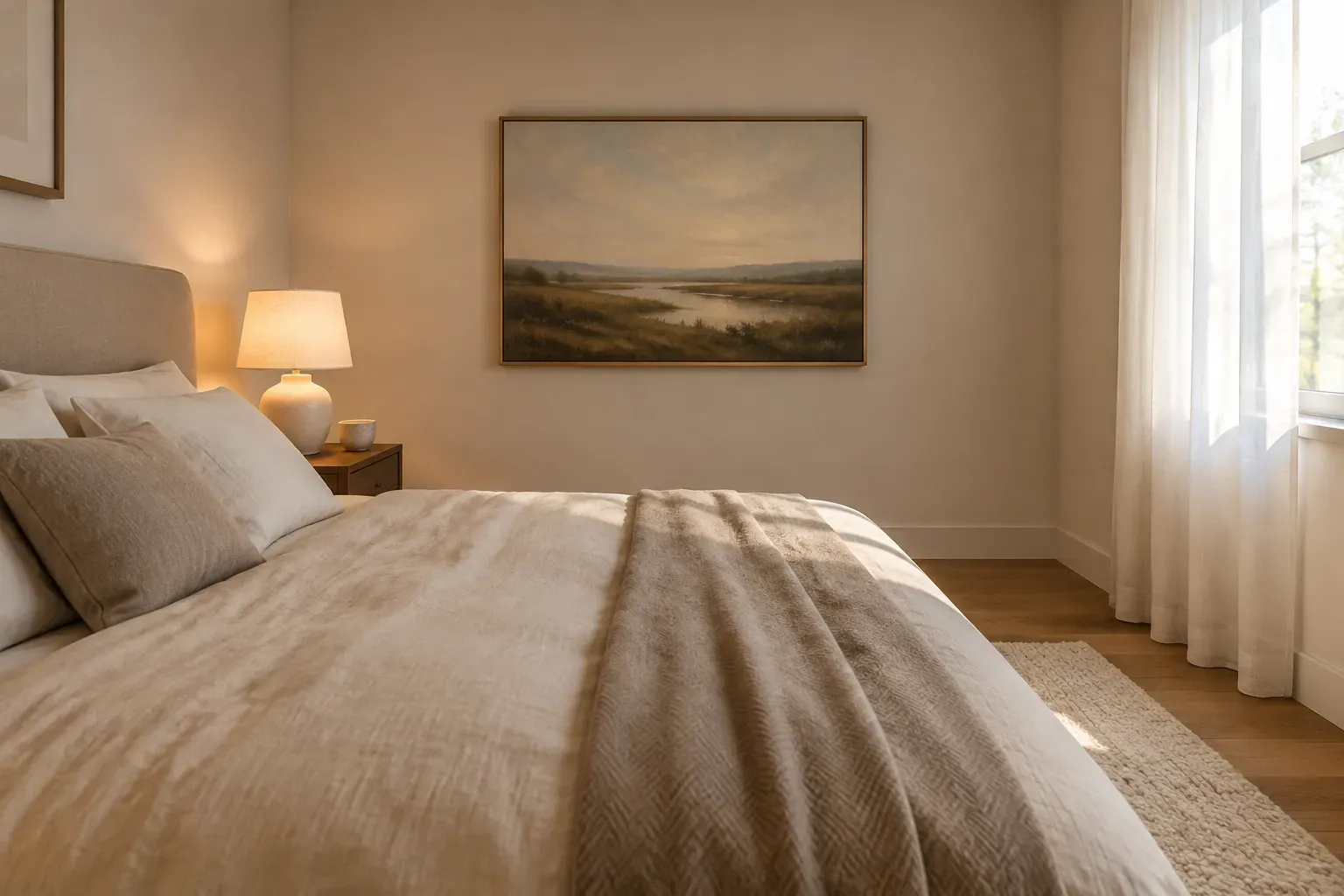
- Close the bedroom door for sleep even if you leave it open by day.
- Keep the bed off the doorway’s rush lane; shift a few inches if needed.
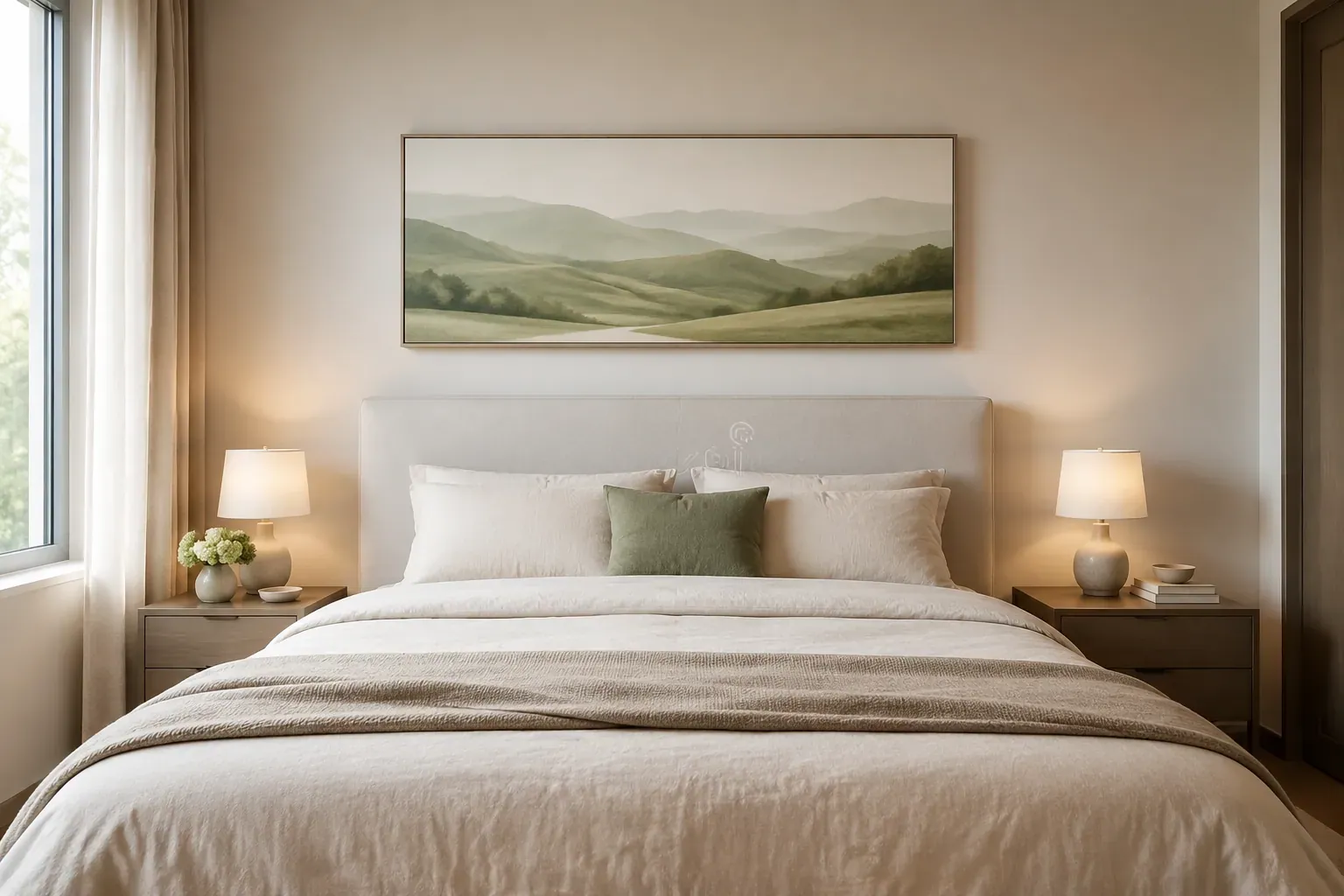
- Prefer a solid head wall over a window-backed headboard; if the window is stuck, use a tall headboard and close curtains at night.
Naming bed layouts (coffin line, floating bed, and so on) belongs in bed position feng shui. Inside a cramped bedroom footprint, use the small-room priority ladder—not this whole-home article—as your next drill-down.
Dual-use pressure (desk, gym, dining)
One-bedroom living almost always means dual-use pressure: laptop on the dining table, yoga mat by the sofa, or a desk shoved into the bedroom because there is nowhere else.
Honest order of preference:
- Best: desk in the living zone, with a clear end-of-day ritual—laptop shut, blotter cleared, work mug put away.
- Acceptable: desk in the bedroom only if you can face a command view of the bedroom door and cover or shut the screen at night.
- Weak: glowing monitor aimed at the pillows, or a “gym corner” that crowds the mattress aisle.
For the bedroom-desk case in detail, see feng shui desk in bedroom. The apartment-level rule is simpler: do not let work tools visually own the sleep end of the Flow Map.
Whole-home apartment constraints you cannot remodel
Renters hit whole-home constraints that blog bagua maps ignore:
- Thin shared walls and hallway noise—soft textiles and a closed bedroom door help more than a “lucky” charm.
- Fixed kitchen and bath stacks—you rearrange furniture, not plumbing.
- A bedroom door that lines up with the front door—break the rush with living-room furniture rather than promising a remodel.
Compass “wealth corners” can wait until the path and the bed already feel steady. Form first is not anti-tradition; it matches how classical layout advice actually starts—with doors and walls you can see.
Quick layout walk (about 20 minutes)
- Open the front door. Clear anything that blocks a full swing.
- Walk to the sofa without sidestepping. Move one piece if the spine is pinched.
- Stand at the bedroom threshold. Can you leave the sleep room visually quieter than the living room?
- Lie on the bed. See the bedroom door? Are you out of its straight lane? Is there real wall behind your head?
- Point at every “work” object visible from the pillows. Shut, cover, or relocate one of them tonight.
If that walk feels honest, you already did more than another plant purchase.
FAQ
How do you feng shui a one-bedroom apartment?
Walk the Flow Map: clear the entry, keep one living spine, place the bed in command with solid head support, contain dual-use gear, then style. Treat the bedroom door as a privacy valve, not an afterthought.
Is one-bedroom feng shui the same as studio advice?
No. Studio guides solve sleep, work, and cooking in one volume with temporary zone markers. A one-bedroom already has a separate sleep room—use that door, and do not copy every studio screen tip wholesale.
What if my bedroom is tiny?
Keep this article for the whole-unit path, then switch to feng shui for a small bedroom for mattress-scale tradeoffs inside the room.
Do I need a bagua map before I move furniture?
No. Fix doors, walkways, and bed geometry first. Bagua and color layers are optional after the Flow Map already works.
Tonight, then the fuller bedroom check
Clear the entry landing or shift the bed off the door’s rush lane—one real move, not five shopping tabs. Sleep on that change for a few nights. When you want the bedroom scored on a full plan—door, walls, and bed together—open the bedroom feng shui layout guide and walk the sleep room with the same form-first habits you just used for the whole apartment.