How to Feng Shui a Bedroom: A Practical Order for Real Rooms

Learn how to feng shui a bedroom in a clear order: bed placement, clutter, mirrors, colors, and renter fixes—plus a tonight checklist you can finish.

How to feng shui a bedroom is less about buying lucky objects and more about making the room feel safe, quiet, and easy to rest in. If you searched how to feng shui your bedroom or the shorter how to feng shui bedroom, you are after the same job: rearrange what you already have so sleep comes easier.
This guide walks the full room—bed, clutter, mirrors, colors, screens—without turning into a deep dive on one placement rule alone. You will get a priority order for awkward rentals, not a shopping list.
What “feng shui a bedroom” means in practice
In plain terms: you arrange the bed and the rest of the room so you feel supported, can notice the door, keep the space visually calm, and remove things that keep your brain “on.” Traditional teaching talks about smooth qi (life energy) in a sleep room; modern practice often lands on the same habits as good sleep hygiene—clear floors, soft light, fewer screens.
Treat the bedroom as a rest room first. Work, workouts, and loud decor can wait in another corner of the home when you have a choice.
The priority ladder (do this order)
When you cannot fix everything, change the bed’s relationship to the door and wall first, then clear the floor and nightstands, then fix mirrors and screens, and only then polish colors and décor. That ladder is the information most tip lists skip.
- Bed geometry — Door in view, not in the door’s straight rush; solid wall and a real headboard behind you when you can.
- Clear paths — Under-bed space, nightstand tops, laundry piles, and anything that makes walking around the bed feel tight.
- Activators — Mirrors that show the sleeper, TVs and phones by the pillow, harsh overhead light.
- Polish — Soft colors, paired nightstands, a kinder first thing you see on waking.
If a rule fights your lease or tiny room, keep the higher rung and use a soft fix on the lower one. Do not throw money at paint before the bed can see the door.
Place the bed (the short version)
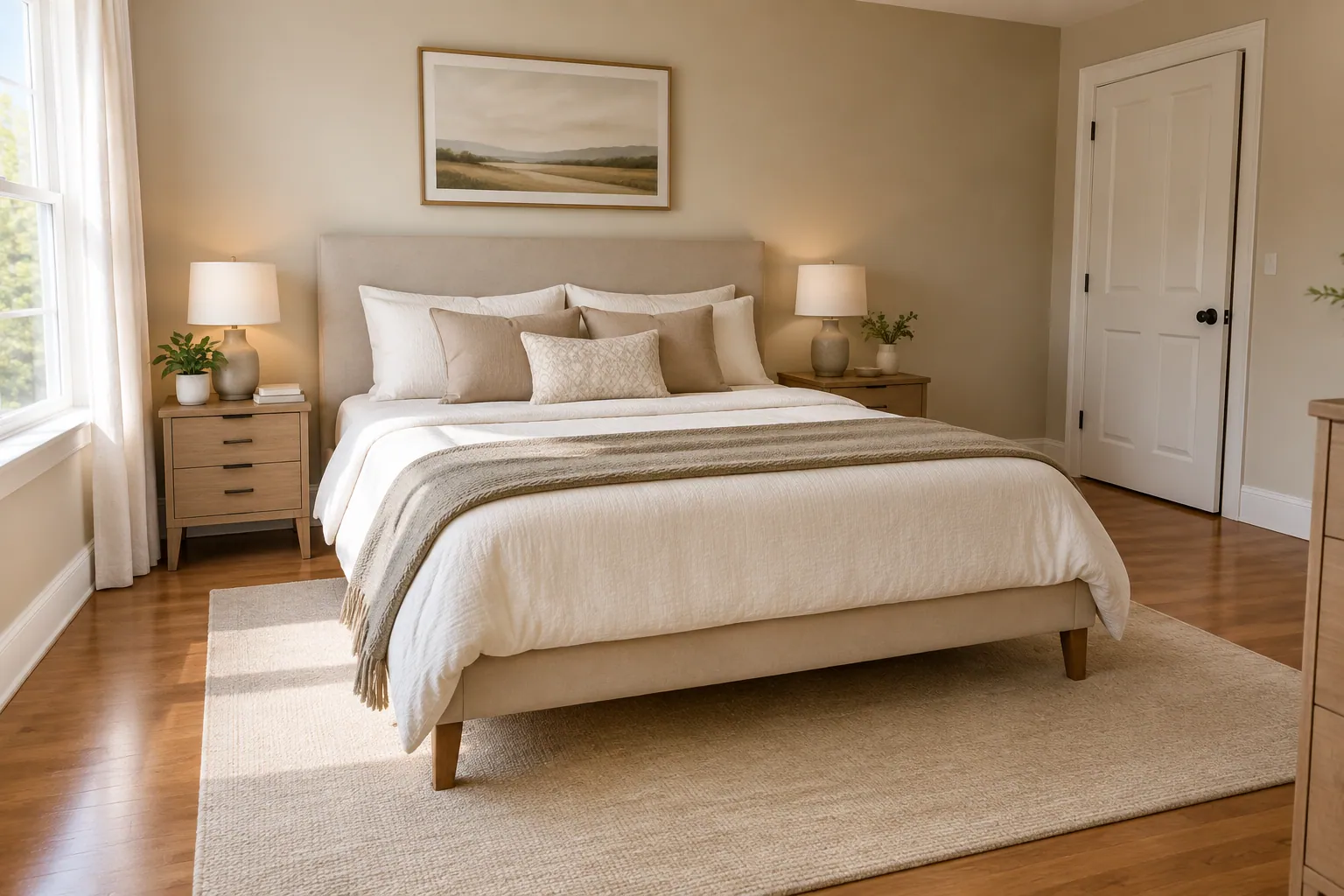
Put the headboard on a solid wall, leave space on both sides if you can, and sleep where you can see the bedroom door without lying in its straight path. That “commanding” idea is the same geometry people mean by command position—see it briefly here, then keep moving through the rest of the room.
Check three things from the pillows:
- You notice the door with a small eye turn, not a full twist.
- Your feet are not aimed straight out the doorway.
- Something solid has your back (wall + headboard), not a bare window if you have another option.
Avoid parking the bed under a heavy beam, low soffit, or an AC vent that blows on your face all night. If the only wall is under a window, use the tallest solid headboard you own and close curtains at night so your back still feels “held.”
Leave walking space on both sides when the room allows it. One side jammed to the wall is a common small-room compromise—better than feet-in-the-doorway, but reopen the side if you ever can.
Clear the room so rest can land
Clear under the bed and keep nightstands sparse so the sleep zone does not feel like storage. Traditional guides say clutter under the mattress stalls the air and energy around your body; practically, boxes under the bed also make the room feel unfinished.

If you must store something underneath, stick to soft, sleep-related items—extra sheets, a spare blanket—not shoes, luggage, tax folders, or gym weights. Clear the tops of both nightstands to a few calm objects. Move laundry baskets, treadmills, and open laptops out when you can; they tell your brain the room is still “in progress.”
A desk in the bedroom is a real-life compromise. Push it as far from the pillows as the walls allow, face it so work papers are not the last thing you see, and cover or close the laptop at night so the sleep half of the room gets its job back.
Mirrors, screens, and lighting
Do not let a mirror reflect you in bed; keep glowing screens away from the pillow; switch harsh ceiling light for warmer lamps after dark. Mirrors are useful in closets and dressing corners. Facing the mattress, they keep the room visually “awake.”

Renter fixes that work:
- Hang the mirror inside a closet door and only open it when you dress.
- Angle a freestanding mirror so it shows a wall or window, not your face on the pillow.
- Cover a built-in wardrobe mirror with a soft cloth at night if you cannot move it.
Phones, TVs, and tablets belong farther from the bed when possible. If the TV stays, hide it in a cabinet or drape it when you sleep. Soft bedside lamps beat a bright overhead can while you wind down.
Colors, pairs, and what to keep out
Choose quiet colors and balanced pairs; keep water features and chaotic art out of the sleep room. Soft neutrals, muted greens, gentle blues, and warm earth tones support rest better than neon or large slabs of intense red. Pairs—two nightstands, two lamps—signal balance for couples and still help singles feel the bed is “finished” on both sides.
Artwork should feel kind when you wake. Skip stormy seas, roaring waterfalls, and mirror-like glass water scenes above or opposite the bed. Sharp décor aimed at the mattress (pointy shelves, aggressive sculpture) is worth rotating away from your body line.
Plants: some teachers welcome one healthy leafy plant; others say plants are too “daytime” for a yin sleep room. If you use one, keep it thriving and out of the walk path—not a jungle at the foot of the bed.
Awkward rooms and rentals
When the ideal layout is impossible, protect door awareness and solid backing first, then soft fixes. Studios, loft beds, and en-suite doors that stare at the mattress are common. Use a folding screen, tall plant, or open bookshelf as a soft barrier between bed and door path if you cannot slide the frame. A footboard or bench can blunt a straight door rush when the bed cannot move.
Shared bathroom walls behind the headboard are not ideal in traditional teaching. If you cannot change walls, keep the bathroom door closed at night and add a solid headboard so your back still feels backed.
Personal “lucky” sleep directions matter in some classical systems, but they should not erase door-view and support. Fix the geometry you can measure with your eyes; refine direction later if both can coexist.
Tonight checklist
In about ten minutes: sit on the pillows and confirm door view, clear one under-bed box, fix or cover any mirror that shows the bed, and put the phone farther away. Then walk the floor once and remove one work or gym item that does not belong in a rest room.
When you want the layout checked against your real walls—not a generic tip list—open the bedroom feng shui page and run your plan there: Bedroom feng shui check. Use it after you try the ladder above so the tool is answering a room you have already simplified.
FAQ
What should you not put in a bedroom for feng shui?
Skip clutter under the bed, mirrors that show the sleeper, water fountains or big water art, and (when you can) TVs, desks, and gym gear next to the pillows. Broken or cloudy mirrors are worth retiring, not “energizing.”
Does how to feng shui your bedroom require a compass?
Not for the first pass. Door view, solid backing, clear floors, and quieter lighting already change how the room feels. Compass or personal directions are optional refinements after the layout works.
Is under-bed storage always bad?
Empty is best. Soft linens only is the usual compromise. Avoid shoes, suitcases, and stress paperwork under where you sleep.
Can I feng shui a small bedroom without moving the bed?
Yes—clear under-bed and nightstands, cover or re-angle mirrors, soften lighting, and create a visual break from any desk. Those steps still count as how to feng shui bedroom space when the bed frame cannot slide.
Tonight, finish the ladder as far as your lease allows, sleep one night in the quieter setup, and notice whether waking feels less rushed. If you want a second opinion on the floor plan itself, start with the bedroom layout check and adjust from what you see—not from fear of getting every rule perfect.