Rules of Feng Shui Bedroom: Ranked Checklist (+ Exceptions)

Feng shui bedroom rules ranked by impact: bed and door geometry first, then mirrors, under-bed clutter, and electronics—with clear rental exceptions.

Feng shui bedroom rules are the placement and habit checks that keep a sleep room calm, supported, and easy to rest in—not a shopping list of charms. People also search bedroom feng shui rules, feng shui rules for bedroom, and bed feng shui rules; the job is the same: know what matters first, why it matters, and when a real room forces a compromise.
This piece is a ranked checklist. If you want a full walkthrough of rearranging one room from scratch, that is a separate how-to job. Here you get the rules, the reasons, and the honest exceptions.
What “rules” means here
In this guide, a “rule” is a layout or habit check you can verify in the room; a “tip” is décor preference that helps after the hard geometry is handled. Command position, door alignment, and headboard support sit in the first bucket. Soft paint colors and matching lamps sit in the second.
Traditional teaching and modern sleep-hygiene advice often land on the same practical moves: see who enters, keep support behind your head, keep the sleep zone visually quiet. Treat absolute compass slogans (“always face south”) as a later, separate toolkit—not as a trump card over door-and-wall geometry.
Priority map: fix Tier A before paint
| Tier | Focus | Fix tonight if you can |
|---|---|---|
| A — Geometry | Bed vs door, solid backing, headboard | Highest impact |
| B — Sleep hygiene | Mirrors, under-bed clutter, screens, overhead pressure | High impact, often free |
| C — Atmosphere | Symmetry, colors, plants, water art, work/gym gear | Helpful polish |
If you only change three things, stay in Tier A and B.
Tier A: bed and door geometry
1. Command position (see the door, stay off its path)
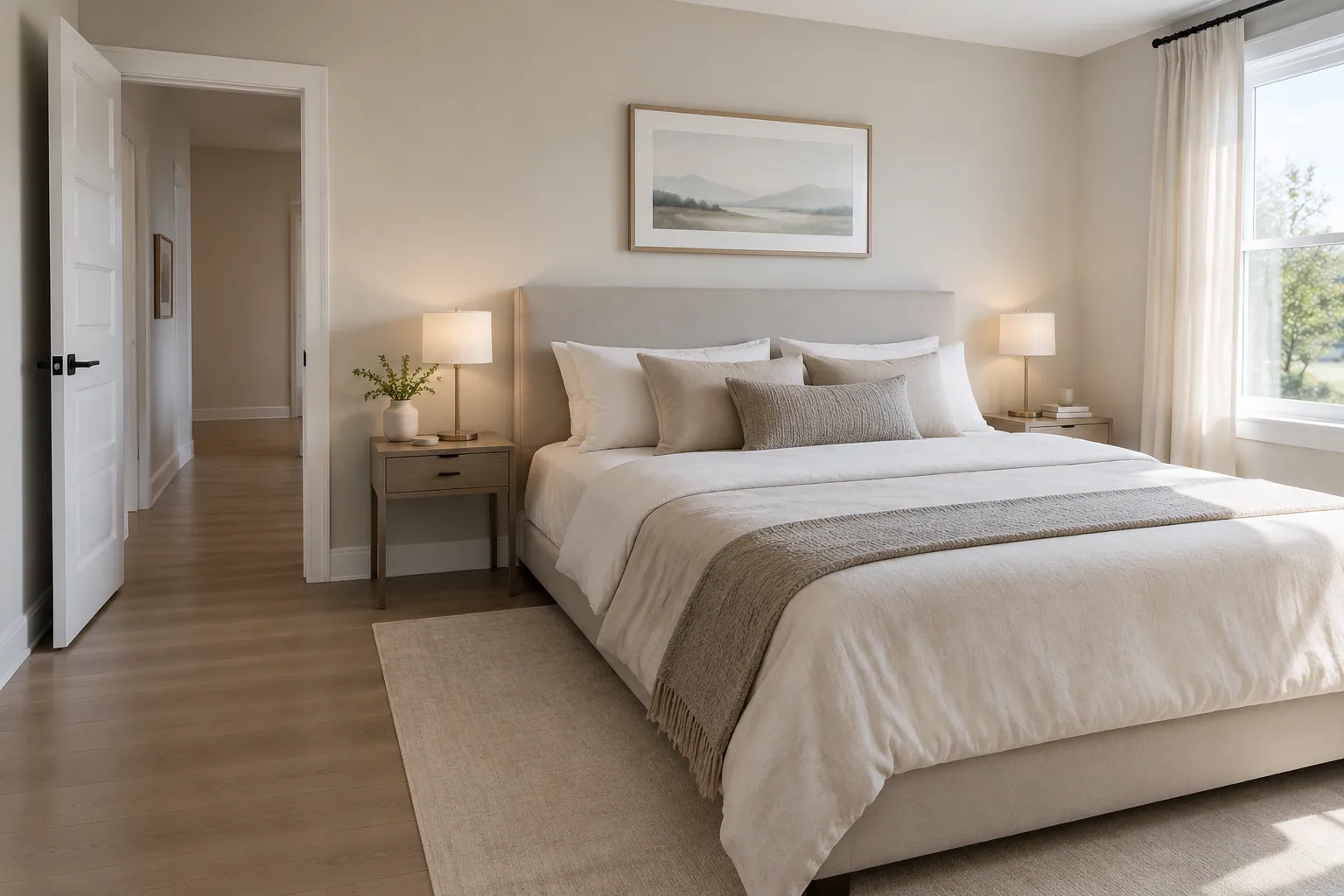
Core bed rule: from the pillow you can see the bedroom door, you are not lying in the door’s straight rush, and something solid supports your head. That is the practical heart of feng shui bed rules and the modern “command” language.
Why: sleeping is when you are least alert. A clear angled view of the entrance feels safer; sitting in the doorway’s lane feels exposed.
Exceptions: tiny rooms may fail the perfect diagonal. Shift sideways off the door band first. If you truly cannot see the door, a small mirror that shows only the doorway—not your face in bed—is a common rental workaround, not a full replacement.
2. Do not aim your feet straight out the door
Avoid lining the bed so your feet point straight through the open doorway. Many English guides call this the “coffin” or door-aligned layout. Traditional notes also warn that a bed floating alone in the room’s center can feel unsupported—a different idea sometimes given the same nickname. For this checklist, treat feet-to-door as the main bedroom hazard; treat center-float as a separate “give the bed a wall” rule.
Why: the door path is the room’s traffic lane. Feet in that lane put the sleeper on display and in the rush of movement.
Exceptions: if the only wall forces feet toward the door, add a low barrier at the foot (bench, blanket box, low shelf) that still lets you see the entrance. Partially closing the door at night softens the lane; it does not erase a bad line.
3. Solid wall + real headboard behind you
Put the head of the bed on a solid wall and use a sturdy, attached headboard. Avoid a large open window as your only “backing” when another wall works.
Why: solid backing is the physical and traditional stand-in for support while you sleep.
Exceptions: when the only free wall is a window wall, use the tallest solid headboard you can, plus heavier drapery at night. That improves backing; it does not turn glass into a wall.
Tier B: sleep-space hygiene
4. Keep mirrors from reflecting the sleeping body
Do not leave a mirror aimed at you while you sleep. Traditional sayings warn that a mirror at the bed head unsettles rest; modern guides repeat the same practical advice.

Why: mirrors bounce light and movement. In a room meant for yin rest, that keeps the space “on.”
Exceptions: wardrobe mirrors you cannot remove—cover them at night, frost them, or hang fabric. A side-wall mirror that does not catch the bed is usually fine. Using a tiny mirror only to restore a door view is a Tier A exception, not an invitation to a full-length glass wall opposite the pillows.
5. Prefer an empty space under the bed
Keep under-bed storage empty when you can. If you must use the space, limit it to soft, sleep-related items (spare linens, pillows)—not shoes, luggage, or work files.

Why: traditional layout wants air and quiet circulation around the sleeper; piles under the mattress also read as unfinished stress when you lie down.
Exceptions: storage beds in small apartments are common. Declutter on a schedule, ban emotionally loud or work-related boxes, and keep the visible room calmer to compensate.
6. Reduce electronics in the sleep zone
Keep TVs, laptops, and phones out of arm’s reach of the bed—or power them down and cover screens at night.
Why: screens keep the room in “day mode.” Many practitioners also dislike the always-on feeling of glowing devices beside the pillow.
Exceptions: phone-as-alarm is real life. Charge it across the room, use airplane mode, or switch to a simple clock. Hide a TV in a cabinet if it cannot leave.
7. Avoid sleeping under beams, fans, or heavy fixtures
Do not park the bed under a low beam, bulky fan, or heavy pendant aimed at your body.
Why: overhead bulk reads as pressure—traditionally and visually.
Exceptions: if the beam cannot move, shift the bed to the highest ceiling zone, paint the beam ceiling-color, or soften with a light canopy. Patterned bedding run across the beam line is an old soft remedy—not magic, just visual redirection.
Tier C: balance and atmosphere (tips tier)
These are still useful feng shui bedroom tips, but they should not outrank a bed stuck in the door path.
8. Leave walking space on both sides when possible
Matching nightstands and lamps support balance—especially for couples. Slim twins beat one giant tower on one side. In a single sleeper’s room, two small surfaces still keep the layout open.
Exception: against-the-wall beds in micro rooms. Leave the accessible side fully clear; do not block the only exit path.
9. Soft colors first; treat water art and plants as optional
Calm neutrals, soft greens, and muted blues fit a rest room. Bright, busy patterns fight sleep.
Water fountains and large water imagery are widely discouraged in bedrooms. Plants divide teachers: some allow one or two rounded-leaf plants; others keep living growth out of the sleep room. Treat plants as optional, not a core rule.
10. Keep work and gym energy out of the sleep story
Desks, printers, and exercise gear push the room toward daytime yang. If the bedroom must share duty, screen or curtain the work zone and close the laptop before bed.
Exception matrix (rentals and awkward rooms)
| Constraint | Better move | What it does not erase |
|---|---|---|
| Bed must sit in door band | Shift sideways; add low foot barrier | The lane still exists |
| No door view from pillow | Small mirror showing doorway only | Not true line of sight |
| Head under window | Tall solid headboard + night curtains | Draft, light, street noise |
| Built-in mirror on closet | Cover / frost at night | Glass is still there by day |
| Only storage is under bed | Soft linens only; purge quarterly | Ideal empty space is lost |
| Beam cannot move | Shift bed / canopy / tone-match paint | Structure remains |
Tonight’s 5-minute rule audit
Walk the room once:
- From the pillow, do you see the door?
- Do your feet aim straight out the doorway?
- Is there a real wall (or serious headboard) behind you?
- Does any mirror catch your sleeping body?
- What is under the bed and on the nightstand screen?
Change one Tier A or B item this week. When you want the whole bedroom scored as a layout—not only this rules list—open the bedroom feng shui layout guide and walk the plan with your floor sketch.
FAQ
What are the most important feng shui rules for a bedroom?
See the door from bed, stay out of the door’s straight path, keep solid support behind your head, keep mirrors off the sleeping body, and keep the under-bed zone as clear as you can.
Are feng shui bedroom tips the same as rules?
Not in this guide. Tips (colors, symmetry, plants) help after geometry and sleep-hygiene rules are handled.
What is bad feng shui for a bedroom?
Feet aimed at the door, mirror reflecting the bed, heavy clutter under the mattress, screens glowing at pillow height, and a bed under a low beam or with no backing.
Do bed feng shui rules require a lucky compass direction?
Not as Tier A. Direction systems are a separate layer. Get door view and backing right first.
Can I break a rule in a rental?
Yes—improve the closest version. Cover mirrors, shift off the door band, raise backing with a headboard, and clear under-bed stress items before you repaint.