
Feng Shui Report
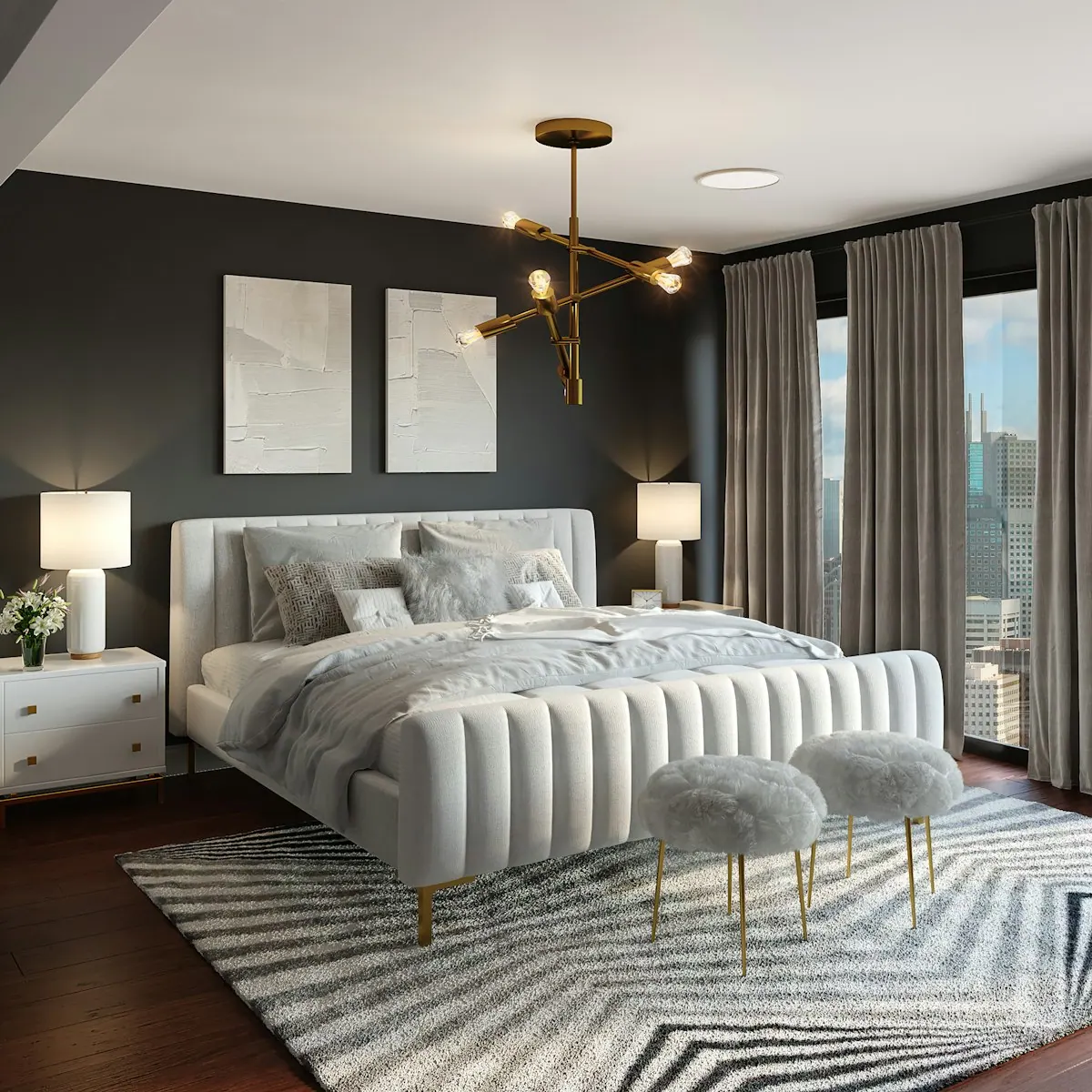
[Sample] Bedroom · Bed facing the door
Room reports · Livable, with a few fixes · Assessed October 27, 2026
70
Overall
When you open the Bedroom entry door, the first thing you see is often the pillows on the double bed — not a side glance, but a straight line from door to bed axis. Direct door alignment disrupts rest
- Entry sightline: from the entry door straight to pillows — classic door-to-bed conflict; night-time sense of exposure is low.
- Circulation clash: foot or side of bed sits on the main path; late returns and night trips brush the mattress edge.
- Mirror risk: wardrobe mirror doors facing the bed add glare and nervous-system alertness at night.
- Room to adjust: headboard wall is solid; sliding the bed sideways about two steps (~0.6 m) still leaves an aisle.
- Priority order: move bed off door axis → cover or turn mirrors → clear foot path and fix a permanent corridor.
- Score 70: clear form conflict — liveable, but placement should come before décor.
Airflow analysisRead: Door line hits the sleep zone — move the bed before décor
First look from the door: why “seeing the pillow” hurts sleep
From the entry door, your eyes reach the double-bed pillows with almost no turn — that is what “Bed facing the door” looks like on this plan. Many people think “as long as I can see the door I feel safe.” The difference matters: seeing the door from the side means “I know who enters”; sleeping on the door axis means “I lie in the middle of traffic.” At night that amplifies: hall light, phone glow, footsteps to the bathroom all travel in a straight line to the pillow. A common pattern: fine in daytime (“convenient”), shallow at night. Try a quick test — hall light only, lie still, check if light crosses your face. If yes, the door axis is already affecting you. Before: entry sees pillows; a subtle “being watched” tension. After: entry sees a low cabinet or wardrobe side; bed tucked to the solid wall; pillows about two steps (~0.6 m) off the door hinge. A 1–1.2 m cabinet, sheer curtain, or screen is enough — no new wall needed. Tonight: clear foot clutter, confirm slide direction, two people lift the foot and shift sideways, lie down one minute and compare. [Late return] Home at 10 p.m., door opens, light runs straight to the pillow — you squint without thinking. That is the body saying the path is too direct. After a sideways move, you first see cabinet mass; eyes get a second to adapt; pre-sleep tension often drops. With elders or children, avoid night paths that “meet” the bed head-on.
Traffic beside the bed: keep the main path off your feet
Besides “facing the door,” this plan often hides a second issue: the main corridor brushing the foot or side of the bed. The sleep zone doubles as a hallway — night trips, early work departures, kids getting water all skim the mattress. Duvets lift, the frame micro-shakes, light sleepers notice everything. If the double bed is centered, 60 cm per side is a comfort floor; narrower and passers subconsciously suck in, shaking the bed. Ideal: main path passes in front of the foot, not beside the pillows. In a narrow room, push the bed to the headboard wall and let one side carry all traffic — a single loop around the bed. Weekend scenario: someone walks in the living area; you hear steps approach and fade — if the track hugs the bed, “sleeping in” quality drops. Mark the path you must keep before choosing a new bed position; do not move first and discover you cannot pass. After moving, tape a temporary path on the floor and walk it three times. [Mismatched schedules] If one partner sleeps early and one late, a path along the bed puts the late person’s line on the early sleeper. A fixed corridor gives a physical boundary for “quiet after X o’clock” — more reliable than promises alone.
Doors, windows, and airflow: ventilate by day, “close” at night
If a window or balcony lines up with the entry door, daytime cross-breeze feels great; at sleep time it becomes a straight “tunnel” of temperature, light, and sound — harder to reach deep sleep. The fix is not sealing the window but timing: open + sheer curtain by day; heavy drape at night with a 2 cm gap for air. When no window is marked on the plan, judge from the door first — it is the main movement and energy entry. Fix door–bed before windows. If you add windows later in the editor, regenerate the report; light and vent advice will shift. Mini case: all-night open window works in summer; in autumn/winter a 3 a.m. temperature drop triggers micro-wakes. Close to a slit before sleep, or split “light” and “wind” with two layers of curtain. [Seasons] The same window saves you in summer and wakes you in winter. Thick + sheer beats a single panel; pull thick at night, sheer first in the morning for gentler wake-up.
Dead corners and under-bed: do not “smother” the sleep zone
Wardrobe corners, under-bed, and the door-back triangle are where bedrooms collect boxes. Short-term easy; long-term dust, odor, and visual noise — peripheral vision on clutter signals “unfinished business” to the brain. If you store under-bed, use half-height bins and leave scan space; seasonal clothes in the wardrobe, low-frequency items under-bed only. Do not hang coats behind the door like a second wall — entry feels tighter. Clear order: ① under-bed round; ② wardrobe top and corner declutter; ③ 80 cm clear width at foot. Then switch on 3000K warm white — shadows usually lighten and the room feels “lighter.” [Two-week rhythm] Week one: foot and under-bed; week two: wardrobe top. Five-minute nightly reset beats a single weekend purge for keeping the sleep zone calm.
Quiet vs active: bedroom is for sleep and recovery only
Desk, clothes rack, or mini gym beside the bed mixes work and rest in one sightline. Screens, to-do notes, unfolded laundry tell the brain to stay on. Split when you can: wardrobe on inner wall, work surface toward the window; screens off one hour before sleep, phone outside a 1 m pillow radius. If you must work in the bedroom, use a curtain or low cabinet so the bed zone stays a complete rectangle visually. Before/after: before, screen glare from the pillow line; after, only headboard wall and upholstery in view — other functions sit to the side. For sleep-first goals, this often beats new sheet colors. [Pre-sleep hour] Close screens, clear desk, tomorrow’s clothes in wardrobe, dim hall light. Post the list on the door; two weeks trains “enter bedroom = go offline.”
Sleep core: solid headboard wall + side view of door
The headboard wall should be full solid — no window or door behind the head. Lying down, eyes see the entry door from the side, but pillows are not on the door-axis extension — that is this report’s comfort standard. Two people lift the foot and slide toward the wardrobe-opposite or solid-wall direction about two steps (~0.6 m). Then check: ① solid behind; ② side view of door; ③ foot path clear; ④ nightstands still reachable. All four before remaking bedding. Worried about outlets? Use a power strip temporarily; fix hard wiring after you confirm the long-term spot — do not skip correct placement for a socket. [One-week log] Track minutes to sleep, night wakes, morning energy. Placement changes often show day three, peak day seven — better than arguing from memory.
Night stimuli: mirrors, bright light, screens
Wardrobe mirror doors facing the bed bounce any glimmer when you turn. Priority: cloth cover, frosted film, or mirror turned to the dressing side; no second mirror at the foot. Hall lights warm and dimmable; phone charging at the pillow delivers blue light to your eyes. Move the charger to the outer nightstand or a fixed point behind the door. If you need an alarm, prefer red light or sound-only. [Weekly] Wipe mirrors, check cover tension; two-minute bedtime check: mirror covered, phone away, hall not too bright — three wins beat a new pillow purchase.
Entry buffer: pause before the sleep zone
The first indoor view should not be pillows. Use a low cabinet, curtain, or 1.2 m screen between door and bed — key tray and small lamp on top for a “change mode” ritual. Guests also avoid staring into the bed zone. Buffer need not eat much floor area; it must break the straight sightline. In tiny rooms, a half-height open shelf stores and breathes. A cabinet night light beats ceiling glare on pillows and signals “private zone.”
How to read this report (sample note)
Production reports follow the same shape: score and summary, five qi essays, sleep core and night stimuli, strengths, step fixes, five-element table, and “tonight first task.” This sample uses plausible labels (entry door, double bed, wardrobe) — yours will match the layout editor. Skim the five essays for the picture, then jump to improvement steps; split work across tonight / this week / remodel. If you are comparing credits, use this sample as the unlocked thickness reference. Live reports also weight sections to your stated goals (sleep, wealth, relationships) and birth data if provided.
What already works
Room scale allows adjustment
The double bed still has aisles on both sides — the plan is not a extreme corridor. Use the wardrobe as a fixed anchor; move only bed and nightstands — often one afternoon, no construction.
Full solid wall at the headboard
The headboard wall has no door or window — ideal backing. After the slide you still keep structural support; the most valuable form condition on the plan.
Storage already on the side wall
The wardrobe is on a side wall, not blocking the foot path. You can fix sleep circulation without rebuilding storage.
Improvements
01 Bed facing the door
Critical · Do todayDirect door alignment disrupts restful qi. Each night: chest toward the door opening, ears toward the hall — any door sound magnifies in light sleep.
WhyThe door is the main movement entry; pillows on the hinge line amplify light, sound, and “exposure.” Common sleep feedback, not abstract theory.
Do thisStep 1 — clear foot and side clutter; measure slide direction. Step 2 — two people lift the foot, slide the double bed toward the headboard wall about two steps (~0.6 m) so entry sees wardrobe side first. Step 3 — lie one minute: side view of entry door? solid wall behind? Step 4 — anti-slip pads, remake bed. Step 5 — if door still stares at bed side, add 1–1.2 m low cabinet or sheer curtain. Step 6 — photo before/after for household alignment.
ExpectNight trips less exposed; hall light less on the face; faster sleep onset; continuity often improves within a week.
02 Manage wardrobe mirror glare
High · Do todayOpen wardrobe doors reflect the full bed zone; any night glimmer bounces on the mirror.
WhyVisual stimulation delays sleep and adds wake-ups. Bedroom mirrors should be side-on or covered, not on the pillow line.
Do thisStep 1 — measure mirror width; buy hook-and-loop cloth or frosted film. Step 2 — cover before sleep; check bottom leak. Step 3 — long term: solid doors or mirror to dressing side only.
ExpectFewer wake-ups; darker, quieter feeling at sleep onset.
03 Fix the foot-of-bed main corridor
Medium · Within 30 daysBoxes or laundry at the foot narrow the path; passers rub the mattress edge.
WhyThe corridor is shared “railway” — narrower paths mean more mutual disturbance.
Do thisStep 1 — foot holds only low stool or décor, no piles. Step 2 — mark 80 cm clear width on the floor. Step 3 — laundry into wardrobe hamper, not the foot zone.
ExpectSmoother walks; less mattress shake; partner night trips bother you less.
04 Build a 30-minute wind-down
Medium · Within 30 daysEven with correct placement, pre-sleep scrolling or work messages keep the brain alert.
WhySleep is rhythm, not a switch. Environment and behavior both matter.
Do thisStep 1 — phone 1 m from pillow 30 minutes before sleep. Step 2 — dim hall light. Step 3 — bedside reading lamp 2700K only. Step 4 — if still awake, three rounds 4-7-8 breathing then lie down.
ExpectShorter sleep latency; easier return to sleep after night wakes.
Five-element balance (visible structure only)
ExpandCollapse
Five-element balance (visible structure only)
| Zone | Visible | Element | Read | Adjust |
|---|---|---|---|---|
| Headboard solid wall | Solid wall, fabric headboard | Earth | Stable support — ideal backing | Keep wall; add upholstered headboard; avoid heavy frames behind head |
| Entry and corridor | Door opening, open path | Metal / movement | Fast-moving qi — needs buffering | Low cabinet, curtain, or screen; warm hall light at night |
| Nightstand zone | Lamps, water, alarm | Fire / wood | Warm, not harsh | 2700K night light; no phone charging at pillow; alarm on far side |
| Wardrobe zone | Wood cabinet, mirror doors | Wood / metal | Strong storage; manage mirrors | Cover or turn mirrors; ventilate inside against moisture |
Overall earth (solid wall) steadies the bed; entry and mirrors lean metal — fast and bright. Soften with fabric, warm light, and low cabinets before chasing accent colors; avoid more mirror area or sharp metal corners at the pillow line. Five elements here are not paint charts — they mark where to keep quiet (earth/wood) vs where movement (metal/fire) needs a buffer.
Conclusion · first task
Tonight first: move bed off the door line
① Clear foot clutter. ② Lift and slide toward headboard wall ~two steps (0.6 m). ③ Lie down — side view of door? ④ Cover wardrobe mirror. ⑤ Warm hall light. ⑥ One-week sleep log. Placement 20–40 min; habits over 7 days.
What would make this more accurate
88% · Full output sample showing unlocked long-form narrative (~3,000+ words in English), fixes, ask demo, and task list.
Sample output only — not medical, financial, or legal advice.