Feng Shui Rules: Home Principles That Matter First

Learn basic feng shui rules for the whole home—entry, clutter, command seats, and balance—before room-by-room tweaks or lucky-object shopping.

Feng shui rules are the layout and habit checks that keep a home easy to enter, easy to walk through, and calm to sit or sleep in. People also search rules of feng shui, feng shui principles, basic feng shui rules, and feng shui home rules; the job is the same: know what to fix first across the whole house—not only the bedroom.
This guide stays home-wide and form-first. If you need a ranked bedroom checklist, that is a separate page. Here you get the foundational stack, the reasons, and a short walk you can finish tonight.
What “feng shui rules” means here
In this guide, feng shui rules are practical form checks—door, path, seat, and balance—not a shopping list of charms. Traditional teaching talks about qi (life energy) moving through a space. Modern rooms answer the same questions in plain sight: Can you open the door fully? Can you walk without weaving? Can you see who enters while you rest or work?
The basics of feng shui start with shape and support (often called Form thinking): how the entrance gathers energy, how furniture sits against walls and doors, and whether the home feels open or stuck. Compass “lucky colors” and full bagua paint jobs can wait until the hard geometry is honest.
The home-first stack
| Priority | Focus | Fix tonight if you can |
|---|---|---|
| 1 — Entry | Front door and first few steps inside | Highest home-wide impact |
| 2 — Paths | Halls, landings, clutter that blocks movement | High impact, often free |
| 3 — Command seats | Bed, desk, sofa, stove vs the door | High impact where you spend hours |
| 4 — Balance | Light, visual weight, calm sensory load | Polish after 1–3 |
If you only change three things, stay in rows 1–3. Room-by-room décor lists are useful later; they are a weak first move when the entry and paths still fight you.
Rule 1 — Keep the entry open (Mouth of Chi)
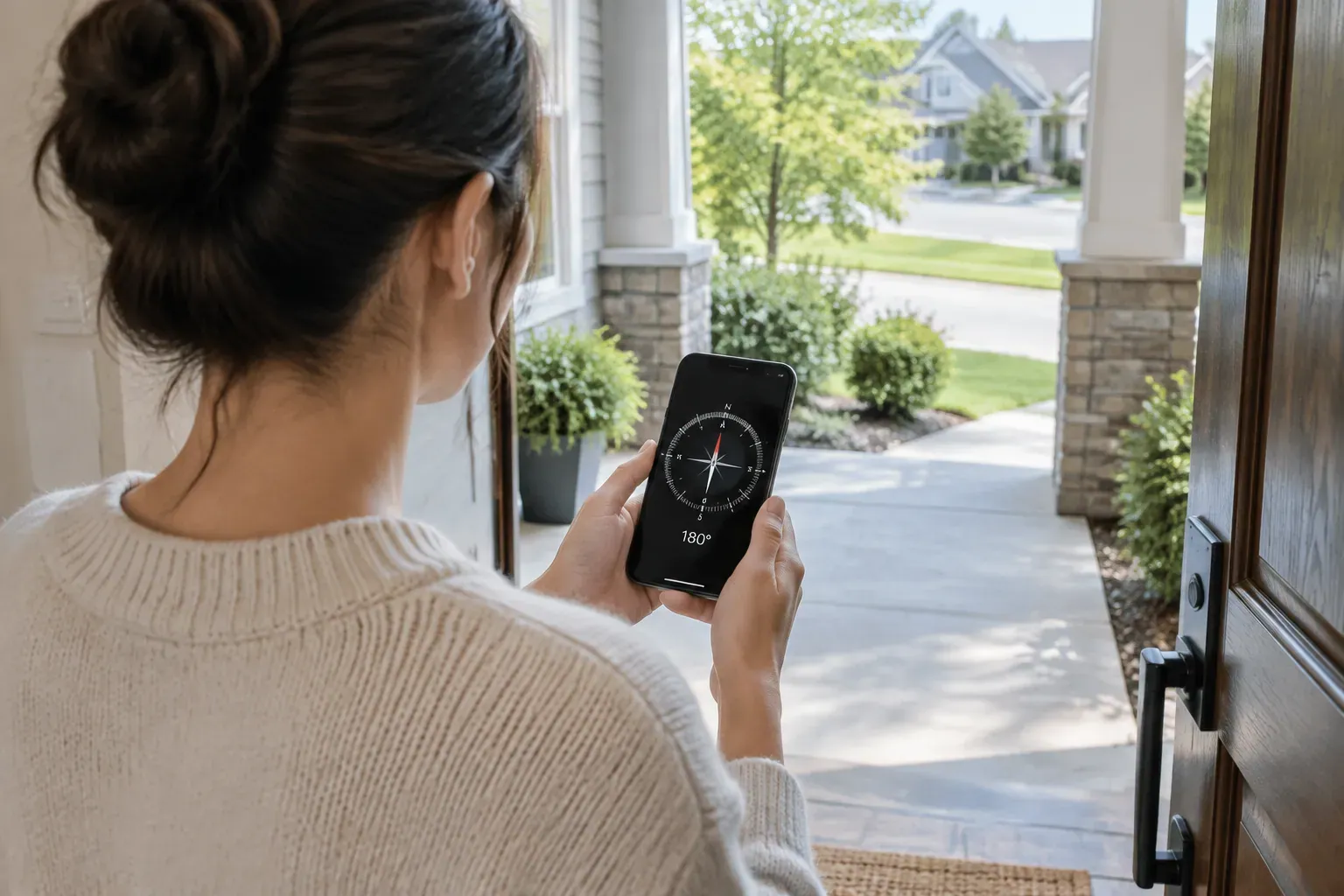
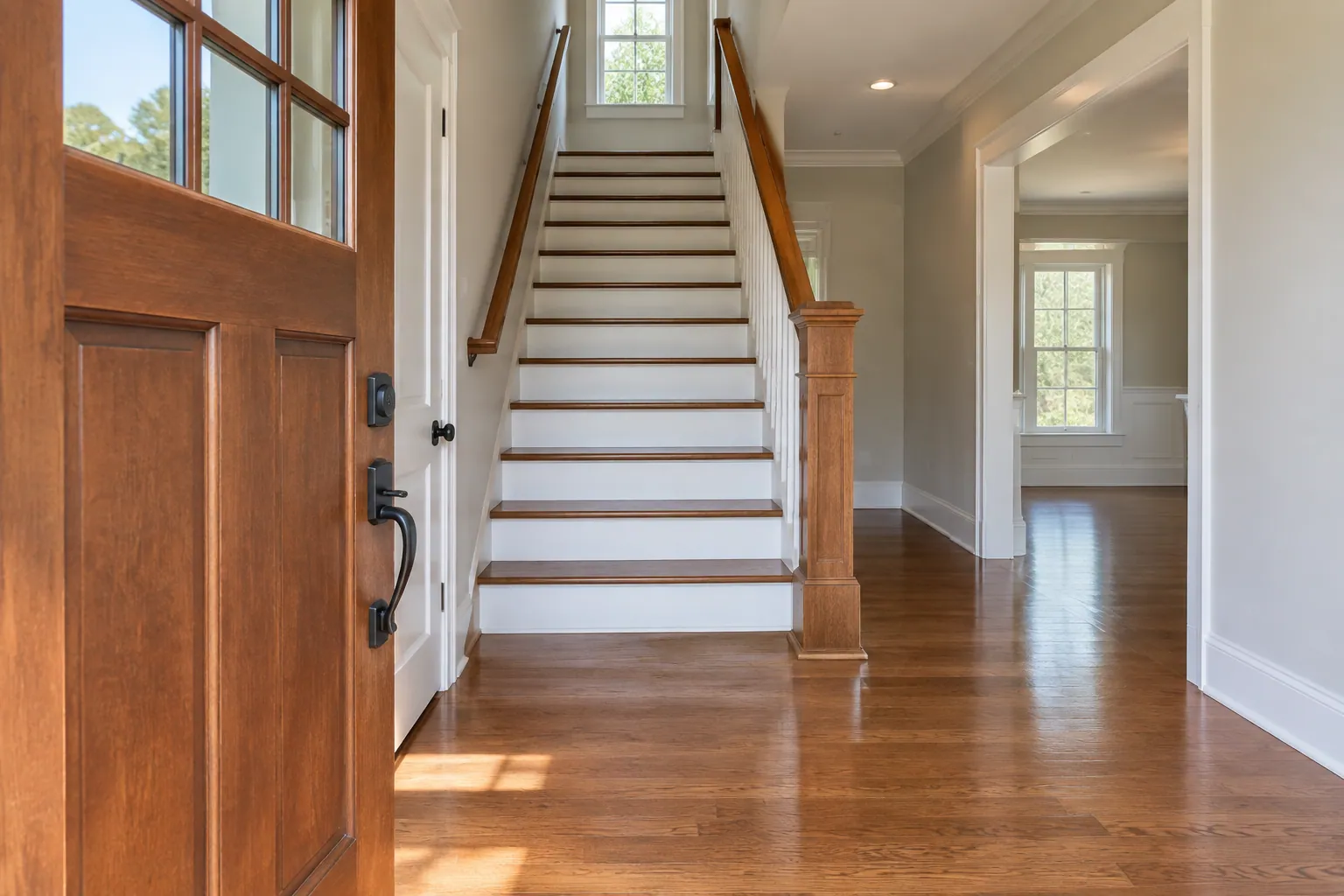
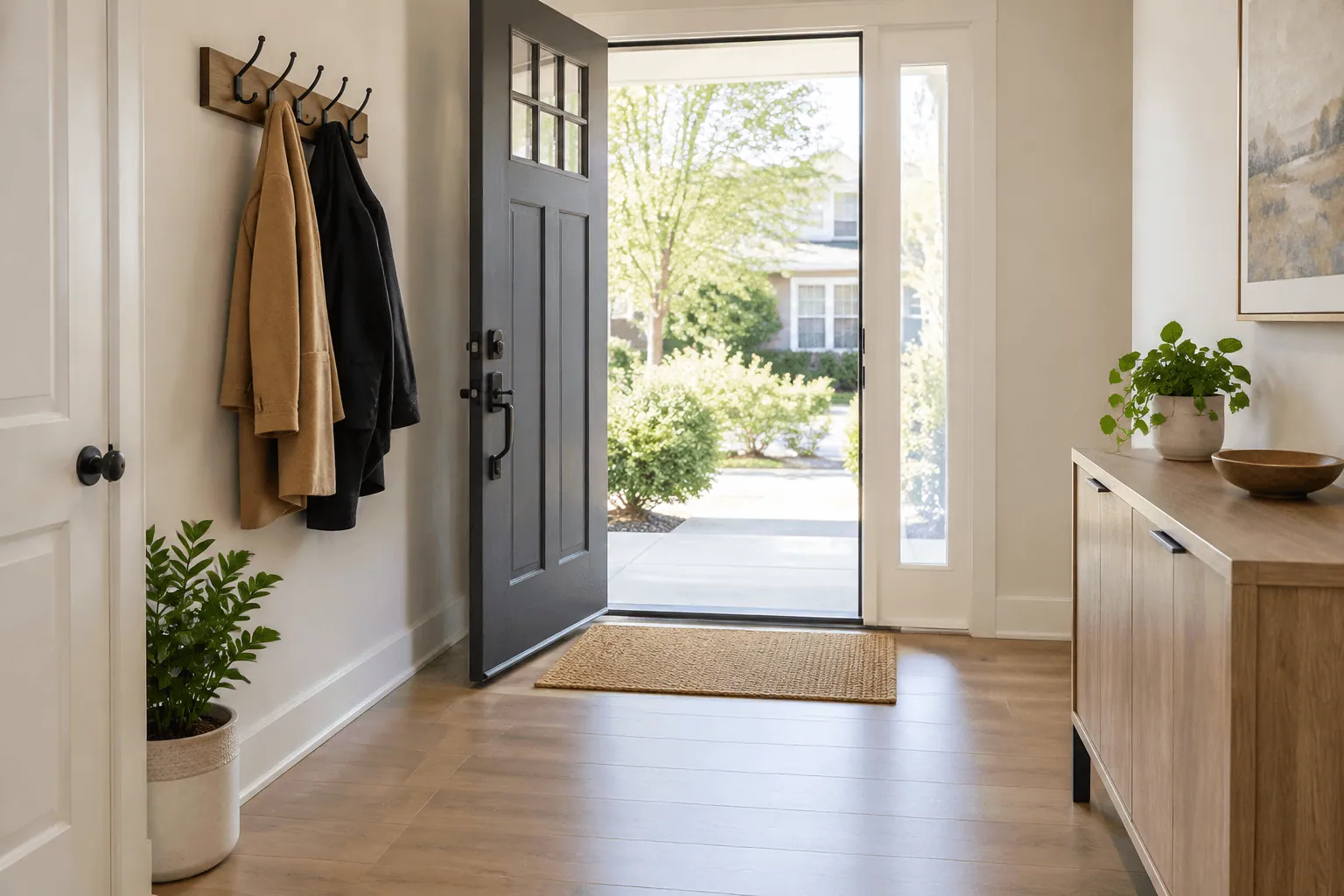
Treat the front door as the home’s main intake: it should open fully, stay well lit, and leave a clear strip of floor on both sides. Traditional language calls this the Mouth of Chi—the place most energy enters the dwelling. For renters and owners alike, the test is physical: shoe piles, sticky hinges, dark bulbs, and a door that cannot swing wide all choke the start of the home.
Do this first:
- Clear anything that stops the door from opening all the way.
- Leave a walkable lane from threshold into the first room—no bag wall.
- Fix dead bulbs at the entry; soft light beats a dark cave.
- Give coats and shoes a home so the threshold does not become storage.
A mirror aimed straight at the front door is a common “bounce energy out” warning online. If your only mirror already lives there, angle it so it does not stare the doorway down, or move it to a side wall. Expanding a narrow hall is useful; reflecting the street rush straight back out is not.
Rule 2 — Clear clutter and walking paths
Keep the routes you use every day—door to kitchen, bedroom to bath—free of trip piles and visual noise. Clutter is not a moral failure; it is a flow problem. Blocked qi in traditional talk maps cleanly to bumping the same chair twice a day and never finding a clear place to set keys.

Work one lane at a time:
- Floors and thresholds before deep closets.
- Broken or unused items leave first; “maybe later” boxes leave second.
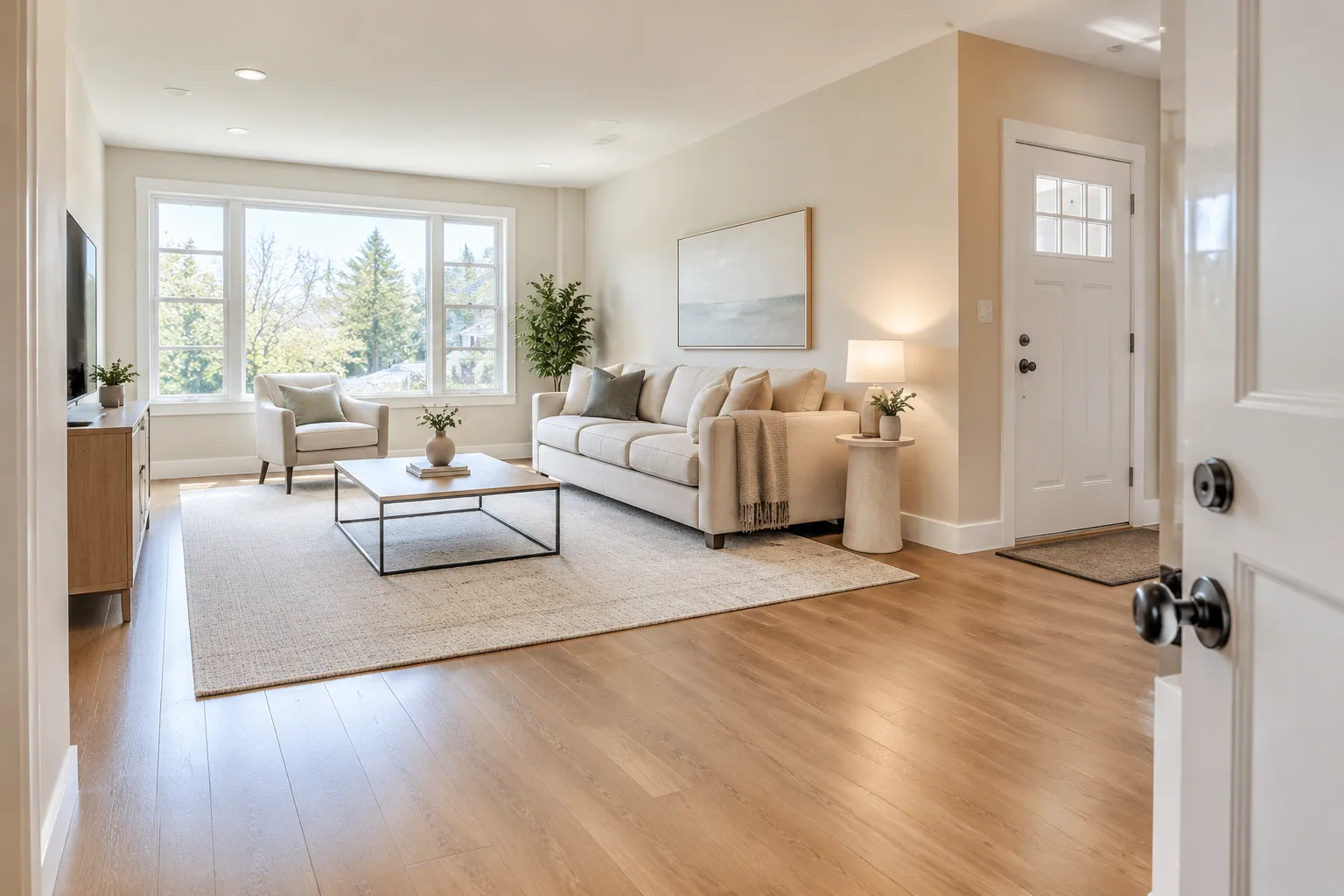
- Leave breathing room around sofas and tables so people (and air) can move.
You do not need an empty aesthetic. You need routes that feel as easy as they look.
Rule 3 — Put key seats in command
For the bed, desk, and—when you can—the stove or main sofa, sit where you can see the room’s entrance without sitting in its straight rush, with solid support behind you when possible. That is the home-wide command idea in one sentence. Traditional notes group bed, desk, and stove as three high-impact interior seats; modern rooms add the sofa you face all evening.

Three checks at each key seat:
- Door in view — A small eye turn shows the entrance; your back is not the only “security system.”
- Off the door’s path — Imagine the doorway’s width projected into the room; move the seat out of that band.
- Solid backing — Wall behind bed or desk beats floating in the center or facing a void.
Stoves rarely move. If yours faces away from the kitchen opening, keep walk lines clear, use the burners you have, and improve lighting—do not pretend a rental kitchen will become textbook.
For a measurable bed-and-desk deep dive, open the feng shui command position guide. For ranked bedroom-only rules (mirrors, under-bed storage, screens), use rules of feng shui bedroom. This page stays at the whole-home layer so those articles do not get rewritten here.
Rule 4 — Balance light, weight, and calm
Aim for even visual weight, usable daylight or layered lamps, and rooms that are not overloaded on one wall. Balance in feng shui principles often shows up as yin/yang talk or the five elements (wood, fire, earth, metal, water). Beginners get more from the physical version: one side of the room stuffed, the other empty; one harsh overhead, no soft lamp; windows never opened.
Light upgrades that count:
- Open curtains for daytime qi (and mood).
- Replace dead bulbs the week they die.
- Add one warm lamp where you sit at night instead of living under a spotlight.
Element décor can support a room after the stack is solid. It should not replace a blocked door or a desk with its back to traffic.
What to skip for now
Save these until entry, paths, and command seats pass a honest walk:
- Lucky house numbers and “unluckiest color” panic lists
- Full-home bagua repaint projects before you can open the front door freely
- Buying cures while halls are still obstacle courses
- Rewriting every bedroom rule on this page—that work already lives on the bedroom rules guide
Fear-based “never” lists travel well online. They rarely help a renter who needs one clear lane and one better chair angle.
Tonight’s 15-minute home walk
- Entry (3 min) — Open the front door fully. Clear one pile. Turn on the entry light.
- Paths (5 min) — Walk door → kitchen and bedroom → bath. Remove one trip hazard on each route.
- Command (5 min) — Sit at bed or desk: see the door? Off the straight line? Wall behind you?
- Balance (2 min) — Open one set of curtains; note one dark corner for a lamp later.
Mark each step pass / soft fail / hard fail. Fix one hard fail this week before you shop for décor.
FAQ
What are the basic feng shui rules for beginners?
Start with four home-wide moves: clear and light the entry, free daily walking paths, place key seats in command, then balance light and visual weight. That sequence is the practical core of basic feng shui rules before room-by-room styling.
What are the basics of feng shui in plain language?
Basics of feng shui means arranging openings, paths, and furniture so the home feels supported and easy to move through. Traditional qi language and modern “does this room feel safe and calm?” tests usually point at the same geometry.
Are feng shui principles different from feng shui rules?
In everyday English they describe the same job. Feng shui principles often sound more theoretical (flow, balance, support); feng shui rules sound like checks you can verify. This guide uses both for the same home-first stack.
How are feng shui home rules different from bedroom rules?
Feng shui home rules start at the door and the routes that connect rooms. Bedroom rules zoom into sleep geometry—mirrors, under-bed clutter, screens. Do the home stack first, then open the bedroom checklist when the rest of the house is not fighting you.
Do I need a bagua map on day one?
No. A bagua map can organize later décor choices. It does not fix a door that will not open or a desk with its back to the entrance. Form checks come first.
When the stack feels honest and you want a whole-home layout pass—not another charm list—open the home design feng shui guide and walk your plan room by room with the same priorities: entry, flow, command, then polish.