Feng Shui Garden Layout: Paths, Water & Seating

Practical feng shui garden layout—curved paths, water that feels inward, backed seating, and front vs back roles—plus a tonight checklist for your yard.

A feng shui garden is less about buying a lucky statue and more about how you move, pause, and look when you step outside. Searchers asking about feng shui for gardens, garden feng shui, or a feng shui garden layout usually want the same outdoor job: calm circulation, a place to sit that feels safe, and water that feels generous—not chaotic. Advice for a feng shui backyard and phrases like feng shui for the garden or feng shui in garden point to that same layout puzzle.
This guide walks a simple spine—Path · Water · Seat—then splits front welcome from back nest. When you want a wider home-design map later, open our home design feng shui hub; tonight, stay with the yard you can touch.
What a feng shui garden means here
A feng shui garden is an outdoor layout where paths, water, seating, and planting keep movement gentle and usable—so energy (qi) and people can arrive, linger, and return without feeling rushed or trapped. Traditional garden teaching and modern “does this yard feel stuck?” checks land in the same place: if the walk is a straight arrow of trash cans and dead pots, the outdoor room will feel hard no matter how many wind chimes you hang.
You do not need a perfect compass bagua on day one. Start with what you can walk and sit in tonight.
The Path · Water · Seat framework
Use three outdoor budgets before you redraw the whole property: Path (how you arrive), Water (how flow feels), Seat (where you rest with support). Call it PWS. It keeps feng shui garden layout decisions measurable for a patio, a courtyard, or a full feng shui backyard.
Path
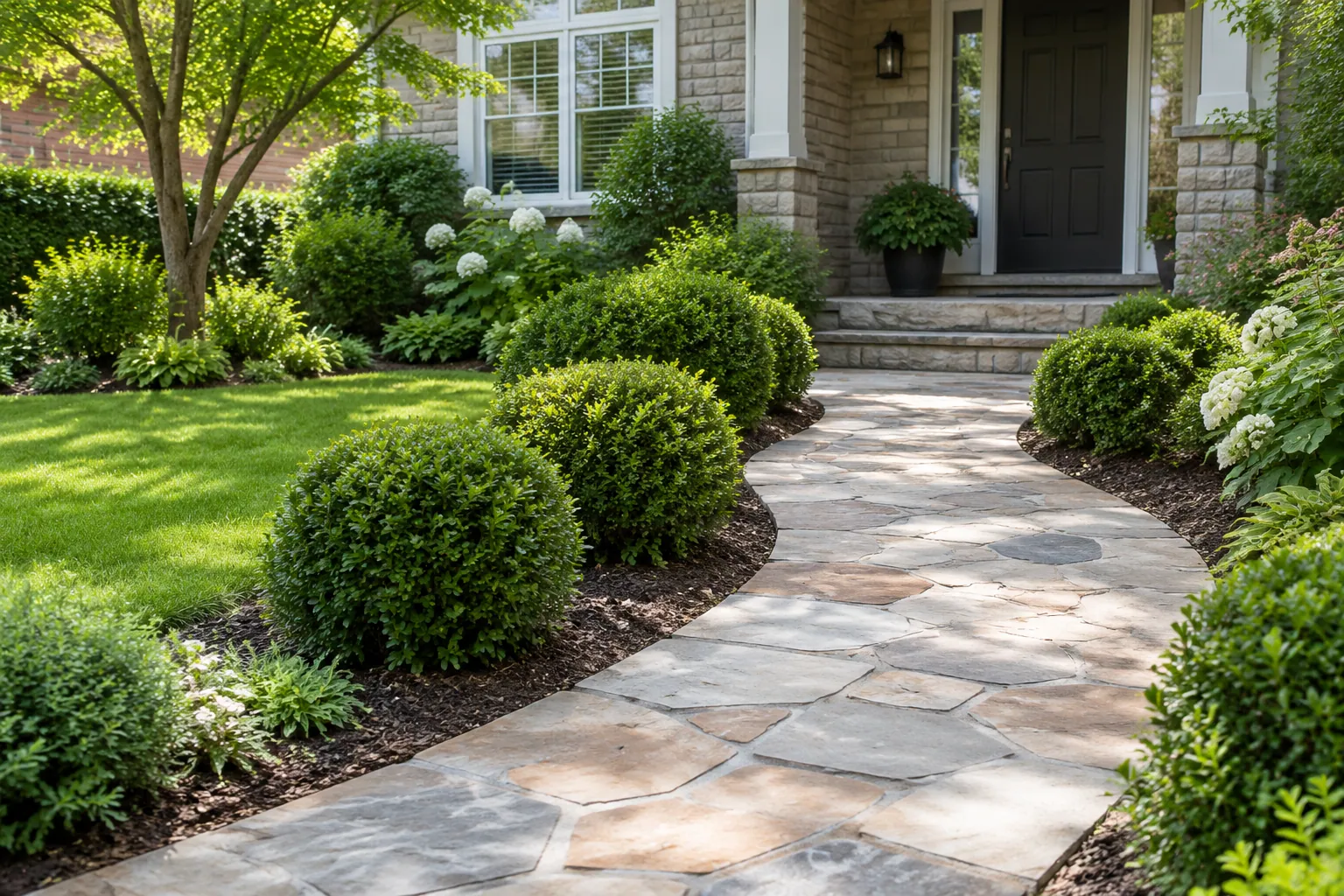
Prefer a gentle bend over a long straight shot from gate to door or from back steps to the far fence. Straight lines are rare in nature; a soft curve slows the eye and the feet. If you cannot rebuild paving, fake the curve: offset a large planter, thicken a planting bulge on one side, or add a side focal point so the walk does not feel like a runway.
Keep the route clear. Overgrown shrubs that slap your shoulders, hose coils mid-walk, and broken stepping stones all count as outdoor clutter. From the street or alley, you should be able to find the door without guessing.
Water
Keep outdoor water clean, sized to the yard, and oriented so it feels drawn toward the home—not racing out the gate. Traditional practice often favors water in northern, eastern, or southeastern garden areas for career, health/family, and abundance themes; treat those as useful defaults, then adjust to sun, HOA rules, and kids’ safety. A birdbath with a tiny pump can beat a neglected pond.
Stagnant, murky, or oversized water fights the point. Proportion matters: a pool that swallows the whole center of a small lot can overwhelm the outdoor room the same way an oversized sofa overwhelms a living room.
Seat
Place the main bench or lounge so your back meets a wall, fence, or dense hedge, and your eyes can read the yard—the outdoor version of a command position. Round or soft-edged tables help circulation. Put enough seats for the household (and one guest) so nobody is left standing like an afterthought.

A simple walkable order many yards can aim for: house → soft path → open middle → water you can see/hear from the seat → taller planting at the rear.
Front Welcome vs Back Nest
Treat the front as a welcome mouth for the home, and the back as a nest for rest and gathering. Front work is curb clarity: visible door, working gate, screened trash, healthy plants, and a path that does not feel like a hallway of thorns. Fragrance and soft leaves near the approach help more than a row of spikes aimed at knees.
Back work is support and stay-time. Taller planting, a fence, or a shed line can act like the “chair back” of the property so the yard does not feel spilled into a void. Use the rear for dining, play, fire light (where allowed), and the backed seat—not as a second junk drawer.
If front and back share one continuous side yard, keep one clear artery and one pause pocket so the whole loop still has Welcome and Nest moments.

Five elements without the overwhelm
Balance wood, fire, earth, metal, and water with things you already maintain—not a shopping checklist. Wood is living plants and timber furniture. Fire is a fire pit, warm lighting, or a few warm-colored blooms in a sunny pocket. Earth is stone, ceramic, and soil that looks cared for. Metal is a slim table base, a tuned wind chime you actually like, or silvery foliage. Water is the feature you keep moving and clean.
Skip fake turf and plastic plants if you can; lifeless surfaces read as “paused” outdoors the same way dusty fake greenery does indoors. Soften sharp fence corners with vines or rounded shrubs along the path.
Tonight checklist and common mistakes
Tonight, clear one path end-to-end, fix or empty one neglected water vessel, and move one seat so your back has support. Then walk the route again at normal speed.
Do this:
- Pull dead plants, broken pots, and visible trash storage off the arrival line.
- Soften one straight walk with a curve, planter offset, or planting bulge.
- Clean the birdbath/fountain; confirm water does not feel aimed away from the house.
- Anchor a bench or chairs against a solid back with a view of the yard.
- Give the front door a clear sightline from the street; keep thorns off the handshake zone.
Watch for these mistakes: a water feature you never clean; seating floating mid-lawn with no back; a front walk blocked by bins; a straight concrete arrow from sidewalk to door with nothing to soften it; spiky plants lining the only path kids use.
FAQ
Is feng shui for the garden different from indoor feng shui?
The goals match—clear flow, support, and balance—but outdoors you work with weather, neighbors, and living plants. Paths, water, and seating do most of the heavy lifting before you worry about fine bagua colors.
Where should a water feature go in a feng shui backyard?
Common traditional defaults are north, east, or southeast of the garden plan, with clean water that feels oriented toward the home. Always weigh sun, noise for neighbors, and child safety first; a small maintained feature beats a large neglected one.
Can a tiny courtyard still use garden feng shui?
Yes. One curved container edge, one clean water bowl with gentle motion, and one backed chair are enough to practice Path · Water · Seat at balcony scale.
Do I need a full bagua map before I start?
No. Map life areas later if you enjoy it. First make the yard walkable, restful, and maintained—then layer intentions.
When the outdoor spine feels right, step inside and continue with a whole-home layout on our home design feng shui page. Tonight, finish the path you started, listen for clean water, and sit with something solid behind you—that is enough proof the garden is working with you.