Feng Shui Wall Art: What to Hang & Avoid

Choose feng shui wall art by subject and room job—living vs bedroom, pairs, hangings, and imagery to avoid—then run a quick feeling test before you buy.

Feng shui wall art is less about buying a “lucky” canvas and more about matching the picture—or hanging—to what the room is for, and how you feel when you look at it. Searches for feng shui art, feng shui artwork, feng shui paintings, or feng shui and art usually want the same job: which subjects help, which ones jar a space, and how bedroom choices differ from living-room ones.
This page stays on wall art and hangings. It is not a full home-layout system, not a shopping list of koi and money trees, and not a bedroom-only essay—bedroom tips sit in one section below.
What feng shui wall art actually means
In plain terms: feng shui wall art means choosing paintings and hangings whose subject, mood, and scale support the room’s job—rest, gather, or focus—rather than treating one symbol as a universal cure. Traditional talk of qi here is simply how easy the room feels to live in: calm, busy, heavy, or open. Art is a strong cue because your eye lands on it every day.
You do not need Chinese motifs for the idea to work. Soft abstracts, photographs, and textile hangings count if the feeling matches the room. A piece you dislike every morning fails the job even if a blog calls it auspicious.
Subject matter that usually supports a room
Start with healthy, living, balanced imagery—then fine-tune by room. These themes show up again and again in practical guidance for paintings feng shui readers:
| Subject | Typical feel | Easy rooms |
|---|---|---|
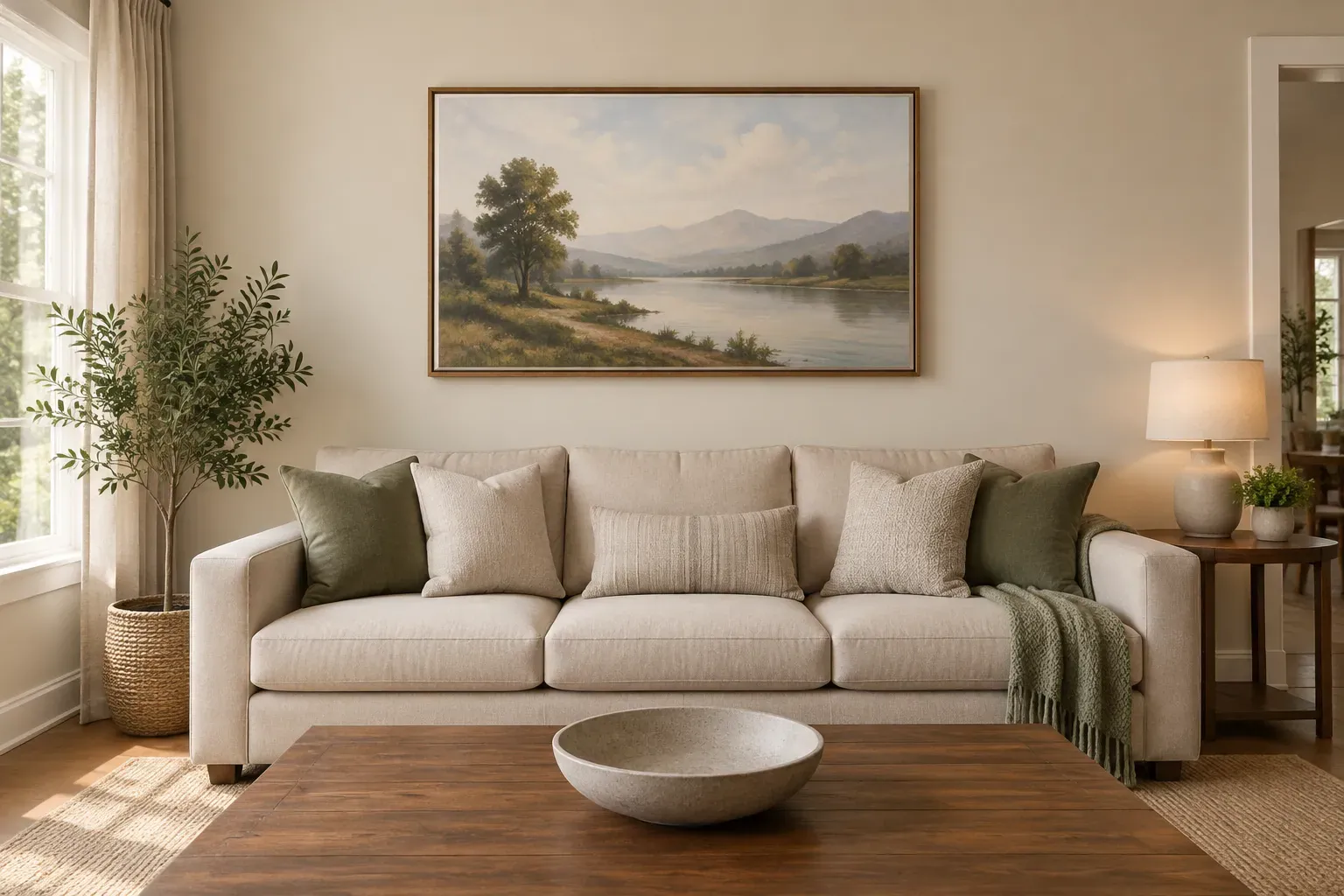
| Gentle landscapes, open fields | Calm, breathable | Living, hallway, bedroom |
| Rounded or soft mountains | Support, stability | Living, behind sofa or desk |
| Blooming flowers, lush plants, bamboo | Freshness, growth | Living, dining, bedroom (soft dose) |
| Pairs of birds or paired forms | Partnership, balance | Bedroom, couple’s sitting area |
| Calm water (still lake, gentle stream) | Flow, ease | Living, entry—careful in bedrooms |
| Soft, flowing abstracts | Quiet mood without literal symbols | Any room if colors stay gentle |
Mountains and open landscapes are versatile feng shui paintings because they read as backing and space rather than drama. Save loud “wealth” symbols for optional accents after the room already feels right.
Living room vs bedroom (and hangings)
Match the wall to the room’s tempo: living walls can welcome more movement; bedroom walls should quiet the nervous system.
Living / gathering walls
The living room is the social heart of many homes. Welcoming landscapes, soft mountains behind the main sofa, botanical art, and calm water scenes usually fit. Family photos that show warmth belong here more easily than over the bed. Leave breathing room around the frame so the wall does not feel crowded.
Bedroom wall art (section)
Bedroom feng shui wall art (including feng shui paintings for bedroom, feng shui art for bedroom, and feng shui wall art for bedroom) should favor soft color, gentle nature, and paired subjects. Avoid stormy seas, crashing waterfalls, predatory animals, and solitary figures if you want the room to feel like shared rest. Keep frames secure and not visually crushing over the headboard—nothing should feel like it is looming over sleep.

Wall hangings and textiles
Feng shui wall hangings follow the same subject rules as canvas: healthy plants, soft geometry, woven botanicals, or calm abstracts beat aggressive metal spikes or war motifs. Textiles often feel softer than heavy glass frames—useful when you want less glare and less “hard” weight on a rest wall. Hang at a comfortable viewing height and keep pathways clear so the hanging does not jab into circulation.
Pairs and partnership cues
Paired imagery is a visual cue for balance and partnership—not a guarantee of romance. Two birds, two flowers, two matching prints, or two similar nightstand artworks can signal “room for two,” which many people use when they want the bedroom to feel shared. A lone figure in fog can be beautiful as art and still feel lonely when it is the last thing you see at night.
If you live alone and like a single quiet landscape, that can still work—choose something that feels whole and calm, not abandoned. Pairs matter most when partnership energy is an intentional goal for that wall.
Imagery to avoid
Skip art that trains the room toward tension, isolation, or decay—especially where you sleep. Common avoid list:
- Fighting, weapons, war, or predatory animals mid-attack
- Storms, disasters, chaotic jagged abstracts that feel like an argument
- Withered plants, barren dead trees, or decaying still lifes
- Lonely or grieving solitary figures in bedrooms meant for rest or couple energy
- Very heavy, dark, oppressive pieces hung directly over the bed or main sofa
- Broken frames or damaged art left unrepaired
Turbulent water belongs in the “use carefully” pile for bedrooms. Living rooms tolerate gentle water better when the scene still feels nourishing, not flooding.
A 10-second swap test
Stand in the doorway, look at the art for ten seconds, and name the first feeling—calm, tense, lonely, or busy—then keep, move, or swap. This is the fastest filter when blogs disagree. If a “lucky” print makes your shoulders rise, it is the wrong piece for that wall tonight. Moving art costs nothing and often fixes more than buying another symbol.
Tonight: pick one living wall and one bedroom wall. Apply the test. Relocate anything that fails into a hallway, closet, or donation pile. Hang the replacement at eye level relative to the furniture below it so the composition feels anchored, not floating.
FAQ
What wall art is good for feng shui?
Calm nature, soft mountains, healthy plants or flowers, paired subjects in rest rooms, and art you personally enjoy looking at. Match the mood to the room’s job first.
Is water painting good in a bedroom?
Strong or stormy water is usually a poor fit for sleep. If you love water, keep it small, still, and gentle—or place larger water scenes in living or entry areas instead.
Can I hang pictures above the bed?
Yes if the piece is calm, well secured, and not visually crushing. Avoid heavy frames and aggressive subjects over the headboard.
Do hangings count, or only paintings?
Hangings count. Subject and feeling matter more than whether the piece is oil, print, or textile.
Do I need traditional Chinese symbols?
No. Intention and daily feeling matter more than a specific lucky animal print.
Next step
When the art on the walls matches how you want each room to feel, the next layer is how the whole home layout supports that calm. Open the free home-design feng shui check at /home-design-feng-shui and compare your plan against a clear layout read—then hang the next piece with fewer guesses.