Feng Shui Mirror Facing Window: Keep or Adjust?

A mirror facing a window isn’t automatically bad feng shui. Learn when it doubles good light—and when to angle or move it.

A feng shui mirror facing window setup is one of the most argued placements online. Search the same idea as mirror facing window in feng shui—the question is the same: does the glass double good light, or bounce life force right back outdoors?
This page answers that narrow case only. It is not a full mirror-rules handbook, and it is not the separate debate about a mirror aimed at the front door.
Quick answer: not automatically bad
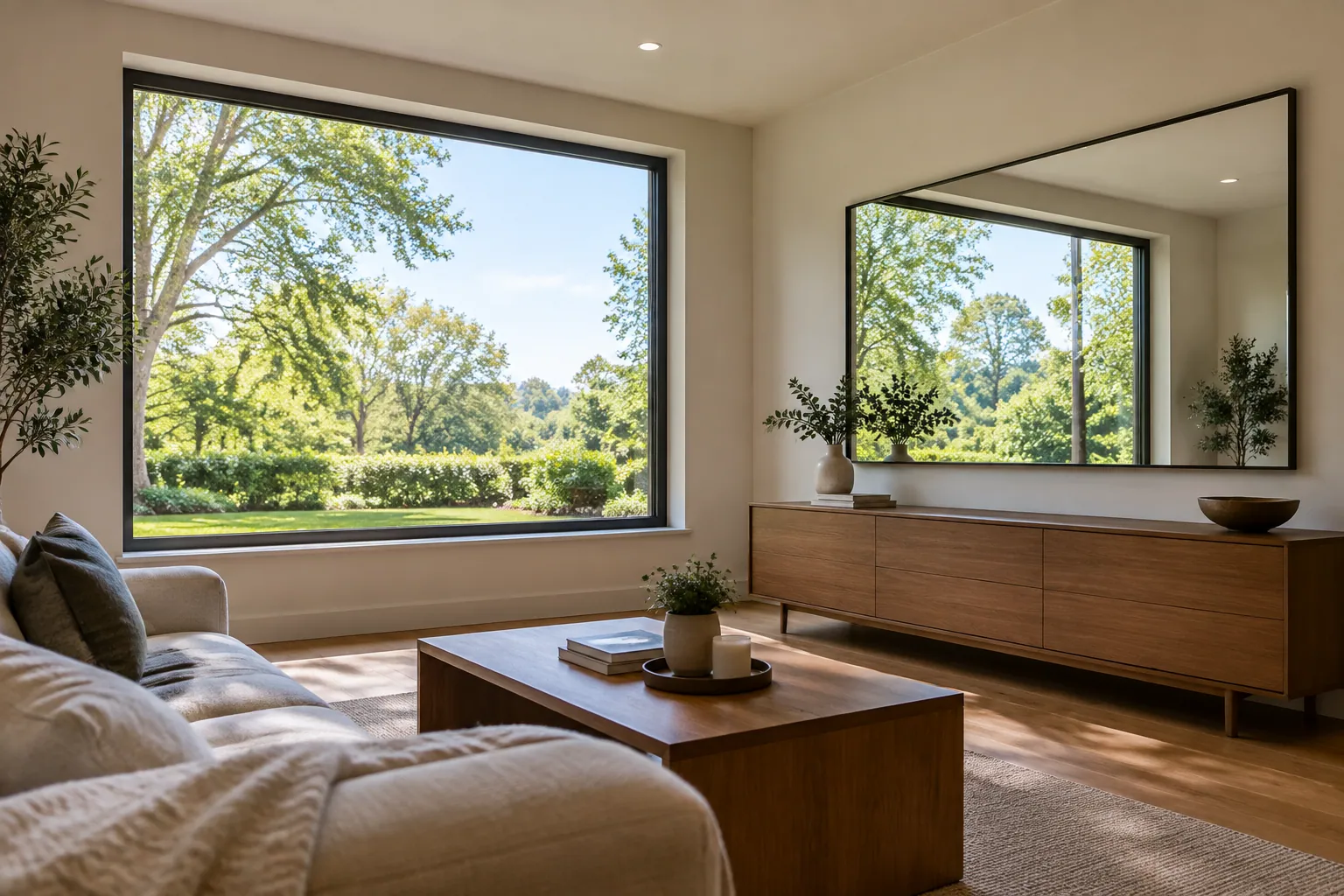
In plain terms: a mirror opposite a window is not automatically bad feng shui—it doubles daylight and whatever the window shows, so the reflection decides keep or adjust. Traditional language calls mirrors amplifiers. If the glass catches a garden, open sky, or calm courtyard, many practitioners treat the placement as helpful, even auspicious. If it catches wires, a blank wall, or night headlights, you are doubling the wrong picture.
You do not need to move a mirror tonight just because it faces glass. You do need to name what it is reflecting.
Two ways people read the same layout
Two common readings compete: one says the mirror amplifies incoming light and scenery; the other says a flat bounce can send qi back out before it settles—so let the outdoor view and room comfort break the tie. Neither camp is fringe. Both show up in popular advice.
- Amplifier reading: Windows are openings for light and outdoor “feel.” A clean mirror across from them pulls more of that into a dim room, the same way a dining-room mirror is said to “double” a table of food.
- Bounce-out reading: Incoming energy hits the reflective face and exits again, so the room never quite holds what the window offered—especially if the path feels like a straight tunnel.
Practical way to choose without dogma: if the outdoor scene is something you would happily hang as art, the amplifier reading usually wins. If the scene is harsh, cluttered, or glare-heavy, treat the bounce-out concern seriously—or simply move the mirror for comfort, which lands in the same place.
When a mirror opposite a window is fine
Keep the layout when the mirror doubles a pleasant view, brightens a dim room, and does not throw harsh sun or headlights onto the sofa or bed. Typical green lights:
- The main reflection is trees, sky, water, or a quiet street you enjoy looking at.
- The room feels clearer at midday after the mirror went up—not colder, noisier, or more restless.
- Seats and sleep spots stay free of sharp glare. Curtains or sheers can soft-clip the brightest hours without killing the view.
- The mirror itself is clean and unbroken. Dusty or cracked glass is a poor amplifier of anything.
A living room or dining area with a soft garden outlook is the classic “keep” case. A home office that needs borrowed daylight can work too, as long as the screen does not sit in the bounce path.
When to adjust (or angle)
Adjust when the mirror doubles a harsh outdoor scene, multiplies sill clutter, or lines up with a door so the room feels like a bright tunnel that never settles. Red flags:
- Utility poles, sharp rooflines aimed at the glass, trash areas, or a blank neighbor wall fill most of the reflection.
- Mail piles, dead plants, or laundry on the sill show up larger in the glass.
- West afternoon sun turns the mirror into a spotlight aimed at eyes or screens.
- The front door, the window, and the mirror form one straight shot—attention rushes in and out.
Bedroom note, kept short: if the same mirror also faces the bed, sleep usually suffers more from the bed reflection than from the window alone. Cover or relocate for night rest; do not confuse that fix with a blanket ban on window-facing glass.

Tonight’s three-check test
Run three checks from the mirror, from your seat, and from the entry path—then keep, angle, or move based on what you actually see and feel. Takes ten minutes.
- View check — Stand where the mirror hangs. Say out loud the first three things it shows outside. Would you want those three things “twice” in the room?
- Glare check — Sit on the sofa or lie on the bed at the hour you use the room most. Does the mirror throw a hard stripe of sun or night light into your eyes?
- Tunnel check — Walk in from the main door. Does the mirror + window make the room feel like a pass-through instead of a place to stay?
If all three pass, keep. If one fails, try an angle before you take the mirror down. If two or three fail, move it to a side wall or store it until the outdoor view changes.
Simple fixes that do not need a remodel
Most “bad” mirror-window pairs fix with an off-axis shift, a side-wall hang, or daytime curtains—not with tearing out glass. Try in this order:
- Nudge off-axis — Slide the mirror a foot sideways or tilt it a few degrees so it catches the best slice of the view (or an indoor plant/art) instead of a perfect reverse of the pane.
- Side wall — Hang or lean it on a wall perpendicular to the window. You still borrow light; you break the straight bounce.
- Curtains as a dial — Sheer for day softness; denser panel for west glare or streetlight. Clear the sill so the reflection stays clean.
- Smaller glass — A large flat panel has the strongest effect. A smaller mirror softens both amplification and bounce-out worries.
- Night cover (bedroom only) — If the room still feels too “on,” drape the mirror after dark and notice sleep for a few nights.
Renters can do all five without drilling a new philosophy into the lease.

FAQ
Is a feng shui mirror facing a window bad?
No—not by default. It is bad only when it doubles a harsh view, creates glare where you rest, or joins a door–window tunnel. Pleasant scenery plus usable daylight is often treated as a plus.
Is mirror facing window in feng shui different in the living room vs the bedroom?
The window rule is the same; the bedroom adds a sleep filter. Living rooms can use light doubling more aggressively. Bedrooms should avoid stimulating reflections toward the bed and may need night covers even when the outdoor view is fine.
Is this the same as a mirror facing the front door?
No. A mirror aimed at the front door is a different classic warning—energy entering the “mouth” of the home bouncing straight back out. A window is a secondary opening. Judge door-facing and window-facing as separate decisions.
What to do next
Tonight, run the three-check test on the mirror that faces your window. If the reflection is worth doubling and the room feels calmer—not glare-blasted—leave it. If not, angle it off-axis or move it to a side wall before you buy a new “cure.”
When you want the same calm logic applied to the whole floor plan—not only one reflection—open the home design feng shui page and map how doors, windows, and seating share the path of attention through your home.