Japanese Feng Shui: Chinese Roots, Fusui & Meaning

Is feng shui Japanese or Chinese? What “Japanese feng shui” means—fūsui, kasō, and aesthetics—without renaming China’s origin. Soft home tips inside.

“Japanese feng shui” is not a claim that feng shui was invented in Japan. Feng shui is a Chinese tradition. In English, the phrase usually points to how related ideas show up in Japan—often called fūsui—or to calm, simple home habits that feel “Japanese” online. Searches for feng shui japanese, feng shui in japan, or is feng shui japanese are asking for that clarification, not a shopping list of charms.
This page sorts the labels. For a full room-by-room layout walkthrough, open the home design feng shui guide when you are ready to rearrange furniture.
Is feng shui Japanese or Chinese?
Feng shui is Chinese in origin. If you asked is feng shui japanese or chinese or is feng shui japanese, the short answer is Chinese. The name is the romanization of 风水 / 風水—“wind” and “water”—a traditional way of reading and arranging places so people, land, and the idea of flowing vitality (qi) fit together.
Related practices traveled across Northeast Asia over many centuries. In Japanese, the same characters are commonly read as fūsui (ふうすい). That is an adaptation and local history—not a rewrite of the birthplace. Treat Japanese practice with respect; do not rebrand the root as Japanese.
What English searchers mean by “Japanese feng shui”
When people type japanese feng shui, they are rarely asking for one official Japanese school syllabus. They are usually mixing a few different questions under one phrase.
| What they often want | What it actually points to |
|---|---|
| “Is it from Japan?” | No—Chinese origin; Japan has adaptations |
| “Feng shui in Japan” | Fūsui habits and history, plus modern lifestyle books |
| “House luck / floor-plan omens in Japan” | Often overlaps kasō (家相), “house physiognomy” |
| “That calm Japanese look” | Aesthetics such as kanso (simplicity), ma (breathing space), wabi-sabi—related vibes, not synonyms for feng shui |
Keeping those lanes separate stops two common mistakes: calling Zen décor “feng shui,” or treating a genkan tip as proof that China “stole” nothing and Japan invented the whole art.
Fūsui, kasō, and Chinese feng shui—side by side
Fūsui, kasō, and Chinese feng shui share family resemblance; they are not interchangeable brand names. Use the table as a map, not as a scorecard of which culture is “better.”
| Label | Origin story | Typical focus | How it shows up in English |
|---|---|---|---|
| Chinese feng shui | China | Landform, buildings, directions; classical Form and Compass streams | History pages, consulting, bagua charts, interior tips |
| Fūsui (風水) | Japanese reading/adaptation of the same characters | Placement and harmony shaped by Japanese history and daily life | “Japanese feng shui” articles; entry, air, water rooms |
| Kasō (家相) | Japanese house-reading tradition | Auspicious/inauspicious house layout and orientation concerns | Less named in English; often folded into “fusui” talk |
Popular English pieces often say Japanese-facing advice feels more like everyday alignment—tidy entry, dry wet rooms, open windows—while classical Chinese work may start with site form and (in many schools) real compass work. That contrast is a useful teaching shortcut. It is not a rule that Japan never used directions, or that China never cared about cleanliness.

Aesthetic cousins matter here. Kanso, ma, and wabi-sabi help many Japanese (and Japan-inspired) rooms feel calm. They are design and cultural ideas. Borrowing them does not turn a Western living room into classical feng shui, and it does not erase China’s origin story.
Habits people borrow (without renaming the origin)
You can try a few Japan-facing housekeeping habits tonight without pretending they replace a full classical reading—or that they make feng shui “Japanese.” Think of them as practical ways to keep pathways clear and wet rooms from feeling neglected.
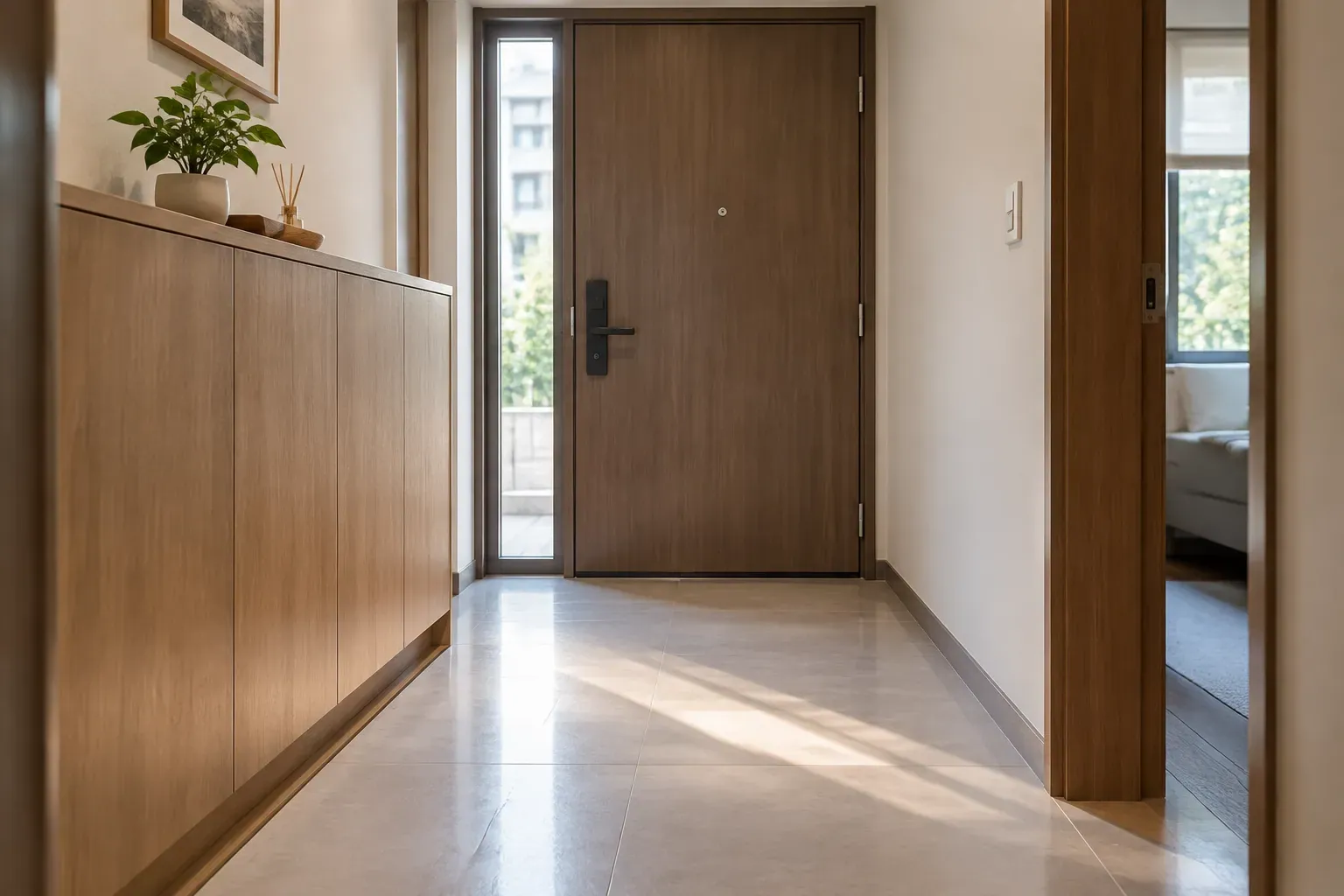
- Clear the entry. Shoes, bags, and delivery piles sit where energy—and guests—arrive. Put them away so the door opens onto floor you can see.
- Mind the water rooms. Kitchen, bath, and toilet stay cleaner and drier; wipe standing moisture and close the toilet lid if that is your household habit.
- Give the air a path. Open windows when you can; avoid parking a bulky cabinet hard against the only light source.
- Leave a little empty. One clear surface beats three “lucky” objects on a cluttered shelf.

None of this requires a maneki-neko collection. If you want placement for bed, sofa, and desk in a modern apartment, use the home design feng shui walkthrough next—start with the rooms you actually live in.
FAQ
Is feng shui Japanese?
No. It is Chinese in origin. Japan has related practices and the reading fūsui; that is adaptation, not invention.
Do Japanese people use feng shui?
Many Japanese sources discuss fūsui and related house lore; interest rises and falls by era and audience. Popular lifestyle books and everyday habits are easier to find in English than a single “official” Japanese syllabus.
Is fusui the same as feng shui?
Same characters, shared roots, local history. Treat fūsui as the Japanese-facing branch of a China-born tradition—not a separate invention with a new birthplace.
What is kasō?
Kasō (家相) is a Japanese tradition of reading a house’s layout and orientation for auspicious or awkward patterns. It overlaps with fūsui talk in everyday Japanese media, but the word is its own label—worth knowing when English articles blur everything into “Japanese feng shui.”
Is kanso the Japanese version of feng shui?
No. Kanso is an aesthetic of simplicity. It can support a calm room that also follows feng shui-friendly habits, but it is not a geomancy system by itself.
What to do next
Tonight, clear the path from your front door and wipe one wet counter dry. If the room still feels stuck, open the home design feng shui guide and fix one furniture sightline—door visible, solid backing where you sit or sleep—before you buy a single “lucky” object.