Feng Shui Trees in Front of House: Door Blocks & Path Fixes

Feng shui trees in front of house: when a trunk blocks the door, squeezes the bright hall, or steals light—plus prune, path, and shade fixes before you cut.

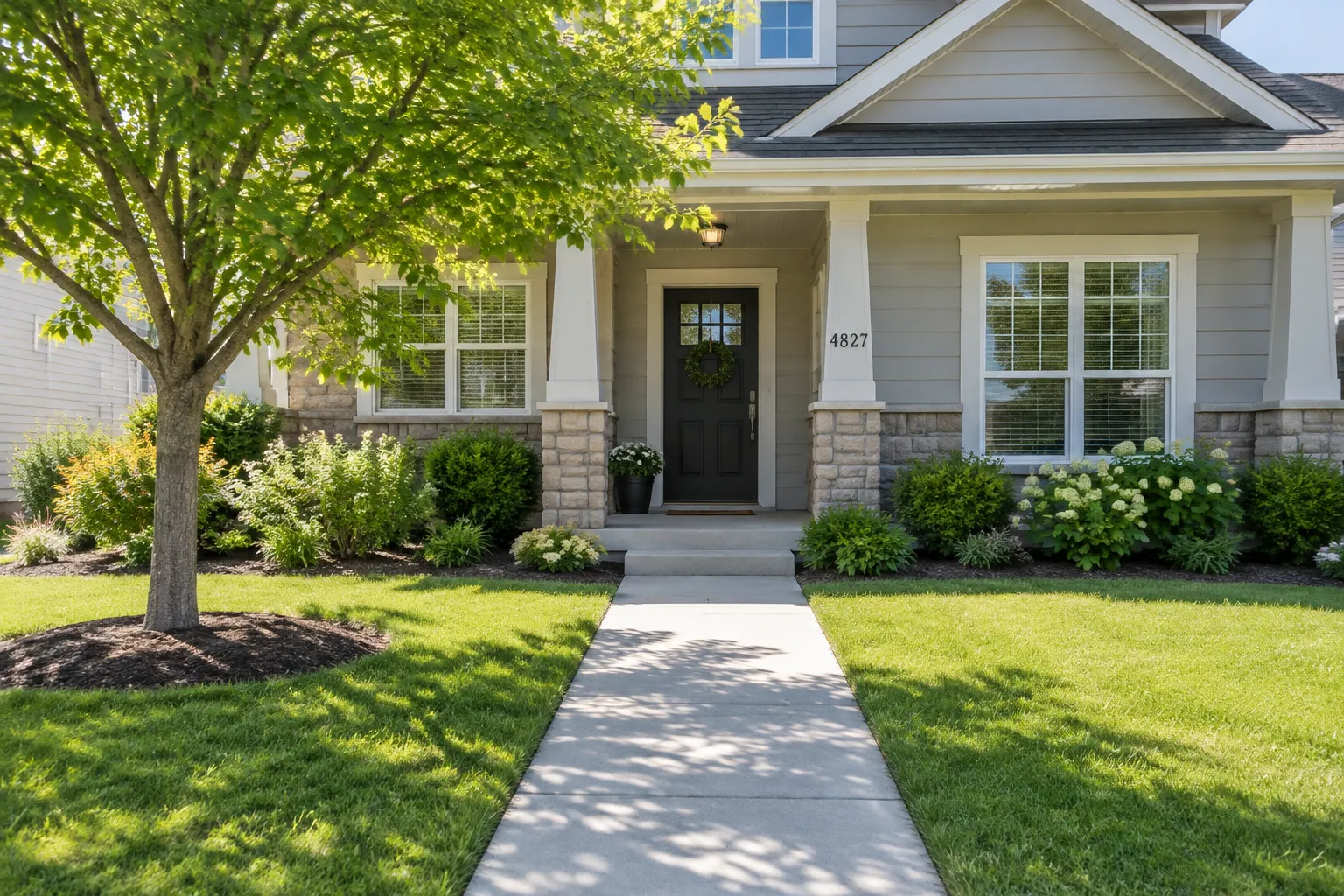
A tree in the front yard is not automatically “bad” feng shui—trouble starts when the trunk sits on the door’s center line, darkens the gathering space in front of the house, or crowds the welcome path. Searches for feng shui trees in front of house or feng shui tree in front of house usually want the same job: keep shade and greenery without choking the mouth of the home.
This guide stays on the front approach—door view, bright-hall clearance, and practical fixes. For a fuller layout read across rooms and facing, open the soft Home Design Feng Shui guide when you finish the yard checklist.
When a front tree helps vs hurts
In plain terms: a front-yard tree supports the home when it is healthy, off the door axis, and leaves an open, bright pocket of space for energy (and guests) to arrive; it hurts when it acts like a pole in the doorway of that pocket. Traditional form teaching treats the front door as the “mouth” of the house and the open yard just in front as a bright hall—a place where movement should slow, collect, and then enter calmly.
A single trunk aimed straight at the door can feel like a vertical obstruction (sometimes called a poison arrow in popular writing). The same tree set to one side, with a clear walk and daylight on the porch, often reads as protection and “mountain” support rather than a blockage. Dead, diseased, or house-touching limbs are a separate problem: they add weight, damp, and risk whether or not you care about symbolism.
The 60-second door-view test
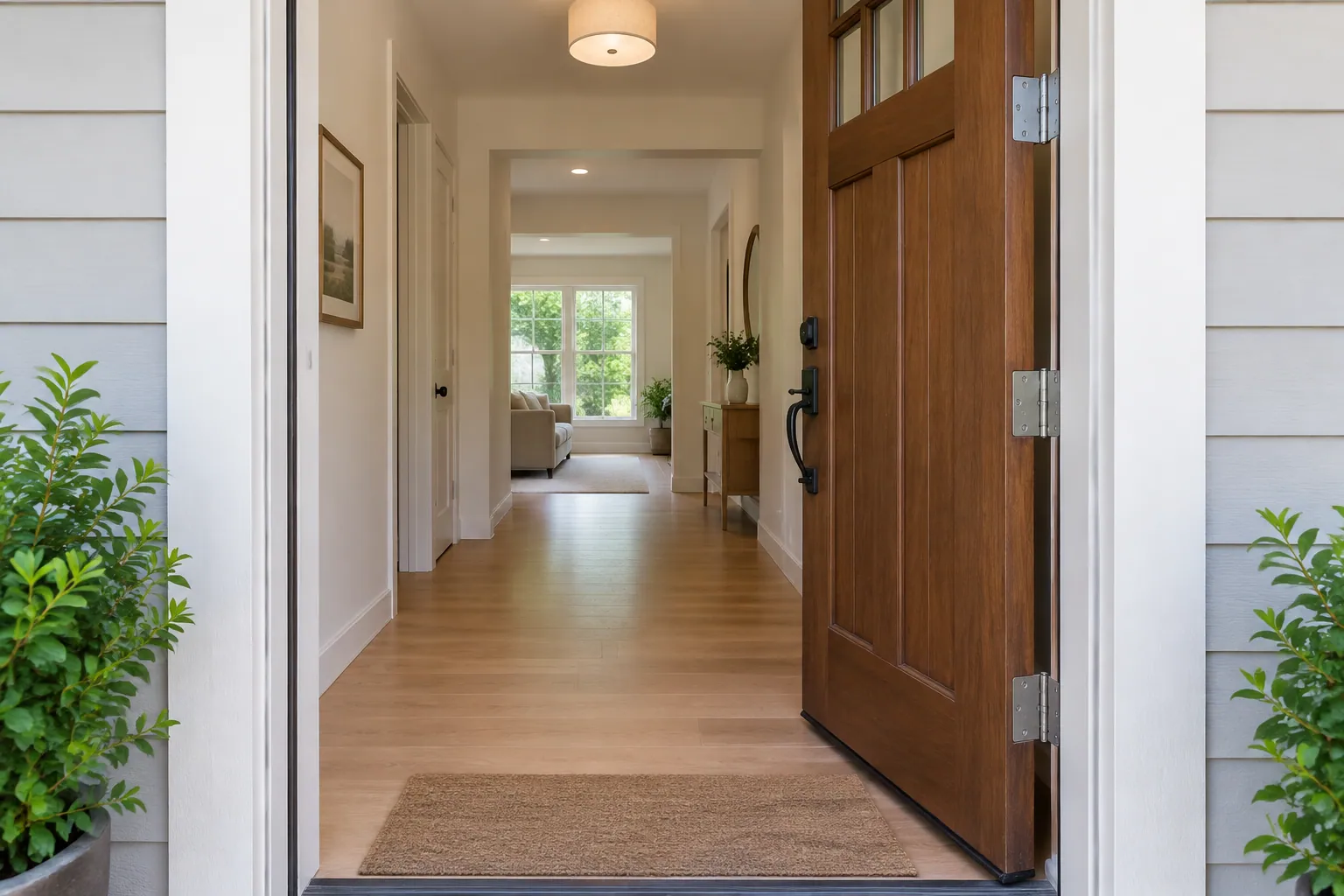
Stand just inside the front door looking straight out; if the main trunk sits on that sightline like a knife edge aimed at the opening, treat alignment as the first issue—before you argue about species. Repeat the glance from the main front window if you use that opening as much as the door.
Check four facts while you stand there:
- Alignment — centered on the door, slightly off, or clearly to the side?
- Distance — does the trunk feel pressed against the porch, or far enough that the door still “breathes”?
- Canopy — do branches hang over the roof, seal the sky, or leave a bright open band above the walk?
- Health — full living crown, or dead wood, split trunk, and constant drop litter on the mat?
A tree eighty feet across a driveway is a different conversation from a trunk three steps from the handle. Distance softens the hit; center-line closeness sharpens it.

Shade versus welcome-path clearance
Useful afternoon shade is not the same as a sealed, dim front court; keep a clear walking line and enough light on the door so the arrival still feels open. Many western lots want both: cooler summers and a front door that is easy to find after dark.
Tradeoffs to watch:
- Keep high, filtered shade that cools the porch without hiding the door numbers.
- Fix low, dense skirts that force guests to duck or squeeze past foliage.
- Keep a soft curve in the walk that slips around the trunk instead of colliding with it.
- Fix a straight path that dead-ends into bark, then jogs awkwardly at the last second.
If the front feels gloomy at noon, crown-lift or thin before you reach for charms. Bright hall teaching is practical here: the entry wants some open ground and light so the house does not live under a permanent heavy lid.
Left dragon, right tiger (side planting)
Looking out from the door, a stronger, slightly taller planting on the left (dragon side) is usually preferred to a lone heavy tree pinned tight on the right (tiger side). Classical landscape language uses that left/right balance as a gentle embrace: support on the left, a calmer, lower right.
If your only mature tree sits on the right and towers over the left, you can often rebalance with a fuller left-side tree or tall shrubs rather than panic-cutting the right. Avoid stacking sharp, spiky forms right beside the handle; soft, rounded canopies feel more welcoming on the approach.
Fixes that don’t require cutting the tree
Start with prune, light, and path geometry; add sound or reflective accents only after the physical approach is clear—and reserve removal for dead, unsafe, or unfixable center-line giants.
- Lift and thin the canopy so you can see sky and door from the street; remove dead wood first.
- Light the arrival — a warm porch light plus a low path light that guides around the trunk (uplighting the canopy can also lift a heavy night silhouette).
- Curve the walk so feet—and the sense of arrival—flow past the tree instead of colliding with it.
- Optional accents — a pleasant metal wind chime between tree and door, or a discreet reflective garden accent facing the trunk; skip anything that aims aggression at a neighbor’s windows.
- Honest removal — if the tree is dying, structurally unsafe, or so centered and close that no trim restores a bright open pocket, removal may be the cleanest reset; replant off-axis afterward.

If you are planting new
Place new trees off the door’s center line, in scale with the house, and leave an open bright pocket at the threshold—health and proportion beat “lucky species” lists. Flowering or fruiting trees can feel abundant when they stay manageable; weeping or heavily thorned forms are usually poorer choices tight against the walk.
Keep trunks and limbs off the walls and roof line. A cluster of softer plantings that frames the path often behaves better than one spear-like trunk in the middle of the bright hall.
FAQ
Is it bad feng shui to have a tree in front of your house?
Not automatically. It becomes a concern when the trunk blocks the door view, steals the open bright space in front, or overwhelms the house with shade and dead wood. Side placement with a clear path is often fine—and can feel protective.
What does a feng shui tree in front of house usually mean?
Popular writing treats a centered trunk as an obstruction to the mouth of the home. Off-center, healthy trees more often read as support or a screen against an ugly view across the street—as long as the door stay visible and the approach stays walkable.
Can plants beside the door help?
Yes, when they flank rather than clog. Balanced pots or low plantings on both sides can slow a harsh approach; oversized foliage that hides the handle or forces a squeeze works against you.
Tonight’s next step
Walk to the door, do the sightline test, and note one change you can finish this weekend—usually a prune order, a path light, or clearing clutter on the mat. When you want the same clarity for the whole floor plan—not just the front tree—continue with Home Design Feng Shui and map how entry, rooms, and facing work together.