Good Feng Shui Bedroom: A Scorecard of What “Good” Looks Like

Use a five-check scorecard for a good feng shui bedroom—door view, support, clear paths, quiet mirrors, rest-first use—plus common bad patterns and next steps.

A good feng shui bedroom is a rest-first room that feels supported and easy to settle into—not a museum of lucky objects. If you searched feng shui for bedroom or best feng shui for bedroom, you usually want the same picture: what “good” looks like, what “bad” looks like, and which detail to fix first.
This page is a hub scorecard. It summarizes the principles; it does not rewrite full guides on command position, bed placement, bedroom rules, or layout atlases. Use the checks tonight, then follow the links for depth.
What “good feng shui bedroom” means
In plain terms: a good feng shui bedroom keeps the bed supported and calm, lets you notice the door without lying in its straight path, and keeps clutter, mirrors, and glowing screens from keeping the room “on.” Traditional teaching talks about smooth qi (life energy) in a sleep room; modern practice often lands on the same habits as good rest design—solid backing, clear floors, soft light.
Treat the bedroom as recovery space first. Work gear, loud décor, and shopping cures can wait until the geometry and quiet are honest.
The Bedroom Goodness Scorecard
Score five checks in this order: door view without the rush, solid support behind you, clear paths and under-bed space, quiet mirrors and screens, then rest-first atmosphere and use. That order is the best feng shui for bedroom beginners who cannot fix everything at once—geometry before paint and charms.
Walk the room from the pillows. Mark each check pass / soft fail / hard fail. Fix hard fails first.
1. Door view without the rush
From the pillows, you should notice the bedroom door with a small eye turn—not a full twist—and your feet should not aim straight out the doorway. That “see it, don’t sit in the rush” idea is the short form of command position.
If the only wall puts you in the door’s straight line, shift the bed a few inches off-axis, add a low footboard or bench as a soft buffer, or use a tall plant that breaks the sightline without blocking the exit. Deep fixes live on bed-position pages; tonight only need a safer angle.
2. Solid support behind you
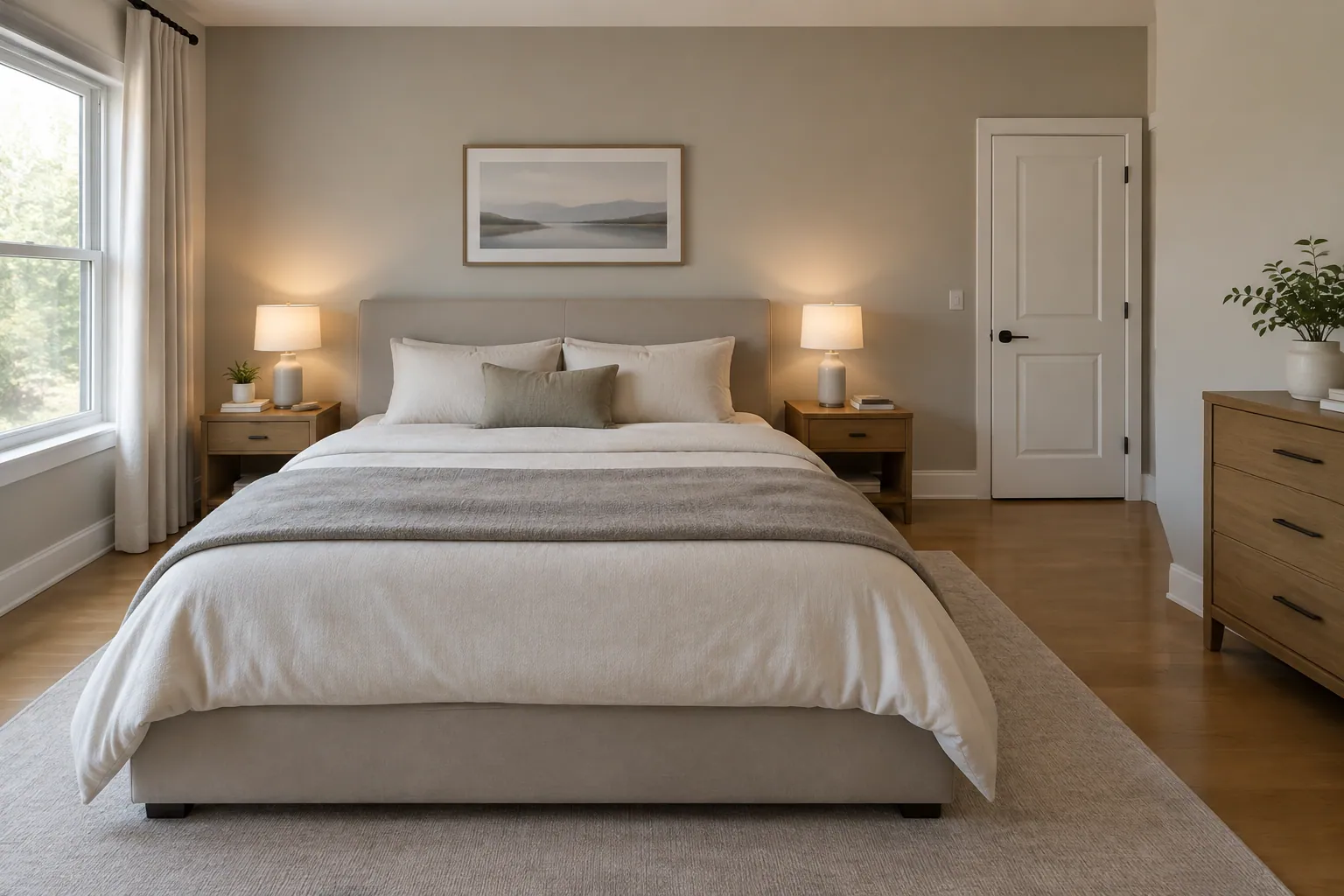
Your head wants a real wall and a solid headboard—wood or upholstered—not a bare window if you have another wall. Traditional guides treat that backing as stability while you sleep.
If the only option is under a window, use the tallest solid headboard you own and close curtains at night so your back still feels held. Do not hang heavy shelves over the pillows.
3. Clear paths and under the bed

You should walk around the bed without hip-checking laundry baskets, and the space under the mattress should stay empty or hold only soft, sleep-related items—extra sheets, not shoes, tax folders, or gym weights. Traditional teaching says clutter under the bed stalls the air around your body; practically, the room also feels unfinished.
Clear both nightstand tops to a few calm objects. Leave walking room on both sides when the floor plan allows; one side jammed to the wall is a common rental compromise—better than feet-in-the-doorway, reopen it when you can.
4. Quiet mirrors and screens
Do not let a mirror reflect you in bed. Keep phones, TVs, and open laptops away from the pillow edge when you can. Mirrors and screens keep the room visually awake; a sleep room wants quieter yang at night.
Renter fixes: hang the mirror inside a closet door, angle a freestanding glass toward a wall, or cover a wardrobe mirror with a soft cloth after dark. Hide a TV in a cabinet or drape it when you sleep.
5. Rest-first atmosphere and use
Soft, quiet colors and warm lamps beat neon accents and a single harsh ceiling can. Keep work desks and workout gear as far from the pillows as the walls allow—or screen them at night. Soft finishes and calm wall images help; they do not replace checks 1–4.
If you want palette depth later, open a colors guide after the scorecard passes. Lucky charms do not fix a bed that cannot see the door.
Bad feng shui bedroom patterns
The most common bad feng shui bedroom setups are the reverse of the scorecard: feet in the door line, weak backing, clutter under and around the bed, a mirror on the mattress, and work or screens at the pillows. Scan for these before you buy anything.

Watch for:
- Bed centered on the door’s straight path (“coffin” talk you may have heard—treat it as a geometry warning, not a curse).
- Head under a window with no real headboard, or under a heavy beam / blasting AC vent.
- Mirror, wardrobe glass, or TV aimed at the sleeper.
- Under-bed storage dump and blocked aisles.
- Open ensuite door aimed at the mattress all night (close it; soft buffer if the plan is stuck).
- Water fountains or stormy water art as the main wall focus—common traditional caution for a rest room.
One hard fail beats five soft décor wins. Fix the hard fail first.
Bed feng shui in one short look
Bed feng shui, in one sentence: put the head on a solid wall, keep a clear angled view of the door, and leave space to walk when you can. That is the hub summary—not a direction chart and not a full placement atlas.
For diagrams, awkward walls, and window cases, open bed position or best position for the bed. For step-by-step room order, use how to feng shui a bedroom. For rule lists and plan shapes, see bedroom rules and bedroom layouts.
Where to go next
| Scorecard gap | Open next |
|---|---|
| Door view / rush line | Feng shui command position |
| Wall, window, or side space | Bed position |
| Whole-room order | How to feng shui a bedroom |
| Rule checklist | Rules of feng shui bedroom |
| Plan shapes | Feng shui bedroom layouts |
| Whole room on one plan | Bedroom feng shui layout guide |
This hub stays the “what good looks like” page. Sibling pages take the deep dives so you are not reading the same article five times.
Tonight’s 10-minute score
- Lie on the pillows: can you see the door without twisting? Are your feet off the straight doorway line?
- Feel the headboard and wall behind you—solid, or glass and air?
- Glance under the bed and at both aisles—one box or pile you can remove tonight.
- Cover or angle any mirror that shows the mattress; park the phone farther from the pillow.
- Switch the overhead off; use one warm lamp for the last ten minutes.
Write pass / soft fail / hard fail for each check. Sleep on the new angle one night before you buy paint or charms.
FAQ
What is the best feng shui for bedroom beginners?
Start with the scorecard order: bed–door–wall geometry, then clear paths, then mirrors and screens, then soft light and color. That sequence is the best feng shui for bedroom beginners because it matches how the room actually feels at night.
Is feng shui for bedroom only about the bed?
No. The bed is the center, but paths, mirrors, screens, and how you use the room matter. Feng shui for bedroom spaces fails when the bed is fine and the rest of the room still feels like an office.
Can a rental still score “good”?
Yes. Shift the bed off the door line, add a solid headboard, cover mirrors at night, clear under-bed junk, and soften lighting. You do not need to move walls to improve the score.
What is bad feng shui for bedroom most often?
Most often: bed in the door’s straight path, mirror on the mattress, clutter under the bed, and glowing screens at the pillow. Those four show up more than any missing lucky object.
When the scorecard feels honest and you want the whole bedroom—door, walls, and bed—checked on one plan, open the bedroom feng shui layout guide and walk the room with a checklist, not another shopping list of charms.