What Is Feng Shui?

Feng shui means wind and water: how a home gathers or scatters ease. This guide defines qi, yin-yang, and form versus compass school—then five checks you can do tonight.
Most answers to what is feng shui hand you a bag of objects: a frog, a bagua mirror, a color chart. The older idea is plainer. Feng shui is a way of reading how a place supports or exhausts the people who live in it. The name is literally wind and water—the two forces classical teachers said could gather life in a site or blow it apart.
This article stays on that definition. You will get a usable meaning of feng shui, then the three ideas the rest of the practice hangs on: qi, yin and yang, and the split between form school and compass school. Room-by-room how-tos (bedroom command position, kitchen stove rules) live on the Home Design pages. Here the job is to make the concepts clear enough that those pages make sense.
Feng shui means wind and water
Feng is wind. Shui is water. Together they name a method for living in harmony with a site so movement, rest, and outlook feel supported.
Classical Chinese also calls this work kan yu (堪舆): surveying land and settling a dwelling. That is closer to environmental order than to fortune-telling. You are not asking “what lucky sticker do I buy?” You are asking:
- Where does weather, traffic, and people enter?
- Where can they rest without being on a thoroughfare?
- What sits behind that rest so it does not feel exposed?
If a room fails those tests, no ornament fixes it. If it passes, ornaments are optional.
Feng shui is not a religion. It grew beside Chinese cosmology—qi, yin-yang, later compass charts—but you can use the layout rules without adopting a creed. It is also not interior design, though the two overlap. Interior design often starts from style. Feng shui starts from relationships: door to bed, path to stove, solid wall behind the place you sleep.
Qi: the breath of a place
Qi (also written ch’i or chi) is the classical name for the “breath” of a site: the quality of arrival, movement, and rest. You do not have to treat it as a particle. At home it tracks things you can photograph.
Classical notes are blunt:
- Wind that blasts a site scatters qi. A house on a wind-tunnel ridge, or a flat that never stops the draft from the stairwell, feels unrestful even when the furniture is expensive.
- Water that meanders can hold qi. Slow, bounded water—historically a harbor with a narrow mouth, at home a path that turns instead of shooting through—keeps movement from becoming a dart.
- A straight rush is harsh. A door aimed at a bed, a stove, or a desk feels like pressure. Teachers call the harsh pattern sha qi and the supportive pattern sheng qi. You can translate those as “harsh” and “supportive” without importing ghosts.
Three textures you can check tonight, with no compass:
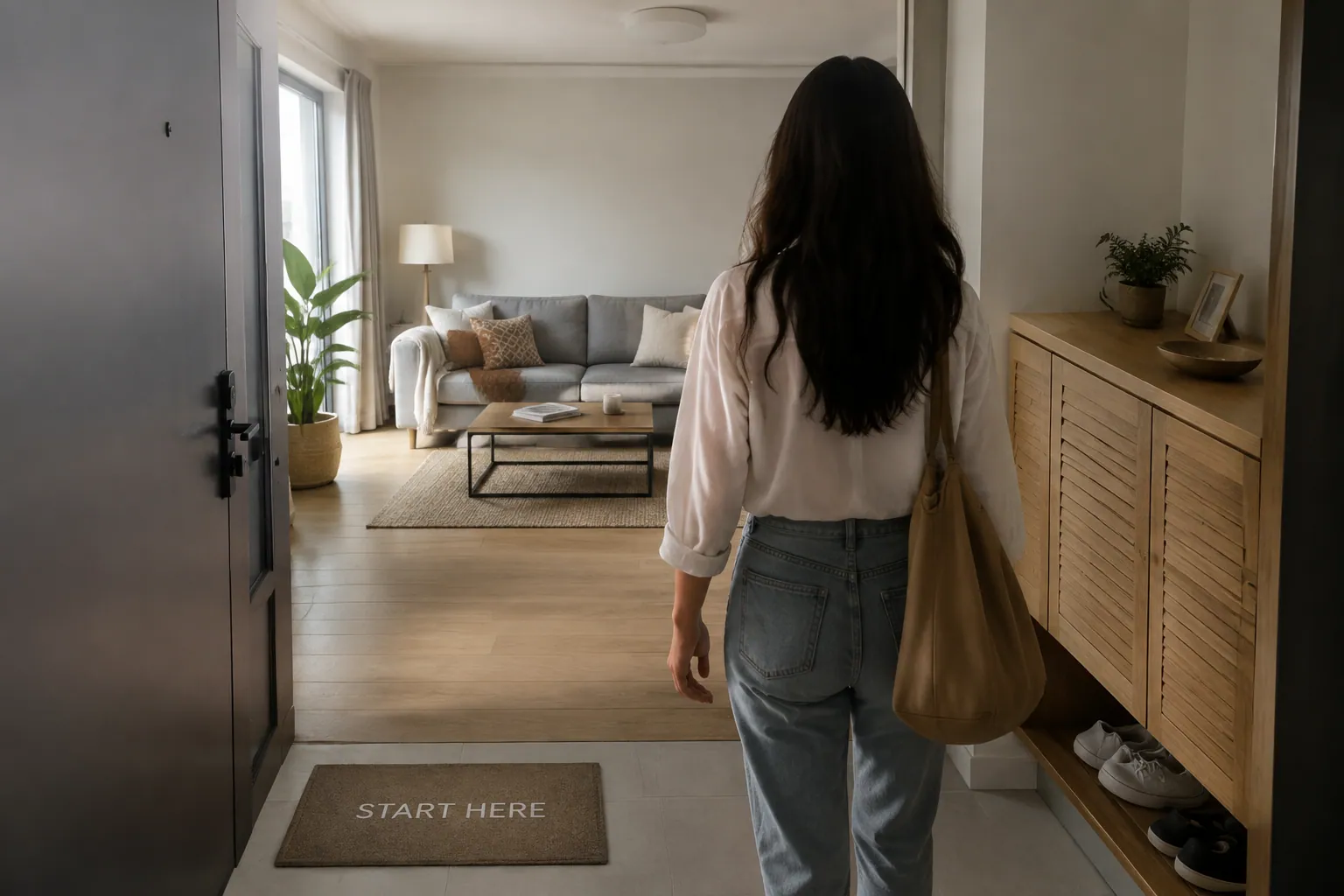
- The mouth of the house. The door you actually use is where qi (people, air, light, first impression) enters. If it cannot open fully, or the landing is a wall of shoes and mail, the rest of the house is working around a blocked throat.
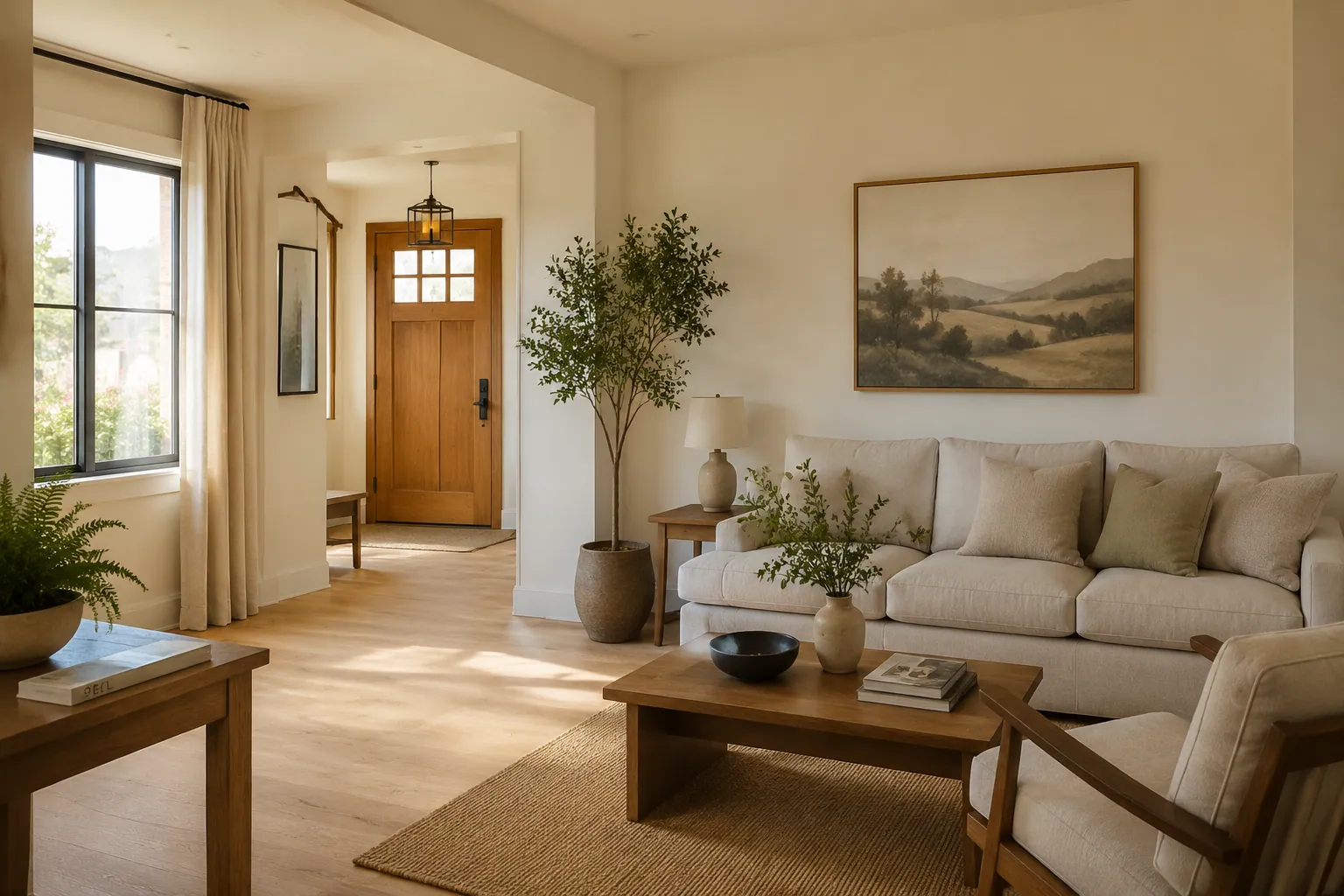
- The path. Can a guest walk from that door to a seat without weaving through a storage dump? A gentle curve is easier to live with than a bowling alley aimed at the sofa.
- Dead corners. A room with no air and no daylight is not “mysteriously yin”; it is unused. Open, clean, or light it before you “activate” it with an object.

The front door is the mouth of qi. A clear, turning path inward beats a blocked landing or a straight dart through the house.
A worked example: two identical apartments. In A, the door opens onto a clear mat, then a rug that turns toward the living room; shoes live in a closed cabinet. In B, the same door hits a shoe rack, a pram, and a straight view of the TV. Classical language says A gathers qi and B leaks it. In daily language, A is easier to come home to. That is the whole move: name the flow in words you can test.
Yin and yang: rest versus activity
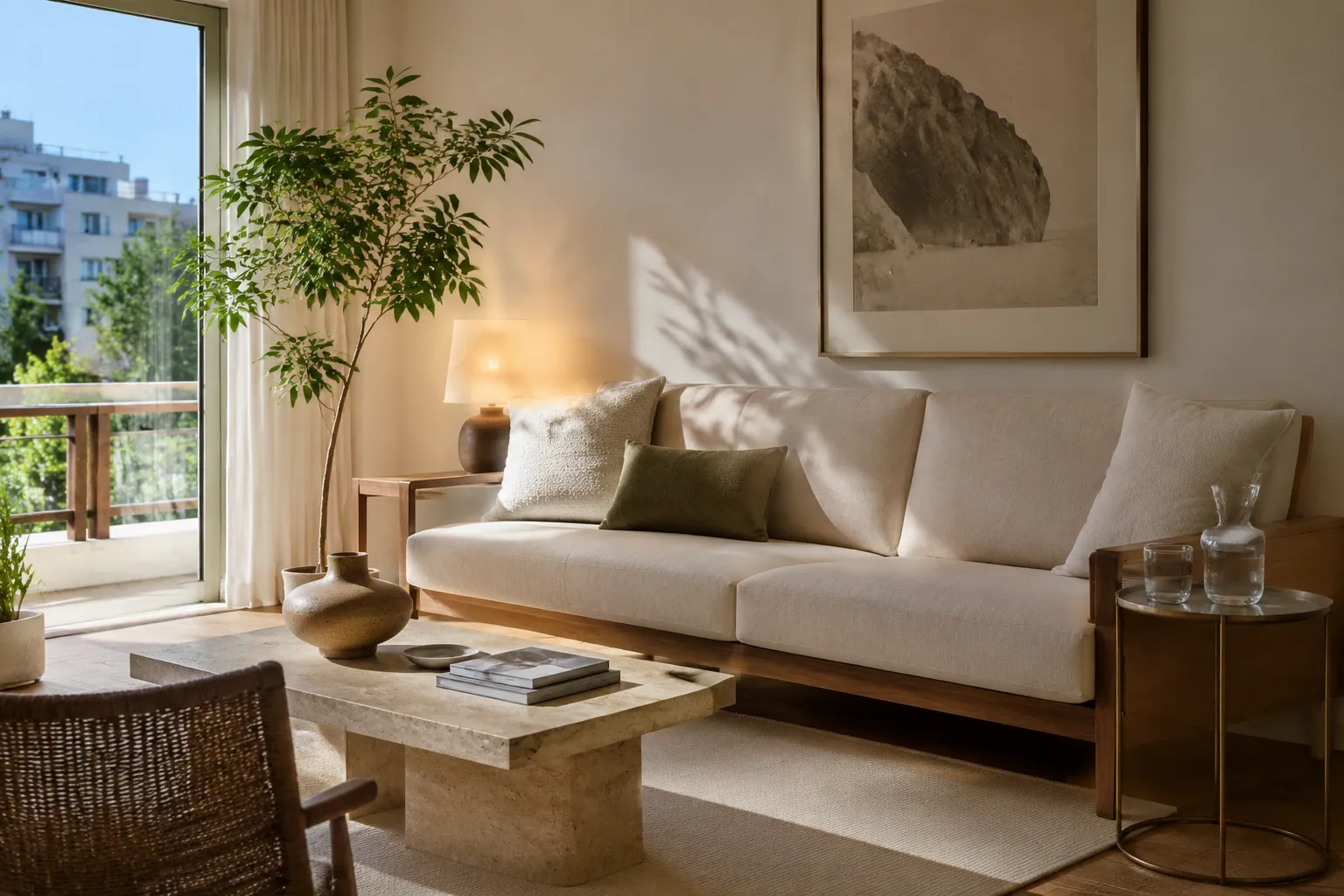
Yin and yang are complementary, not good versus evil. Classical glosses put yin with rest, shade, storage, and yielding; yang with movement, light, heat, and activity. Each needs the other. A home that is only yang never lets you sleep. A home that is only yin never lets you cook, work, or greet anyone.
You do not need a cosmic color chart to start. Match the job of the room to its stimulus level:
| Room job | Tends toward | What “too far” looks like |
|---|---|---|
| Sleep, bathing, reading | Yin | Overhead LEDs, TV at the foot of the bed, door in the rush line |
| Cooking, play, daytime living | Yang | No daylight, no heat at the stove, furniture blocking the work triangle |
| Mixed living | Both | A sofa that cannot see the door and cannot face anyone who sits down |
A worked example: a bedroom with a glass wall, a mirror facing the pillow, and a laptop on the nightstand is too yang for rest—too much light, reflection, and unfinished work. A kitchen with blackout blinds, a stove buried in storage, and no clear path to the sink is too yin to cook. The fix is not a lucky color. It is: dim and back the sleep zone; light and unblock the work zone.
Schools disagree on some landscape mappings (whether a mountain is more yang or more yin). We do not pretend there is one chart. For an apartment, the useful test is the one above: does this room’s job match how loud, bright, and exposed it is?
Five-element colors (wood, fire, earth, metal, water) come after this. They are a later language for materials and room roles—see five elements feng shui—not a substitute for “can I sleep here?”
Two schools, one house
Written feng shui is not one method. Two historical streams still show up in every beginner book.
Form school (形法) looks at shape: hills and water outdoors; doors, paths, backing, and beams indoors. Tang-dynasty landscape texts are often cited as the written root. You can practice it with your eyes and a floor plan.
Compass school (理气) looks at facing, time, and personal directions against a chart. Later scholars layered the luo-pan compass, the Lo Shu square, flying stars, and personal ming gua. You need a direction and, often, a birth date.
They can disagree about the same rental:
- Form school says: this bed sits in the door’s rush and has no wall behind the pillow. Move the bed.
- Compass school says: this occupant is an “east group” person and should sleep with head to the east. The only solid wall faces west.
If you follow the compass first, you may keep a geometrically bad bed. If you follow form first, you sleep with backing and a view of the door, then refine facing when the building allows. Juhe starts with form school because renters in metal-framed buildings often cannot rotate the house, and wiring plus steel can muddy a needle. Geometry still works when true north is a guess.
| Form school | Compass school | |
|---|---|---|
| Asks | Shape and path: backing, openings, beams | Facing, time, personal chart |
| Tools | Eyes, a plan, furniture you can move | Luo-pan, flying stars, ming gua, bagua overlay |
| Tonight | Usually yes | Only if you already know facing and the building cooperates |
| Struggles when | You cannot relocate a door or add a window | Steel, wiring, and fixed streets muddy the reading |
Interior teachers often rank three pieces first: the main door (how the house takes people in), the kitchen (food), and the bedroom (rest). That order is a priority list, not a superstition. Score those rooms on a plan before talking about lucky objects. Compass tools—house facing, ming gua, flying stars—are useful slices after the door and the bed are livable.
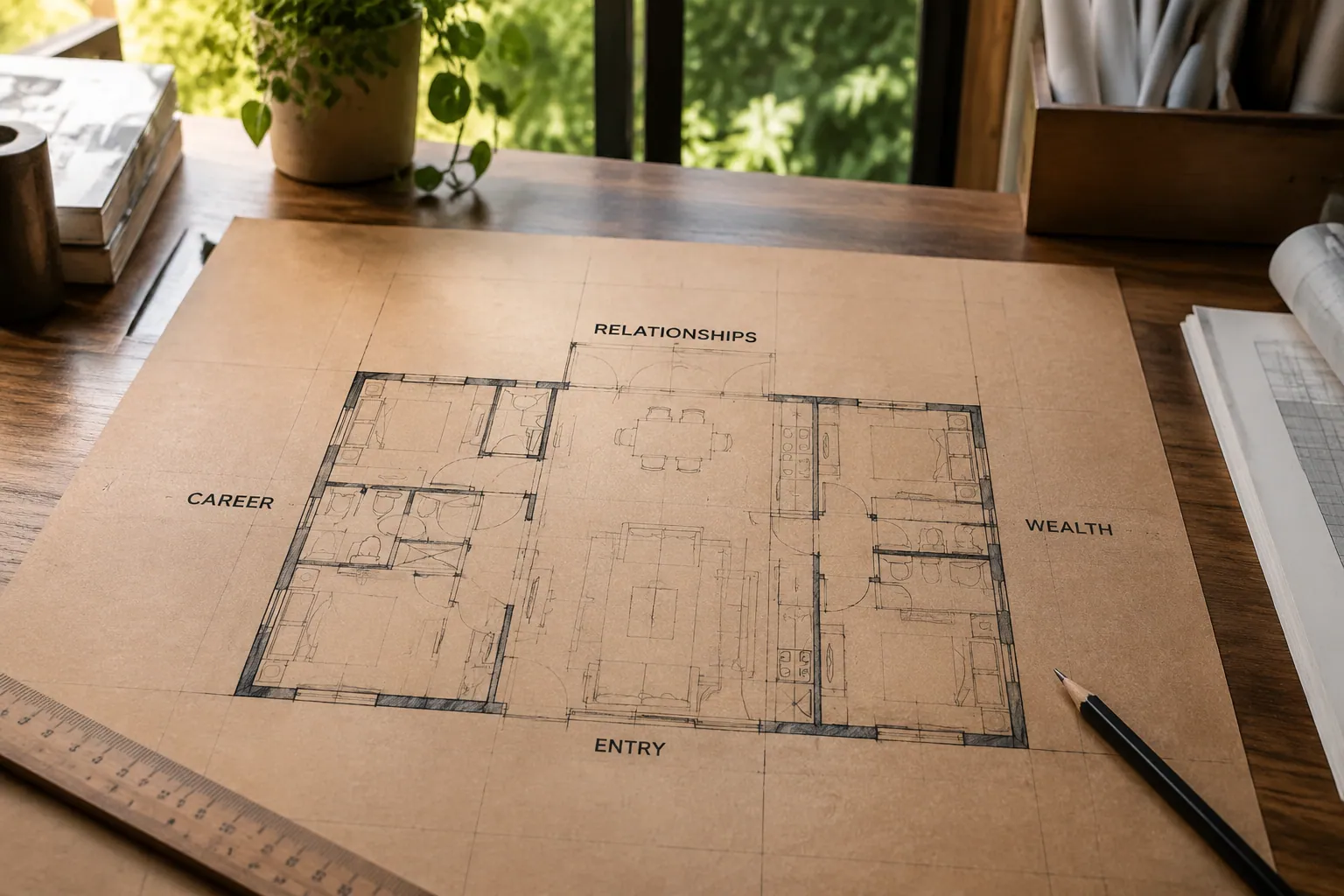
The bagua map (eight life areas overlaid on a plan) sits between these schools: some people align it to the entry (a western / Black Hat habit), others to magnetic north. That debate belongs on the bagua page. You do not need it to understand what feng shui is.
After the definition: five checks
Once the concepts are clear, a first pass is short. This is not a bedroom article; it is a way to see qi, yin-yang, and form school in the rooms you already have.

Form-school geometry in one picture: solid backing, a line of sight to the door, mattress off the rush.
- See the door without lying in its path. From the pillow or the desk chair, the opening should be in view and offset. A straight line from the door across the body is the rush to break first.
- Give rest a solid backing. Beds and sofas want a wall and a real back, not a window void. A thick headboard on a window wall is a compromise, not the ideal.
- Unblock the mouth of qi. The door you use should open fully. Shoes can live in a closed unit; they should not form a wall in the swing.
- Move sleep out from under a beam. A beam over the bed or the stove is a pressure line you can feel. Shift the furniture; if you cannot, break the edge with a soffit or fabric—that is a repair, not a crystal.
- Clear the path so the room can breathe. A corridor of boxes is harder to live in. Declutter before you buy a “wealth” object for the corner.
For the bed in detail—mirrors, equal sides, guest vs master—use bedroom feng shui, not this page.
What feng shui is not
It is not a medical system. Traditional books sometimes pair a layout fault with an illness name. Treat those as memory aids for “this geometry is stressful,” not as diagnosis. Health questions belong with a clinician.
It is not a booking desk. Some search results sell in-home visits. This site is self-serve: you capture a layout, get form-school scores, and follow a task list.
It is not buying a bagua mirror and hoping. Objects can mark an intention after the path is clear. They cannot replace a bed in the door’s rush.
FAQ
What does feng shui mean?
Wind and water. The phrase points to how a place gathers or scatters ease—classically kan yu, the study of land and dwellings—not a brand of interior accessories.
Is feng shui a religion?
No. It grew beside Chinese cosmology. You can use the layout rules without a creed.
What is qi in feng shui?
The “breath” of a site: whether people, air, and light can enter and rest without a fight. Harsh straight rushes and blocked doors are the easy photographs of weak qi. You do not need to believe in an invisible fluid to test those.
Do I need a luo-pan compass to start?
No. Start with form school: backing, door view, paths, beams, clutter. Compass tools help later for facing and personal directions.
Does feng shui actually work?
Layout changes that improve sight lines, backing, and clutter are testable: you sleep better or you do not. Traditional luck claims are not medical evidence. Use the spatial tests; skip scare language.
How is this different from interior design?
Interior design often starts from style. Feng shui starts from relationships: door to bed, path to stove, solid wall behind rest. Style can follow after the geometry is livable.
Where should I go after this page?
Stay on Knowledge for five elements and the bagua map. Use Home Design for room-by-room how-tos. Run a Free Home Check when you want your own plan scored—self-serve, not a booking.
Next step
Keep one picture: wind and water—a door that can receive, a path that does not dart, a place to rest with something solid behind it. Then either continue the beginner path or put your own walls on a plan with Analyze.
Synthesized from Juhe’s feng shui knowledge base: wind-and-water definition and two-school history, qi and yin-yang concepts, form-school interior priorities (door, kitchen, bedroom), and school disagreements we do not paper over. Traditional health correspondences are not used as medical claims.